
TLB Nutrition Therapy Handouts
At TLB Nutrition Therapy, we believe that access to nutrition education shouldn't be limited by insurance coverage, finances, or location. That's why we've created a growing library of free educational handouts and YouTube videos designed to provide reliable, evidence-based nutrition information to anyone who needs it.
Our resources have been thoughtfully developed by the registered dietitians and staff at TLB Nutrition Therapy and reflect our commitment to compassionate, inclusive, and evidence-based care. They cover a variety of topics, including eating disorders, intuitive eating, body image, chronic health conditions, sports nutrition, family feeding, women's health, and more. Whether you're a current client, a healthcare provider, or simply looking to learn, our goal is to make nutrition education approachable, practical, and accessible.
These resources are provided for educational purposes only and are not intended to replace individualized medical or nutrition advice. We encourage you to work with your healthcare provider or registered dietitian to determine the recommendations that are most appropriate for your unique needs.
We know that healing doesn't just happen during appointments. By offering these resources at no cost, we hope to empower individuals, families, and communities with the knowledge and tools they need to support their relationship with food, body, and health.
We invite you to explore our free handouts and YouTube library and share them with anyone who may benefit. Together, we can increase access to compassionate, inclusive nutrition care—one resource at a time. 💜
Use the search tool to search for a specific handout or youtube video.
Otherwise, feel free to scroll this page for all of our handout and video resources.
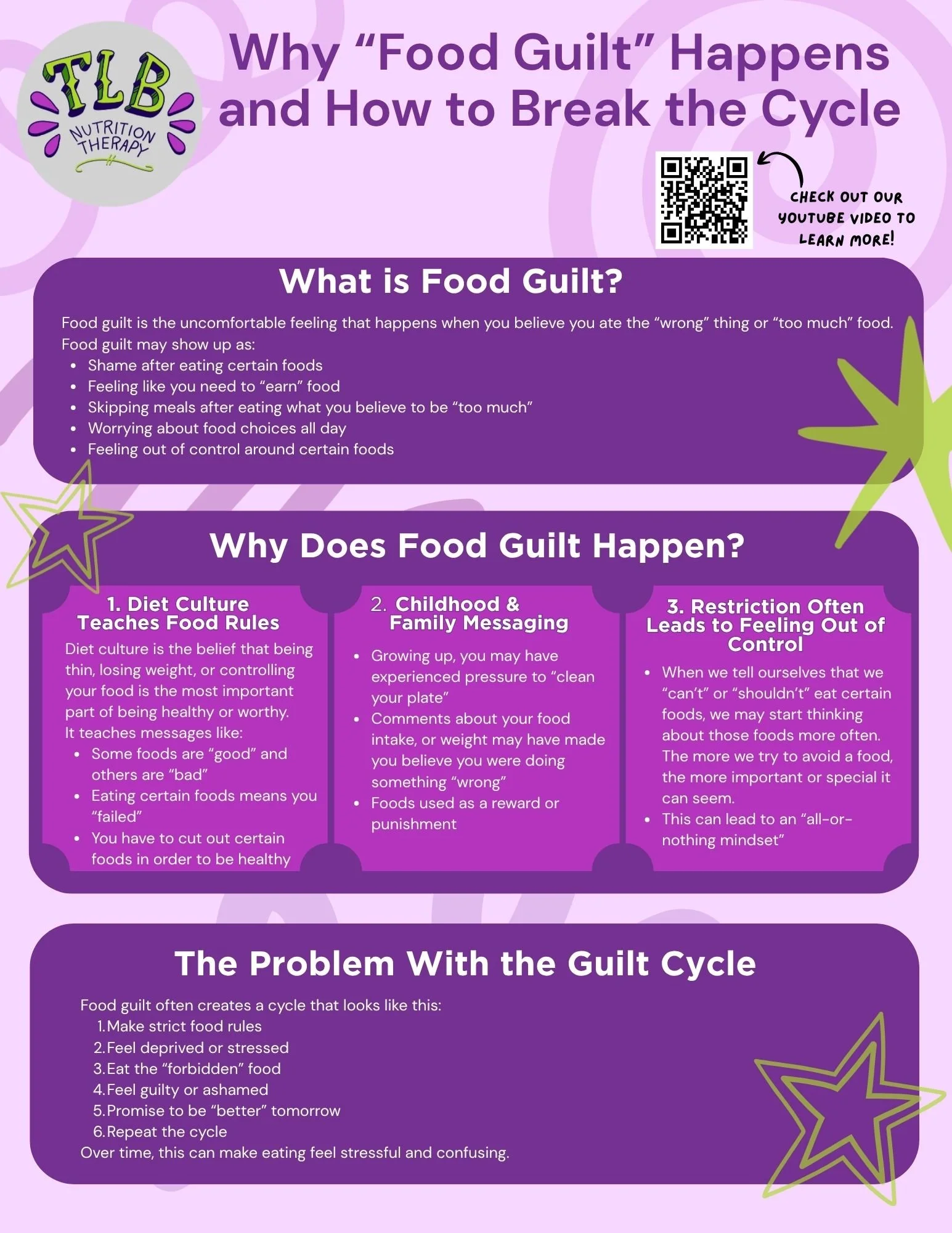
Why “Food Guilt” Happens and How to Break the Cycle
Food guilt can make eating feel far more complicated than it needs to be. It might show up as feeling ashamed after eating certain foods, believing you need to “earn” food, worrying about your choices throughout the day, or feeling like you need to compensate after eating.
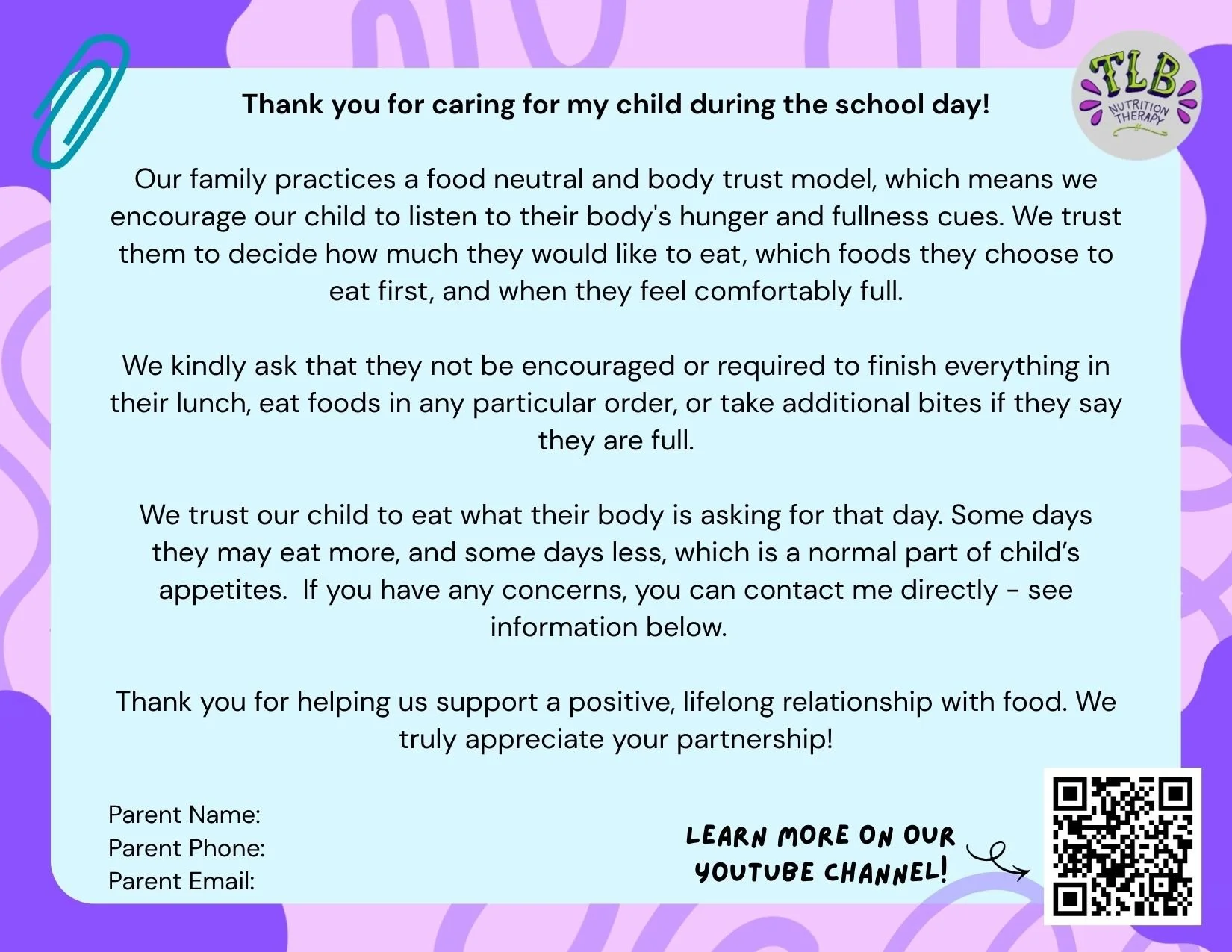
School Lunch Notes: Supporting Kids Without Food Pressure
For some children, lunchtime is short, loud, distracting, socially exciting, or sensory-overwhelming. Adding pressure to finish food, eat foods in a certain order, or take “just one more bite” can make an already complicated part of the school day even harder.
That’s why TLB Nutrition Therapy created two free School Lunch Notes that parents and caregivers can send to school with their child.
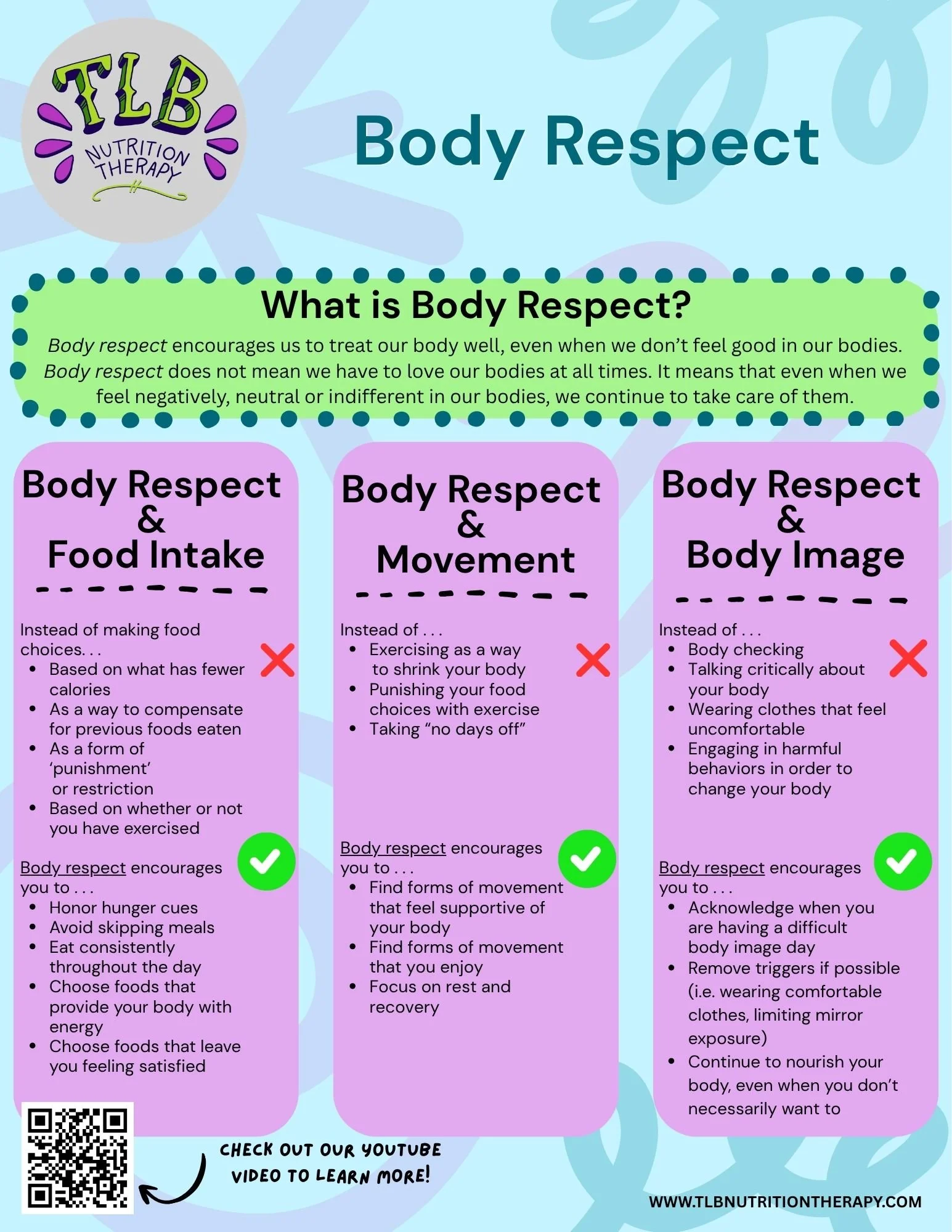
Body Respect — Caring for Your Body Without Having to Love It
At TLB Nutrition Therapy, body respect can show up through food, movement, and body image. With food, it may mean eating consistently, avoiding restriction or compensation, honoring hunger when possible, and choosing foods that provide energy and satisfaction. With movement, it means shifting away from exercise as punishment and toward movement that feels supportive, while recognizing the importance of rest and recovery.
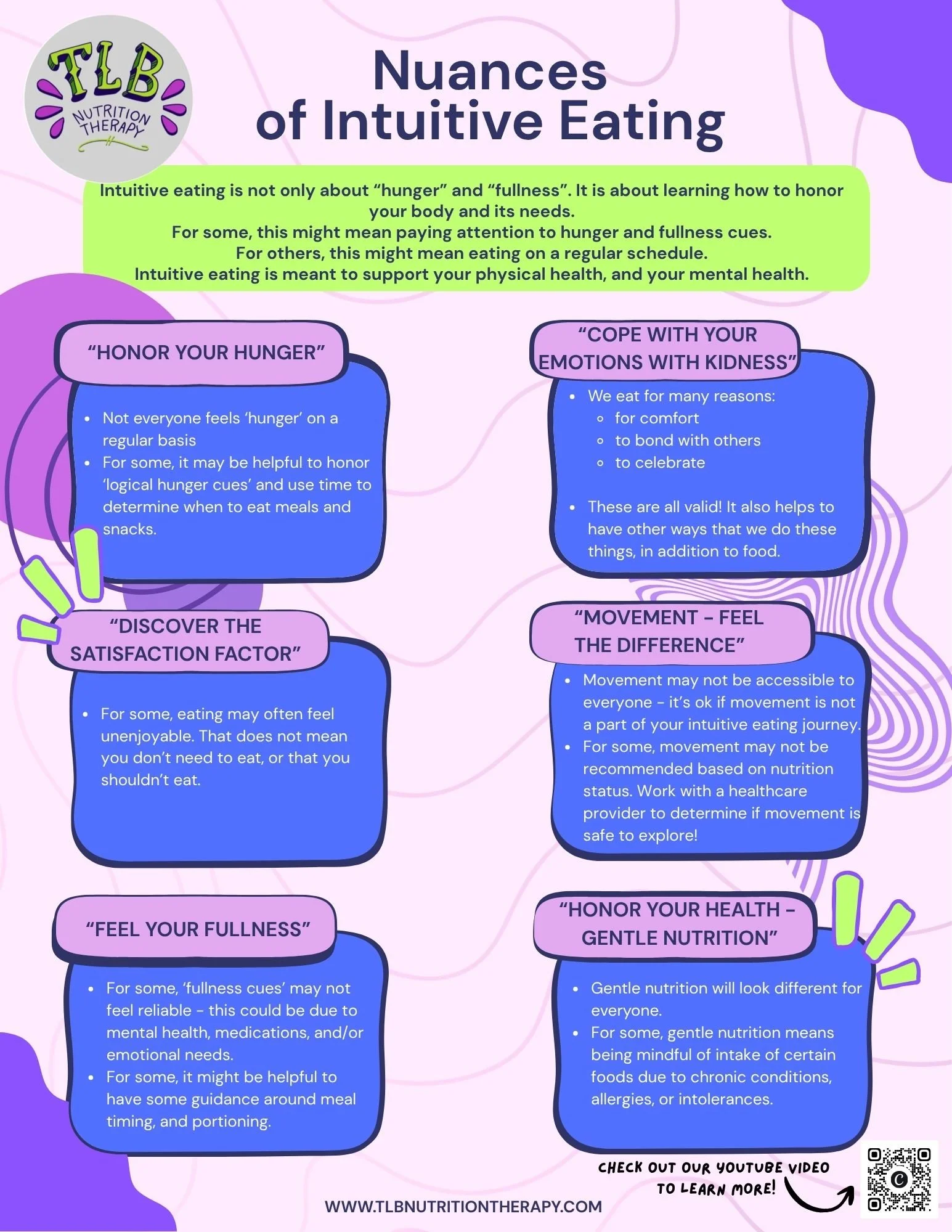
The Nuances of Intuitive Eating
Our Nuances of Intuitive Eating handout explores some of these differences. For example, not everyone experiences reliable physical hunger cues. Honoring hunger might mean using logical hunger and eating according to time. Fullness cues may also be difficult to identify, making meal timing or portion guidance helpful. And satisfaction doesn't always mean food needs to be pleasurable—sometimes eating simply meets a physical need.
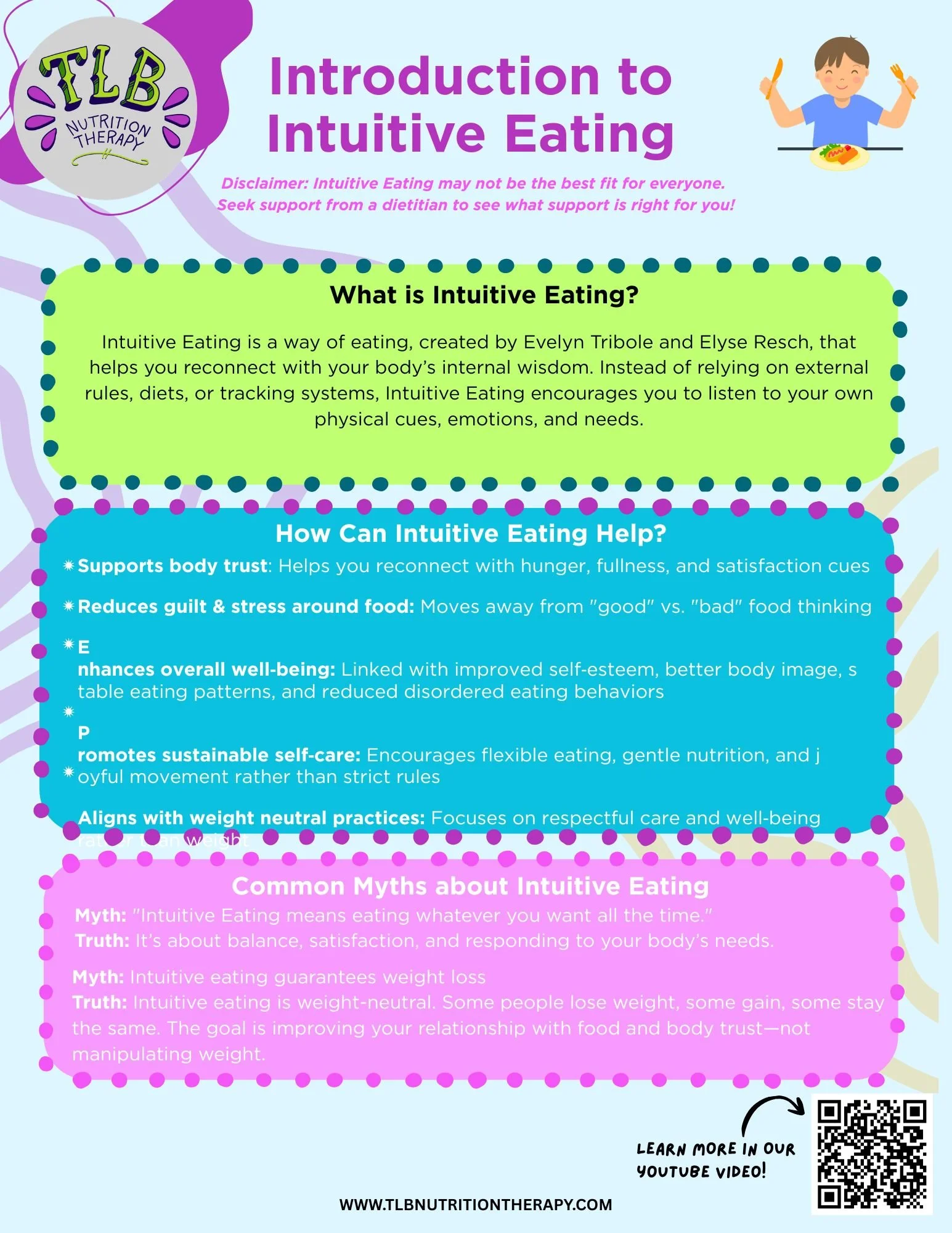
Intuitive Eating Is More Than “Just Listen to Your Body”
Our Introduction to Intuitive Eating handout walks through all ten principles, including rejecting the diet mentality, honoring hunger, making peace with food, challenging the food police, discovering satisfaction, respecting your body, exploring enjoyable movement, and practicing gentle nutrition. It also addresses common misconceptions, including the idea that intuitive eating means eating whatever you want all the time or that it is a weight-loss approach.
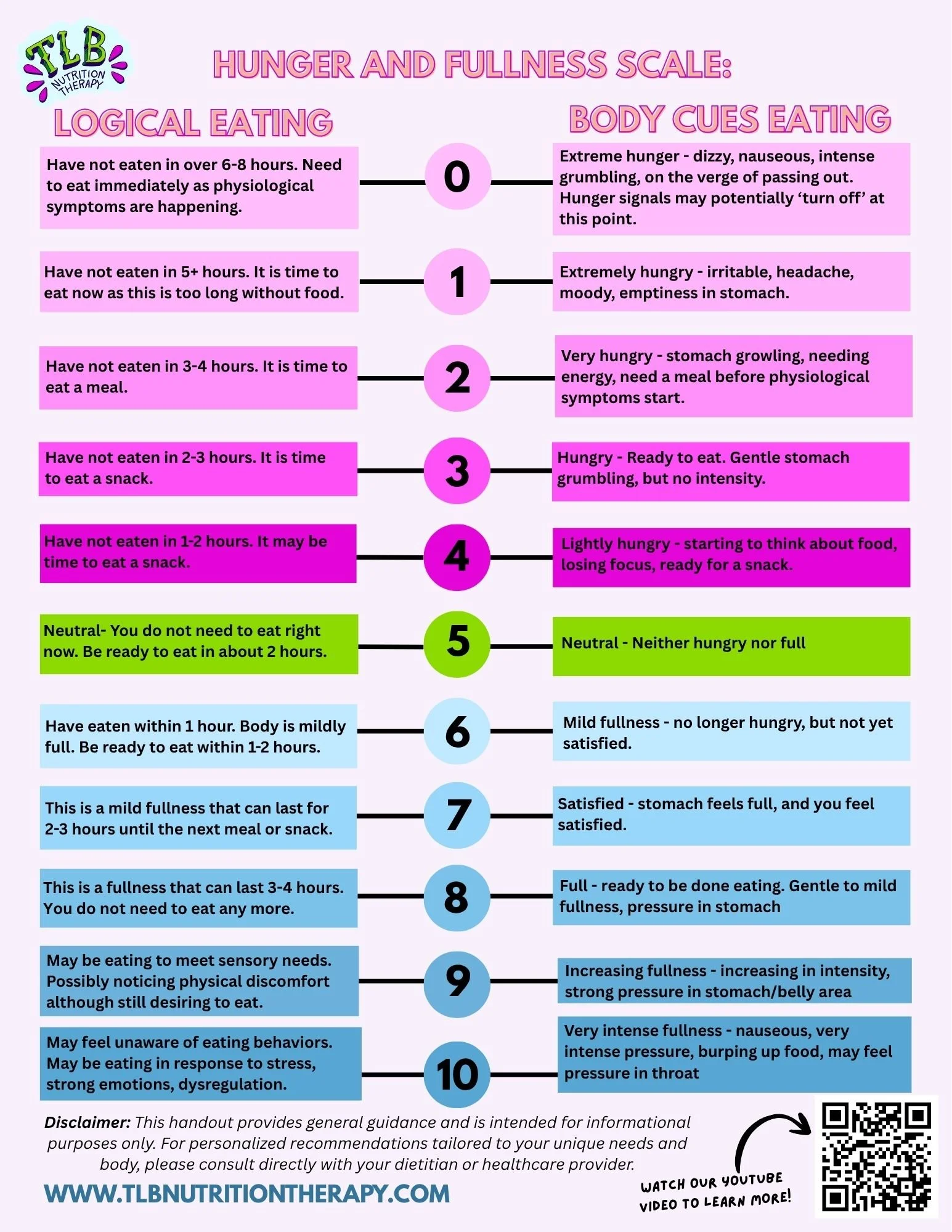
Understanding Physical Hunger and Logical Hunger
At TLB Nutrition Therapy, we talk about both physical hunger and logical hunger. Physical hunger can show up in many ways, including stomach growling, difficulty concentrating, low energy, headaches, irritability, or simply thinking more about food. Logical hunger uses outside information—such as how long it has been since you last ate—to recognize when your body needs nourishment even if you aren't physically feeling hungry.
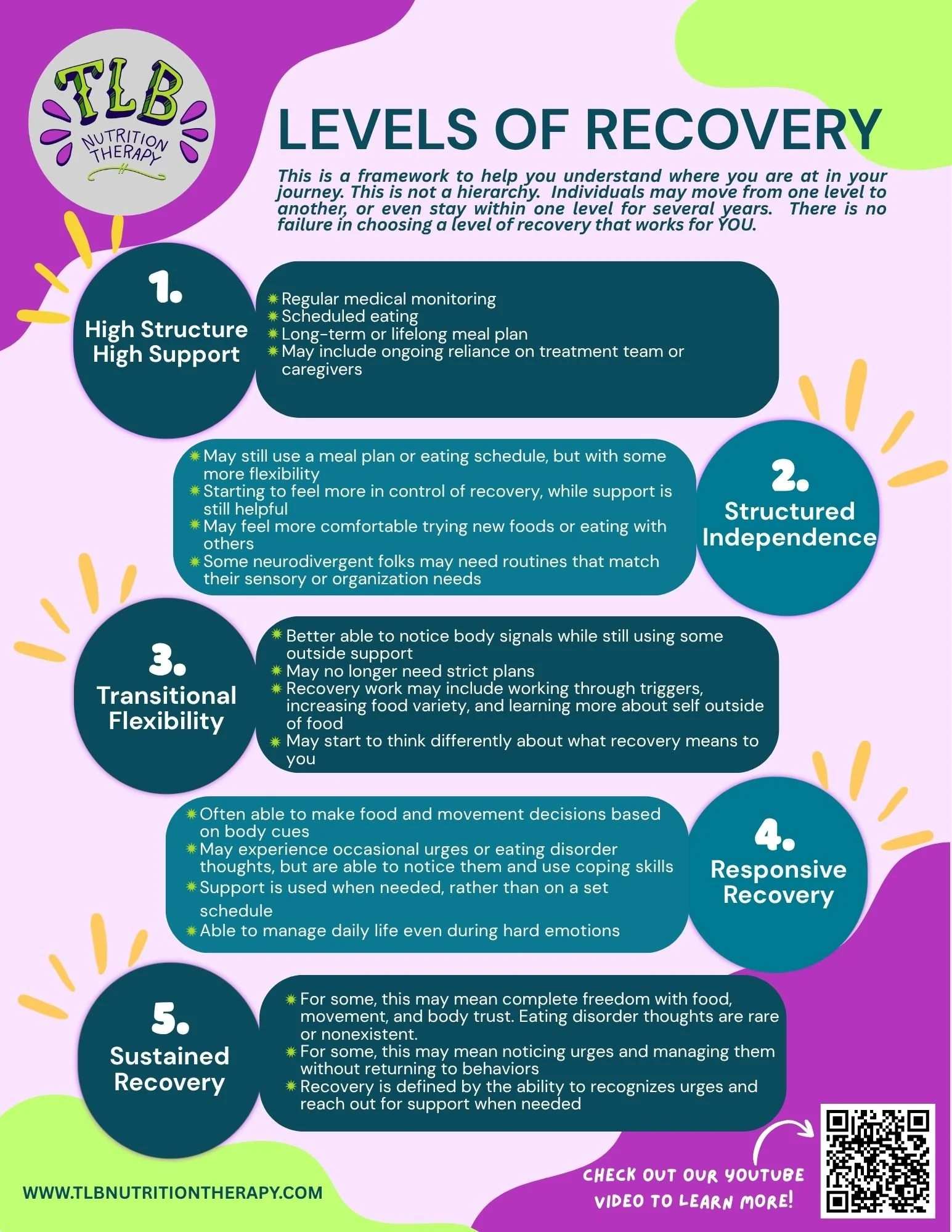
Recovery Isn't One-Size-Fits-All
Our Levels of Recovery handout outlines five flexible stages, ranging from High Structure, High Support to Sustained Recovery. Along the way, individuals may rely on meal plans, schedules, body cues, or support systems in different ways. The framework also recognizes that some neurodivergent individuals may continue to benefit from lifelong routines and structure—and that this is not a sign of failure, but simply an individualized path to recovery.
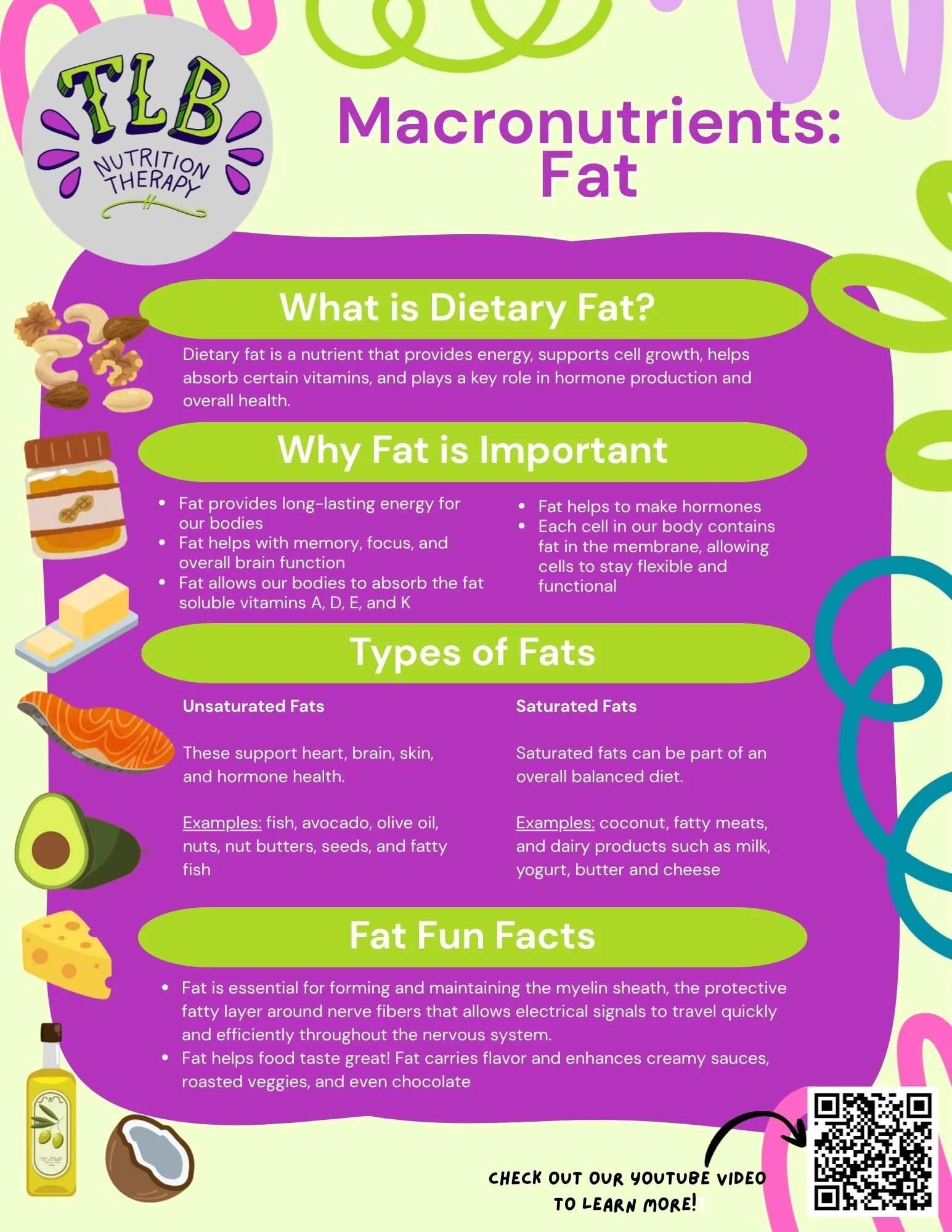
Every Macronutrient Has a Purpose: Including Fats!
Our Macronutrients handout series explains what carbohydrates, protein, and fat do in the body, where they are found in everyday foods, and why all three deserve a place on your plate. Rather than eliminating foods or following restrictive rules, we encourage building meals that include a variety of nutrients to support both physical and emotional health.
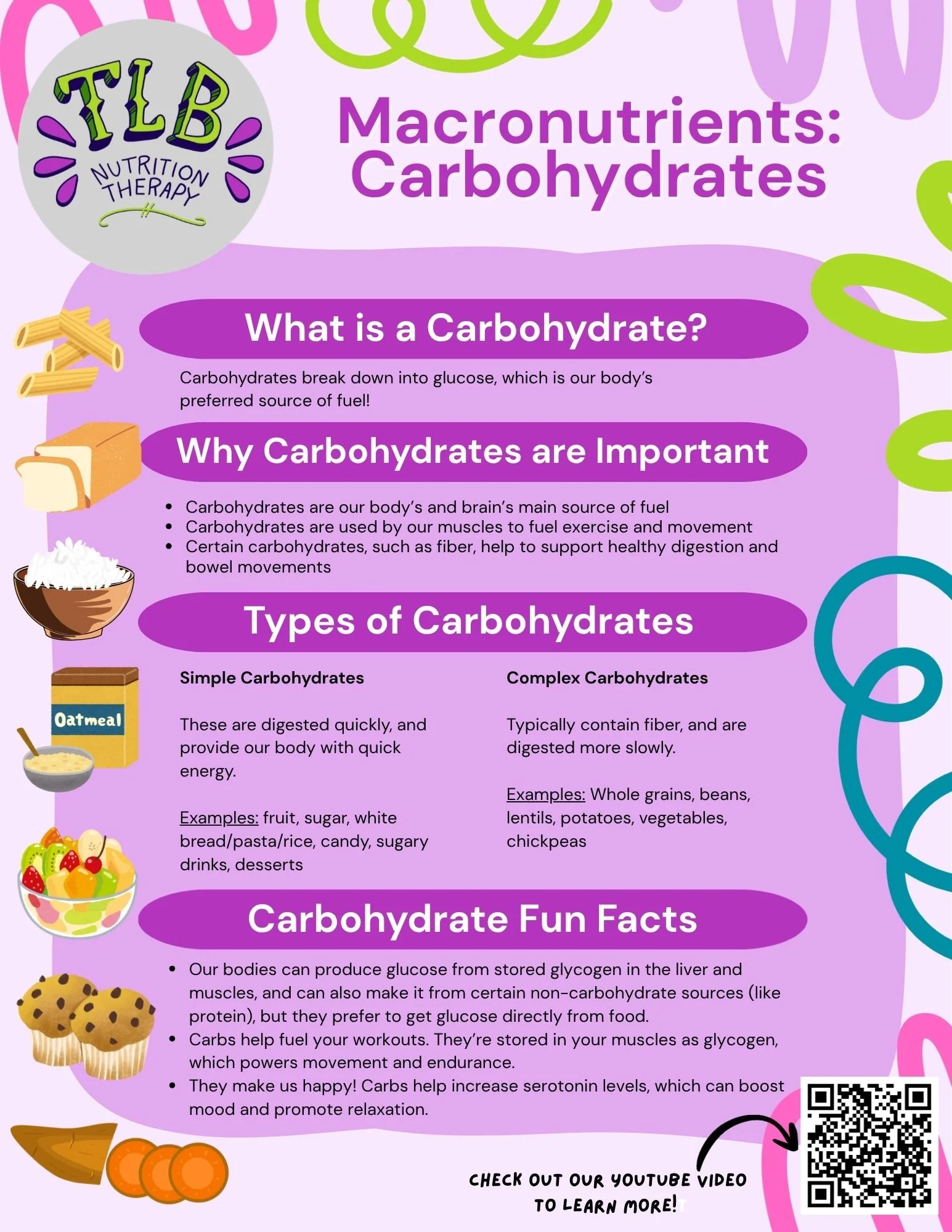
Every Macronutrient Has a Purpose: Including Carbs!
Our Macronutrients handout series explains what carbohydrates, protein, and fat do in the body, where they are found in everyday foods, and why all three deserve a place on your plate. Rather than eliminating foods or following restrictive rules, we encourage building meals that include a variety of nutrients to support both physical and emotional health.
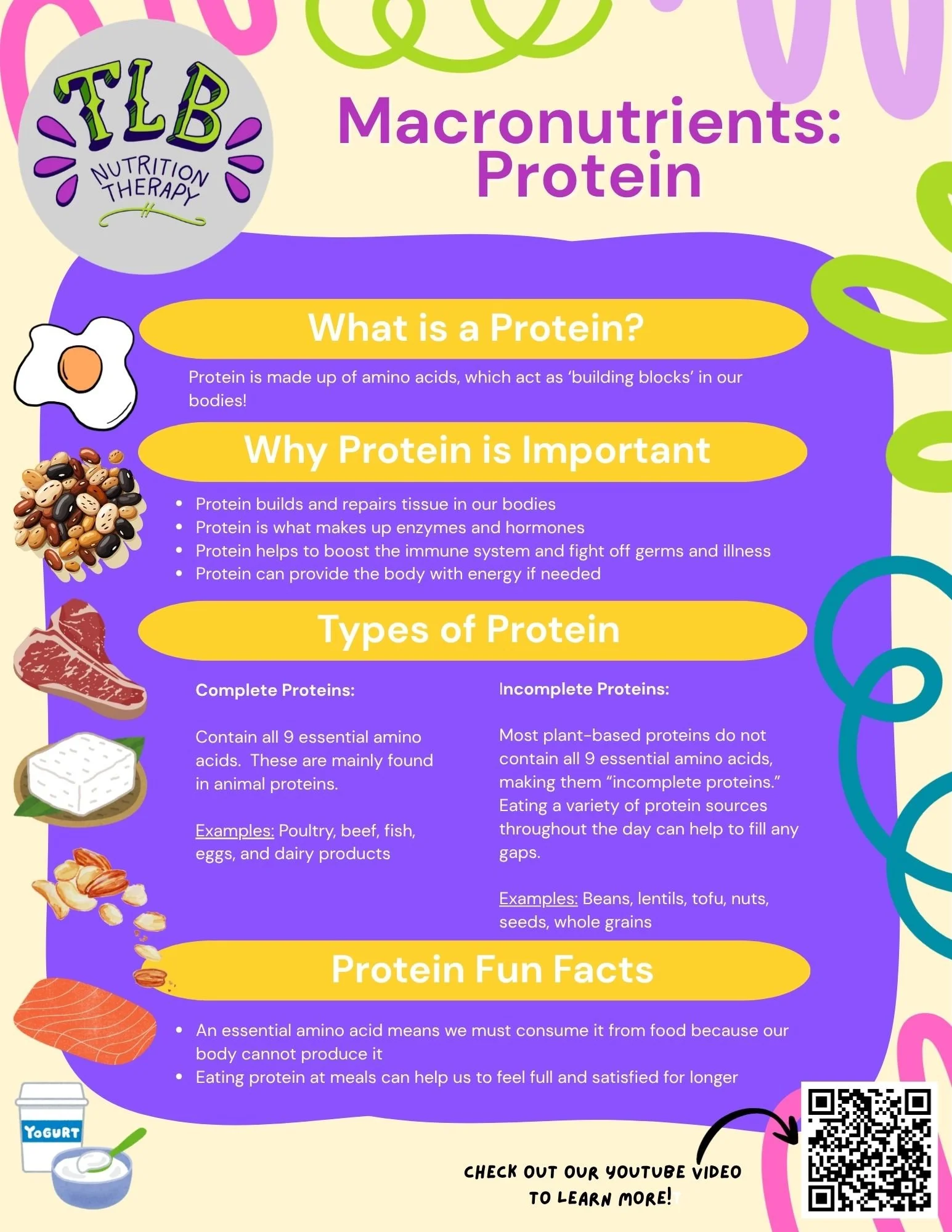
Every Macronutrient Has a Purpose: Including Protein!
Our Macronutrients handout series explains what carbohydrates, protein, and fat do in the body, where they are found in everyday foods, and why all three deserve a place on your plate. Rather than eliminating foods or following restrictive rules, we encourage building meals that include a variety of nutrients to support both physical and emotional health.
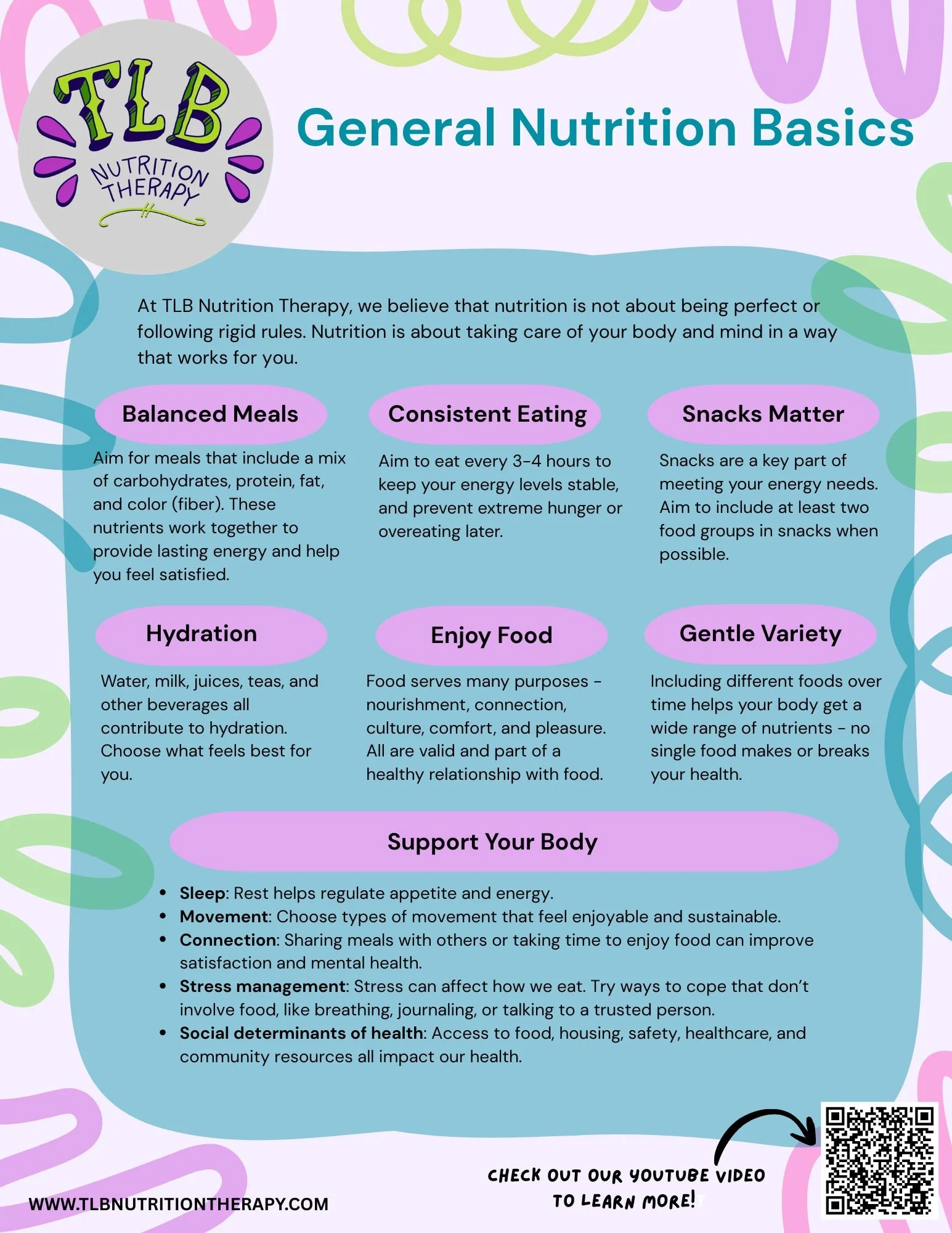
Nutrition Doesn't Have to Be Complicated: General Nutrition
Our General Nutrition Basics handout focuses on building sustainable habits instead of following strict rules. Rather than striving for perfection, we encourage balanced meals that include carbohydrates, protein, fat, and colorful fruits and vegetables, consistent eating throughout the day, regular snacks, hydration, and gentle variety over time. Nutrition is about supporting your body—not controlling it.

Halloween Candy: Building Trust, Not Fear
At TLB Nutrition Therapy, we encourage families to approach Halloween with curiosity, flexibility, and trust. Candy is simply one type of food—it doesn't need to be earned, feared, or placed on a pedestal. Offering balanced meals before trick-or-treating, using neutral language about candy, and allowing children to listen to their own hunger and fullness cues can help support a healthier relationship with food.