Why “Food Guilt” Happens and How to Break the Cycle
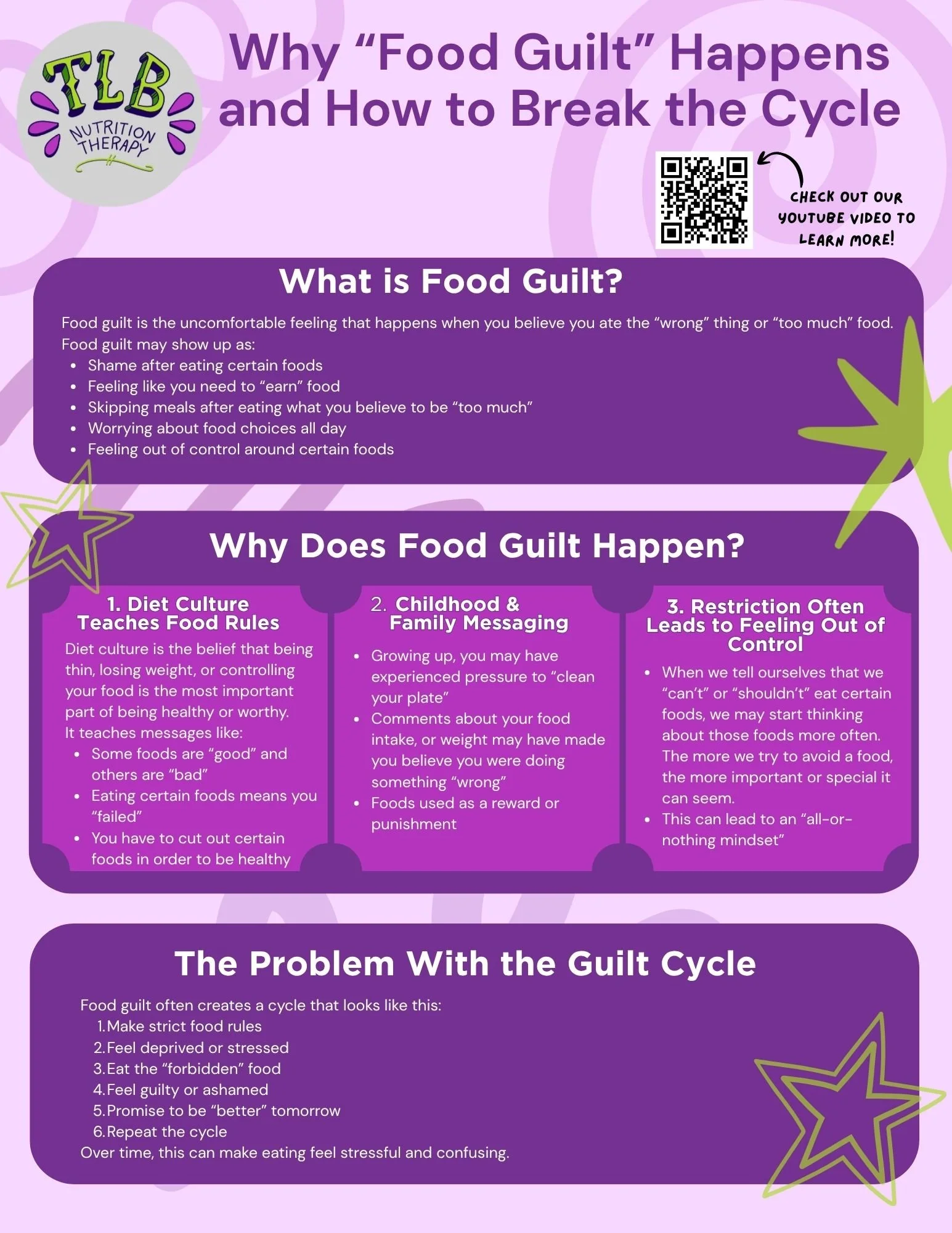
Click the image above for the PDF to download
Food guilt can make eating feel far more complicated than it needs to be. It might show up as feeling ashamed after eating certain foods, believing you need to “earn” food, worrying about your choices throughout the day, or feeling like you need to compensate after eating.
But food guilt doesn't come out of nowhere.
Diet culture, childhood experiences, family messaging, and years of hearing that certain foods are “good” while others are “bad” can shape the way we think about eating. Over time, these messages can create rigid food rules—and breaking those rules can feel like you've done something wrong.
Unfortunately, restriction and guilt can reinforce each other. You create a strict rule, feel deprived or stressed, eventually eat the “forbidden” food, experience guilt or shame, and promise yourself you'll do “better” tomorrow. Then the cycle begins again.
Building a more peaceful relationship with food isn't about following a new set of perfect rules. It can mean eating consistently, challenging “good” and “bad” food labels, noticing your body's cues with curiosity rather than judgment, practicing self-compassion, and remembering that food can provide nutrition and satisfaction, comfort, joy, tradition, and connection.
You don't have to eliminate every food rule overnight. Sometimes breaking the food guilt cycle starts with one small question: What would support me right now?
Food Guilt: When Your Relationship With Food May Need More Support
How much space is food taking up in your life?
In this episode of Snack Chats with TLB, Sarah and Lauren discuss some common signs that your relationship with food may benefit from additional support. They explore how diet culture, food rules, guilt, restriction, and rigidity can become so normalized that it can be difficult to recognize when food and body concerns are beginning to negatively impact your quality of life.
Food guilt can look different for everyone. It may include shame after eating certain foods, feeling like you need to earn food, skipping meals after feeling like you've eaten “too much,” worrying about food choices throughout the day, or feeling out of control around certain foods.
In this episode, you'll learn:
Signs that food may be taking up excessive mental space
How constant thoughts about calories, macros, weight, or food rules can affect daily life
How guilt, shame, and anxiety can become connected to eating
Why labeling foods as “good” or “bad” can make eating more stressful
How rigid food rules can contribute to feeling deprived or out of control
Why restriction can actually increase thoughts about certain foods
How food and body concerns can affect relationships, social activities, and emotional wellbeing
When it may be helpful to seek additional support
Why Does Food Guilt Happen?
Food guilt is often connected to messages we've received about what, when, and how much we're “supposed” to eat.
Diet culture can teach us that certain foods are good or bad, that eating a particular food means we've failed, or that controlling our food is necessary to be healthy. Childhood and family experiences can also play a role—from being told to clean your plate to receiving comments about your food or weight or having foods used as rewards or punishment.
Understanding the Food Guilt Cycle
Food guilt and restriction can create a cycle.
You make a strict food rule. You begin feeling deprived or stressed. Eventually, you eat the food you've labeled as “forbidden.” Then guilt or shame shows up, followed by a promise that tomorrow you'll be “better.”
And the cycle starts again.
Over time, this pattern can make eating feel increasingly stressful and confusing.
Challenging “Good” and “Bad” Food Labels
Food doesn't have to fit neatly into categories of “good” and “bad.”
Some foods may provide energy, fiber, protein, vitamins, and other nutrients. Other foods may provide comfort, satisfaction, joy, connection, or tradition. A balanced relationship with food can make room for both nutrition and enjoyment.
Removing moral labels from food can help create more flexibility and reduce the feeling that eating something automatically means you've succeeded or failed.
Breaking the Cycle
Changing your relationship with food doesn't have to happen all at once.
It may look like:
Eating consistently throughout the day
Noticing physical, mental, and emotional hunger cues without judgment
Challenging one food rule at a time
Eating a favorite food without calling it “bad”
Practicing a kind thought toward yourself after eating
Allowing yourself to eat foods you genuinely enjoy
Moving away from punishment or compensation after eating
Making room for satisfaction, pleasure, celebration, tradition, and comfort
The accompanying TLB handout also encourages starting with something as simple as pausing and asking yourself, “What would support me right now?”
When Might It Be Time for Additional Support?
Food should be able to enhance your life—not control it.
If thoughts about food, exercise, weight, or body image are affecting your relationships, social activities, daily routines, emotional wellbeing, or overall quality of life, additional support may be helpful.
You don't have to wait until your relationship with food gets worse or feels “bad enough” before reaching out.
Download our free handout: Why “Food Guilt” Happens and How to Break the Cycle. This resource explores why food guilt develops and provides practical ideas for moving toward a more flexible, compassionate, and satisfying relationship with food.
Disclaimer:
The information shared in this episode and handout is intended for educational purposes only and is not a substitute for individualized nutrition counseling, medical advice, or mental health treatment. We encourage you to work with a registered dietitian, therapist, physician, or other qualified healthcare provider for individualized support.