
TLB Nutrition Therapy Handouts
At TLB Nutrition Therapy, we believe that access to nutrition education shouldn't be limited by insurance coverage, finances, or location. That's why we've created a growing library of free educational handouts and YouTube videos designed to provide reliable, evidence-based nutrition information to anyone who needs it.
Our resources have been thoughtfully developed by the registered dietitians and staff at TLB Nutrition Therapy and reflect our commitment to compassionate, inclusive, and evidence-based care. They cover a variety of topics, including eating disorders, intuitive eating, body image, chronic health conditions, sports nutrition, family feeding, women's health, and more. Whether you're a current client, a healthcare provider, or simply looking to learn, our goal is to make nutrition education approachable, practical, and accessible.
These resources are provided for educational purposes only and are not intended to replace individualized medical or nutrition advice. We encourage you to work with your healthcare provider or registered dietitian to determine the recommendations that are most appropriate for your unique needs.
We know that healing doesn't just happen during appointments. By offering these resources at no cost, we hope to empower individuals, families, and communities with the knowledge and tools they need to support their relationship with food, body, and health.
We invite you to explore our free handouts and YouTube library and share them with anyone who may benefit. Together, we can increase access to compassionate, inclusive nutrition care—one resource at a time. 💜
Use the search tool to search for a specific handout or youtube video.
Otherwise, feel free to scroll this page for all of our handout and video resources.
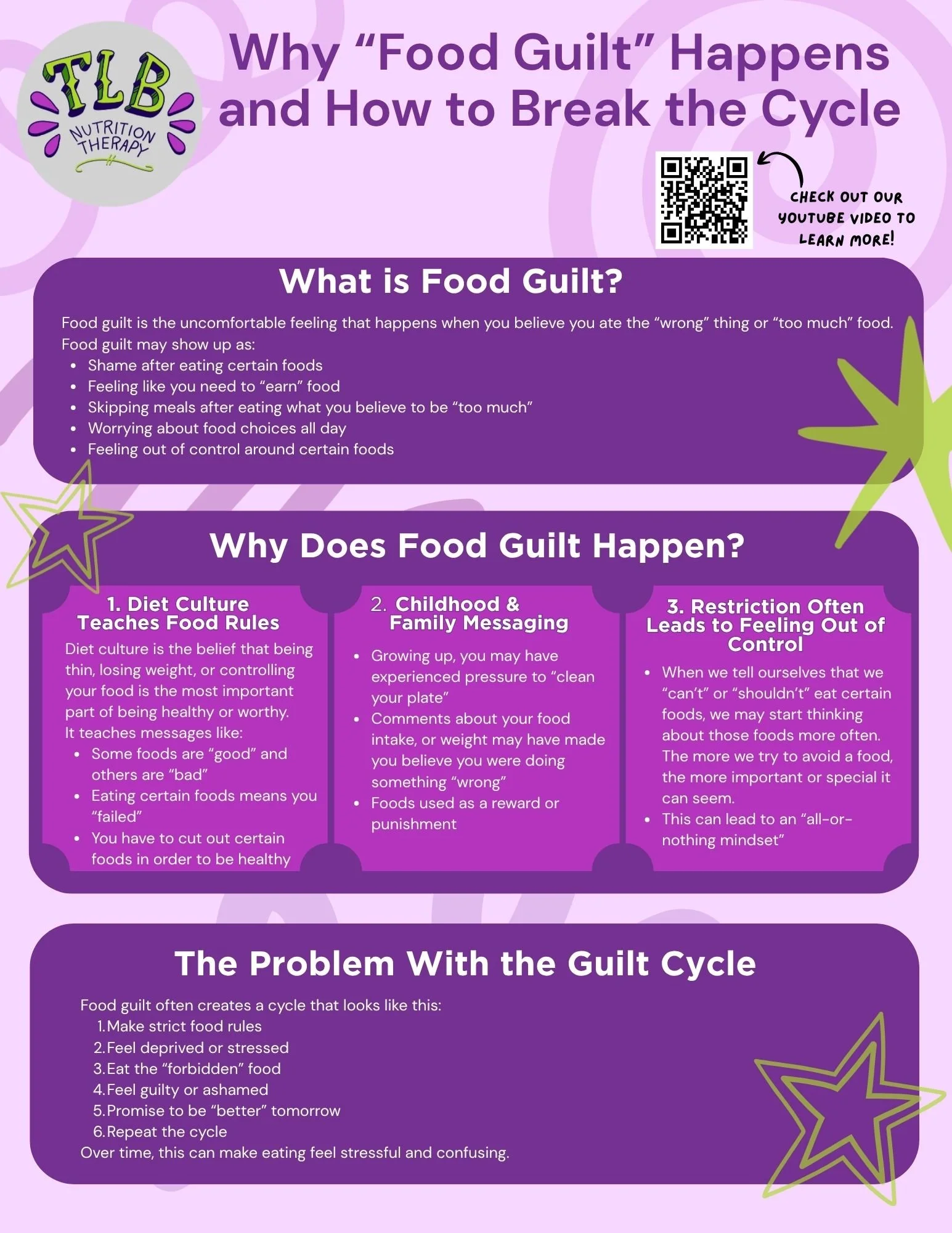
Why “Food Guilt” Happens and How to Break the Cycle
Food guilt can make eating feel far more complicated than it needs to be. It might show up as feeling ashamed after eating certain foods, believing you need to “earn” food, worrying about your choices throughout the day, or feeling like you need to compensate after eating.
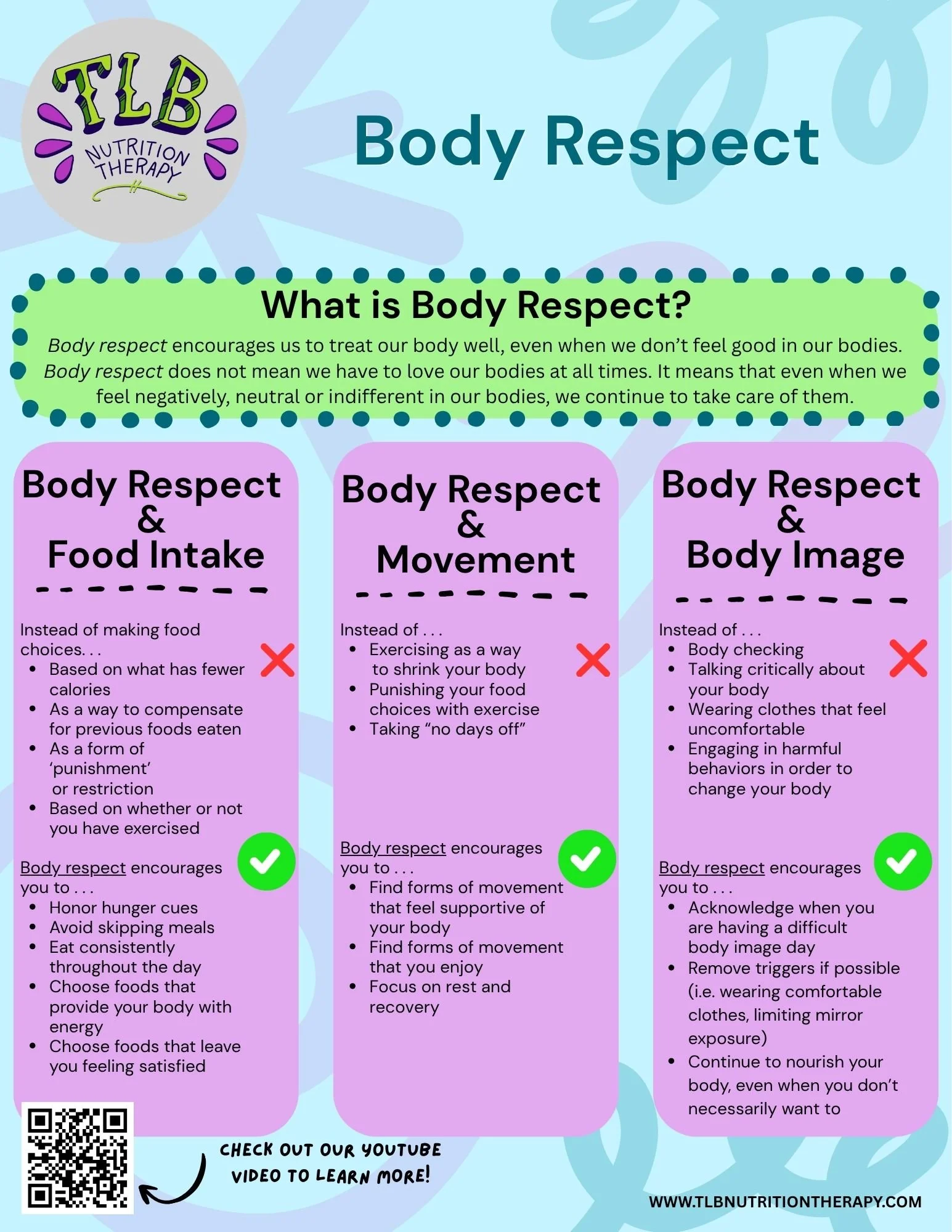
Body Respect — Caring for Your Body Without Having to Love It
At TLB Nutrition Therapy, body respect can show up through food, movement, and body image. With food, it may mean eating consistently, avoiding restriction or compensation, honoring hunger when possible, and choosing foods that provide energy and satisfaction. With movement, it means shifting away from exercise as punishment and toward movement that feels supportive, while recognizing the importance of rest and recovery.
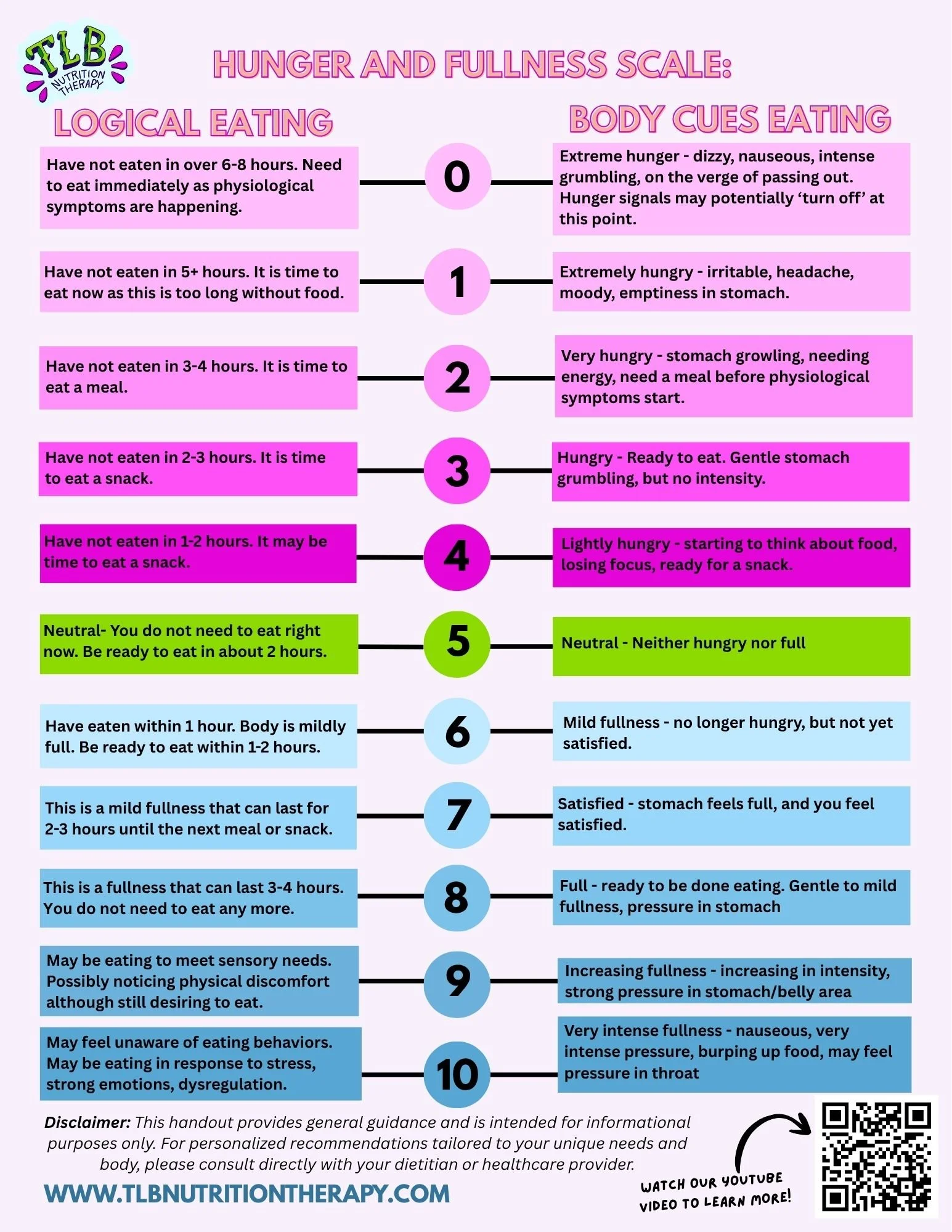
Understanding Physical Hunger and Logical Hunger
At TLB Nutrition Therapy, we talk about both physical hunger and logical hunger. Physical hunger can show up in many ways, including stomach growling, difficulty concentrating, low energy, headaches, irritability, or simply thinking more about food. Logical hunger uses outside information—such as how long it has been since you last ate—to recognize when your body needs nourishment even if you aren't physically feeling hungry.
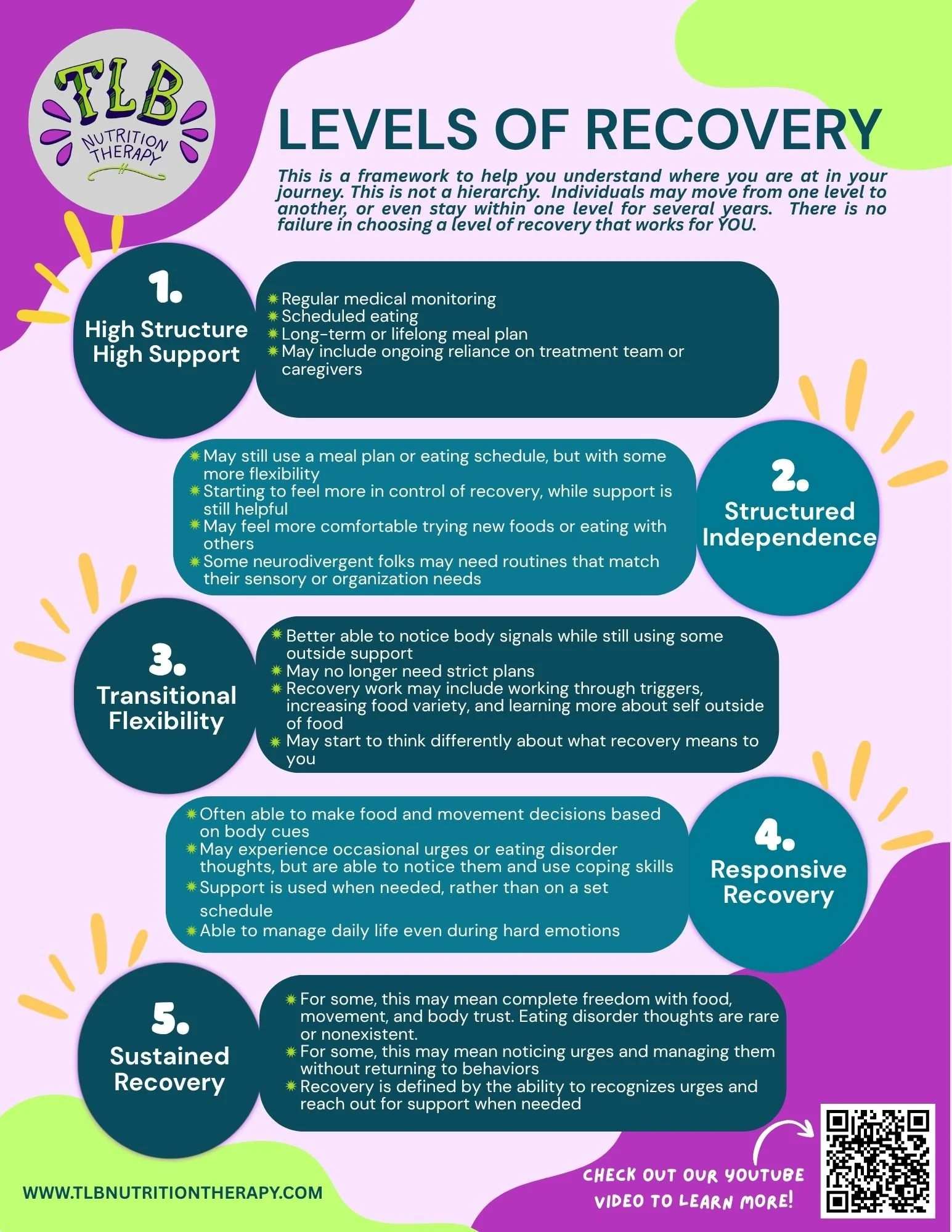
Recovery Isn't One-Size-Fits-All
Our Levels of Recovery handout outlines five flexible stages, ranging from High Structure, High Support to Sustained Recovery. Along the way, individuals may rely on meal plans, schedules, body cues, or support systems in different ways. The framework also recognizes that some neurodivergent individuals may continue to benefit from lifelong routines and structure—and that this is not a sign of failure, but simply an individualized path to recovery.
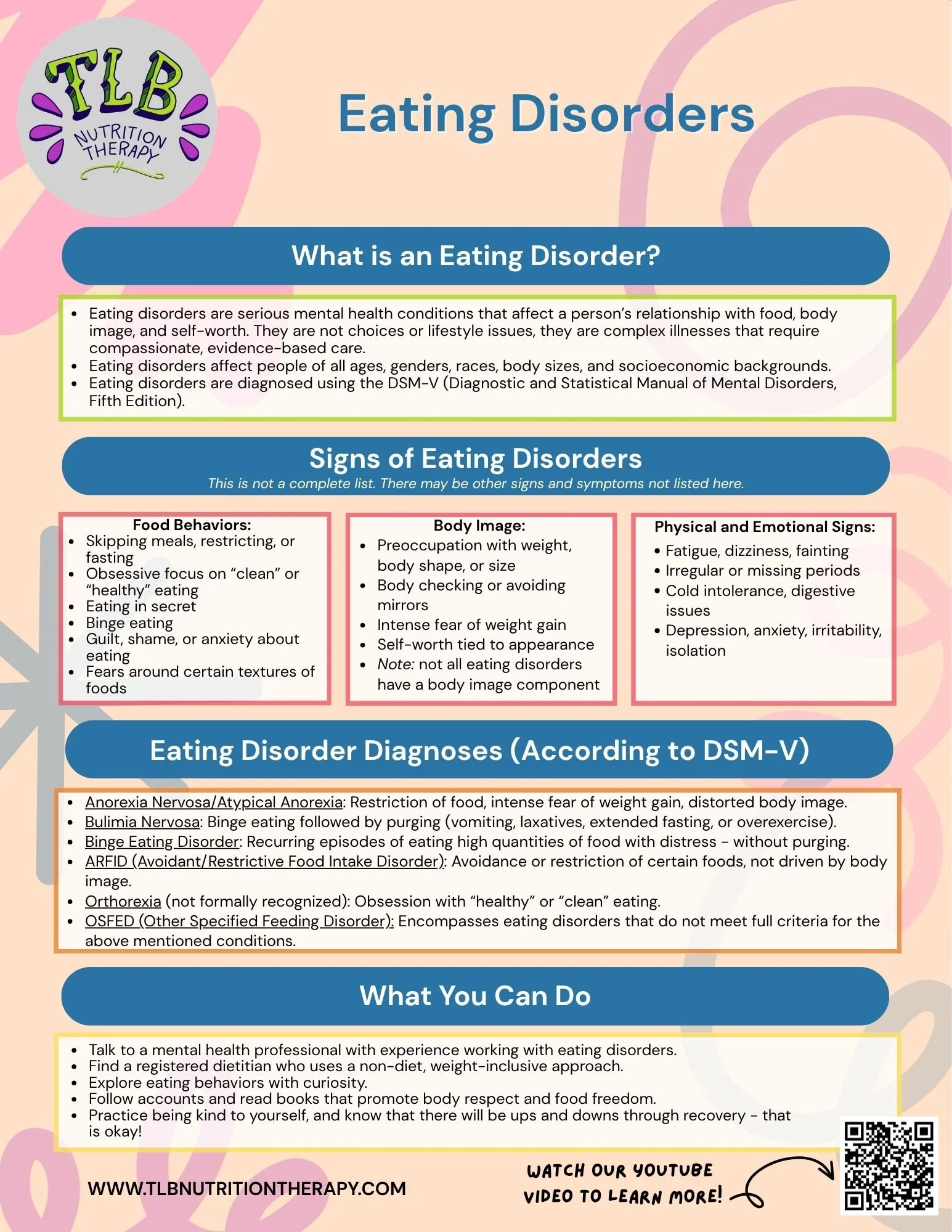
Understanding Eating Disorders Beyond the Diagnosis
Our Eating Disorders handout provides an overview of common eating disorder diagnoses, warning signs, and practical next steps for seeking support. It also highlights an important reminder: you don't have to wait until things get worse to ask for help. Recovery is possible, and compassionate, evidence-based care can make a meaningful difference at any stage of the journey.
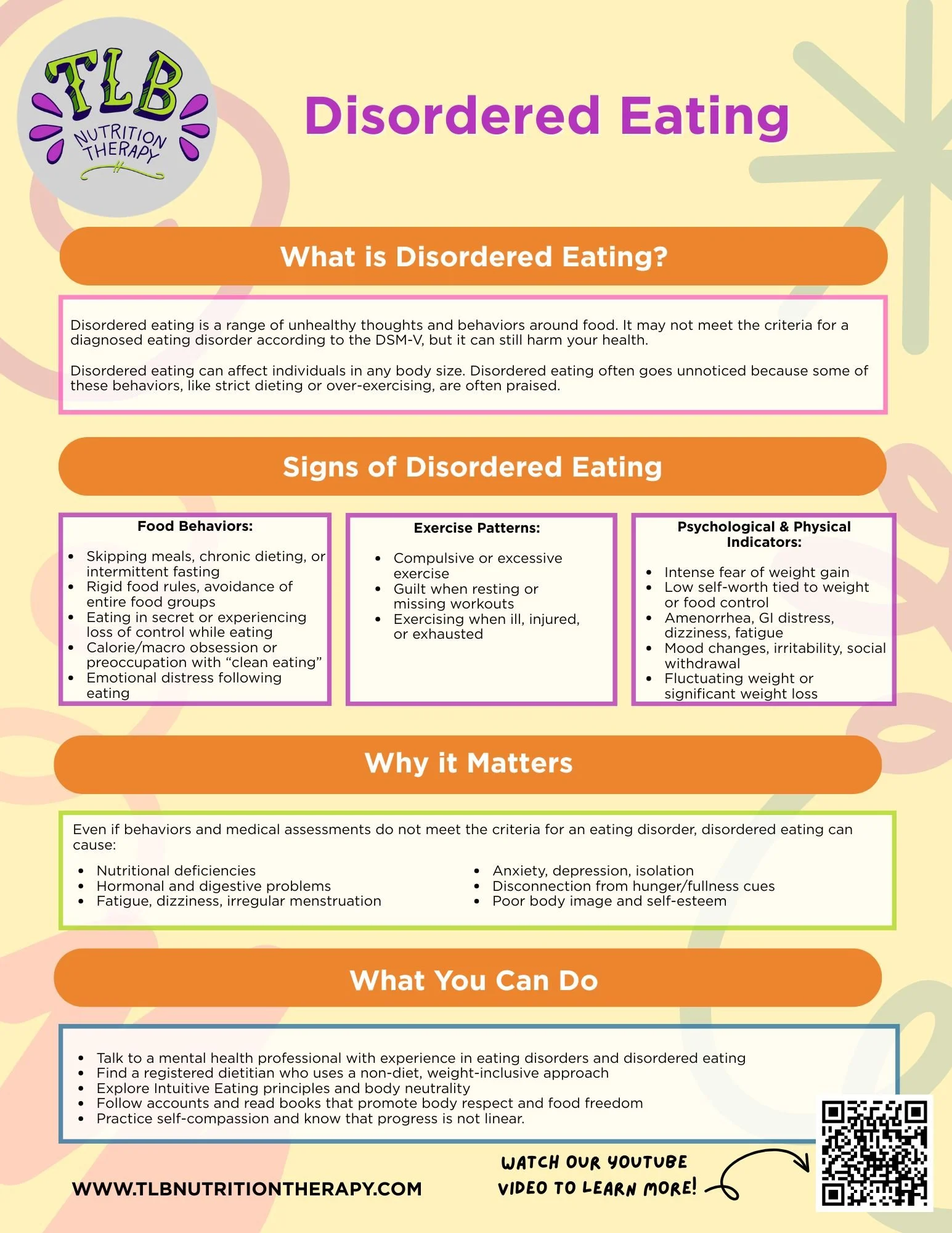
Disordered Eating Deserves Attention, Too
Our Disordered Eating handout outlines common signs, explains why these behaviors matter, and offers practical next steps toward healing. Recovery isn't reserved for those who are "sick enough." If thoughts about food, body image, or exercise are taking up significant mental space or affecting your daily life, you deserve support.
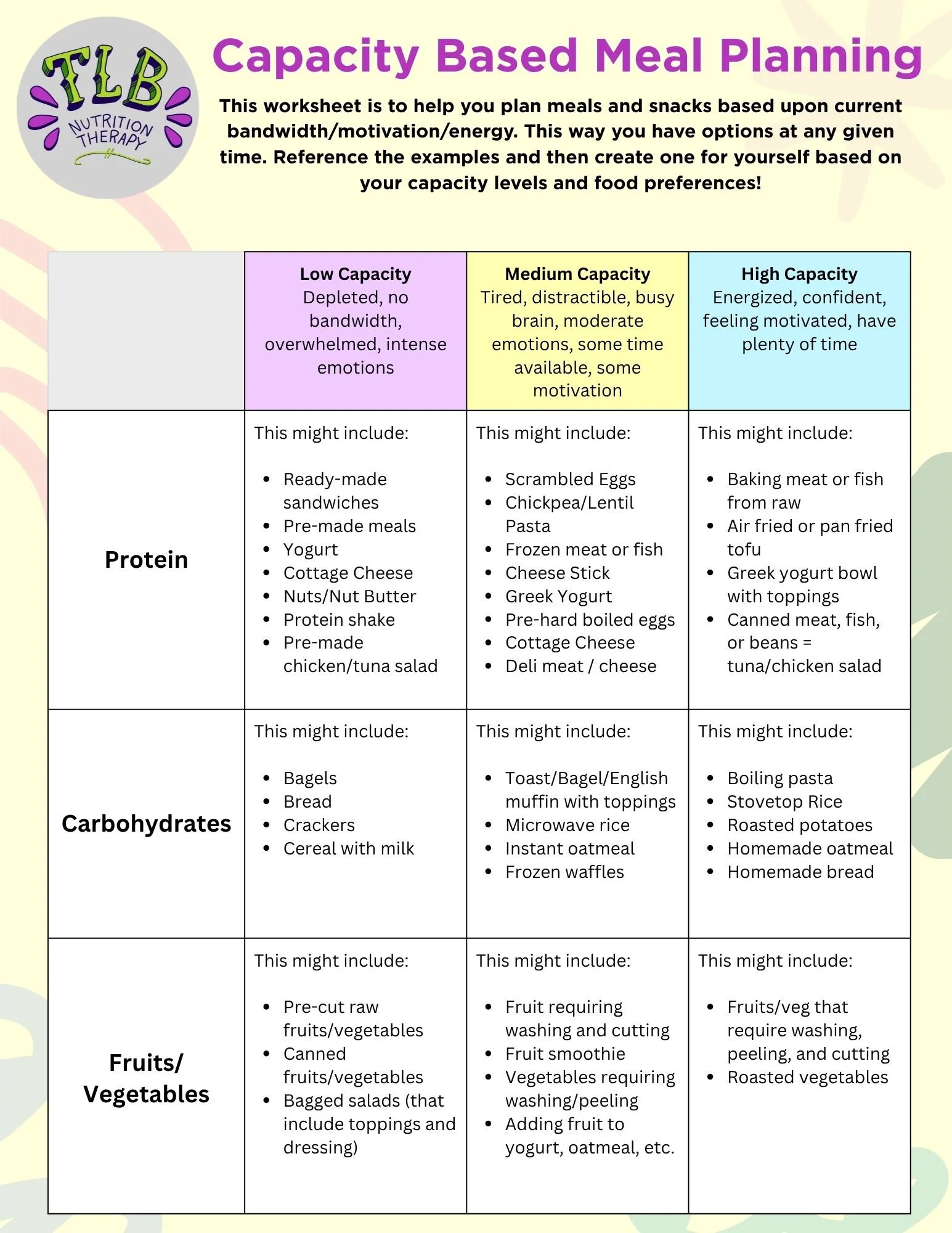
Meet Yourself Where You Are with Capacity-Based Meal Planning
Our Capacity-Based Meal Planning handout walks you through creating meal options for low-, medium-, and high-capacity days. Rather than seeing convenience foods as a failure, this framework encourages having nourishing options available at every level—from ready-made sandwiches and yogurt on low-capacity days to homemade meals when you have more energy. The goal isn't perfection—it's making nourishment more accessible, no matter what your day looks like.

Supporting Clients with Eating Disorders in Medical Settings
The handout emphasizes taking a whole-person approach by looking beyond weight alone. Comprehensive care includes reviewing medical history, assessing the "5 S's" (Sleep, Salt/Nutrition, Sedentary Behavior, Stress, and Substances), evaluating mental health, and completing an appropriate medical assessment with vital signs, laboratory work, and physical examination. It also reminds providers that laboratory values may appear normal even when an eating disorder is medically significant.
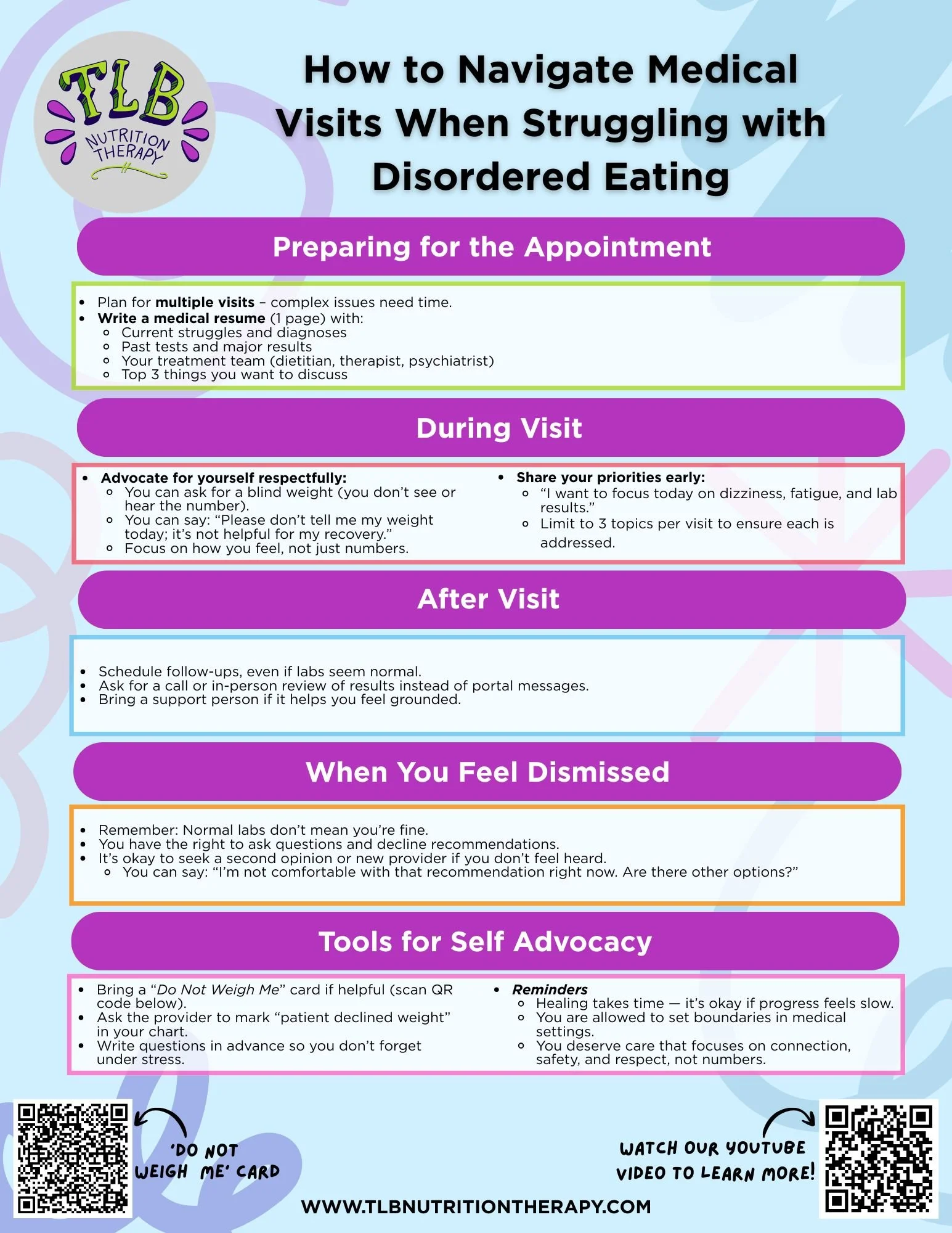
How to Navigate Medical Visits when Struggling with Disordered Eating or an Eating Disorder. For Clients
The handout walks you through practical strategies for every stage of a medical visit. Before your appointment, it encourages preparing a one-page medical summary, identifying your top priorities, and planning for follow-up visits when needed. During the appointment, it offers self-advocacy tools such as requesting a blind weight, asking providers to focus on your symptoms rather than the number on the scale, and limiting the visit to your most important concerns. After your appointment, it emphasizes following up on results, asking questions, and remembering that normal lab work does not always mean everything is okay.
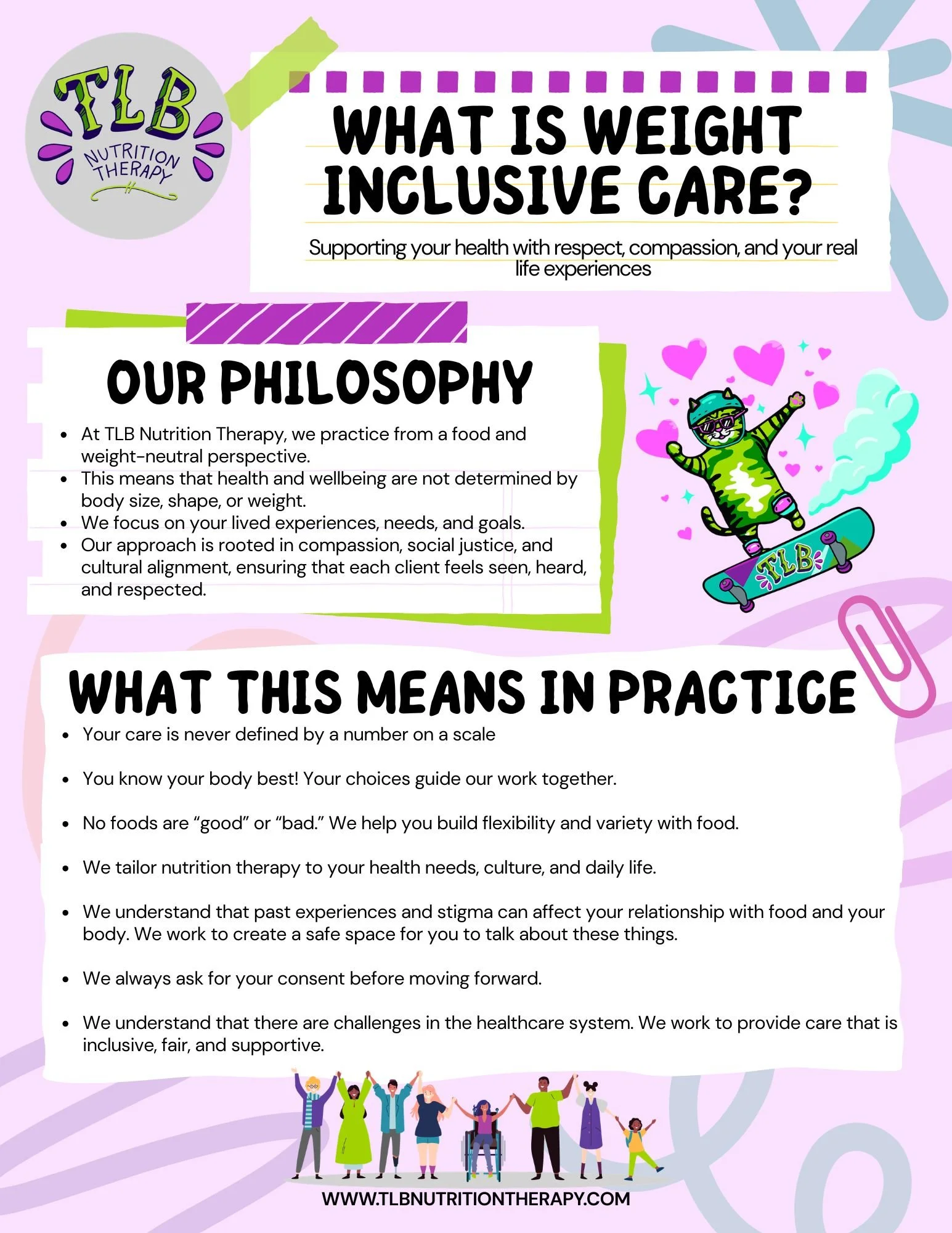
What is Weight Inclusive Care
Weight-inclusive care is a healthcare approach that recognizes that health cannot be determined by a number on the scale alone. Instead of centering weight as the primary measure of wellbeing, weight-inclusive care focuses on the whole person—their lived experiences, medical history, goals, culture, and daily life.