Meet Yourself Where You Are with Capacity-Based Meal Planning
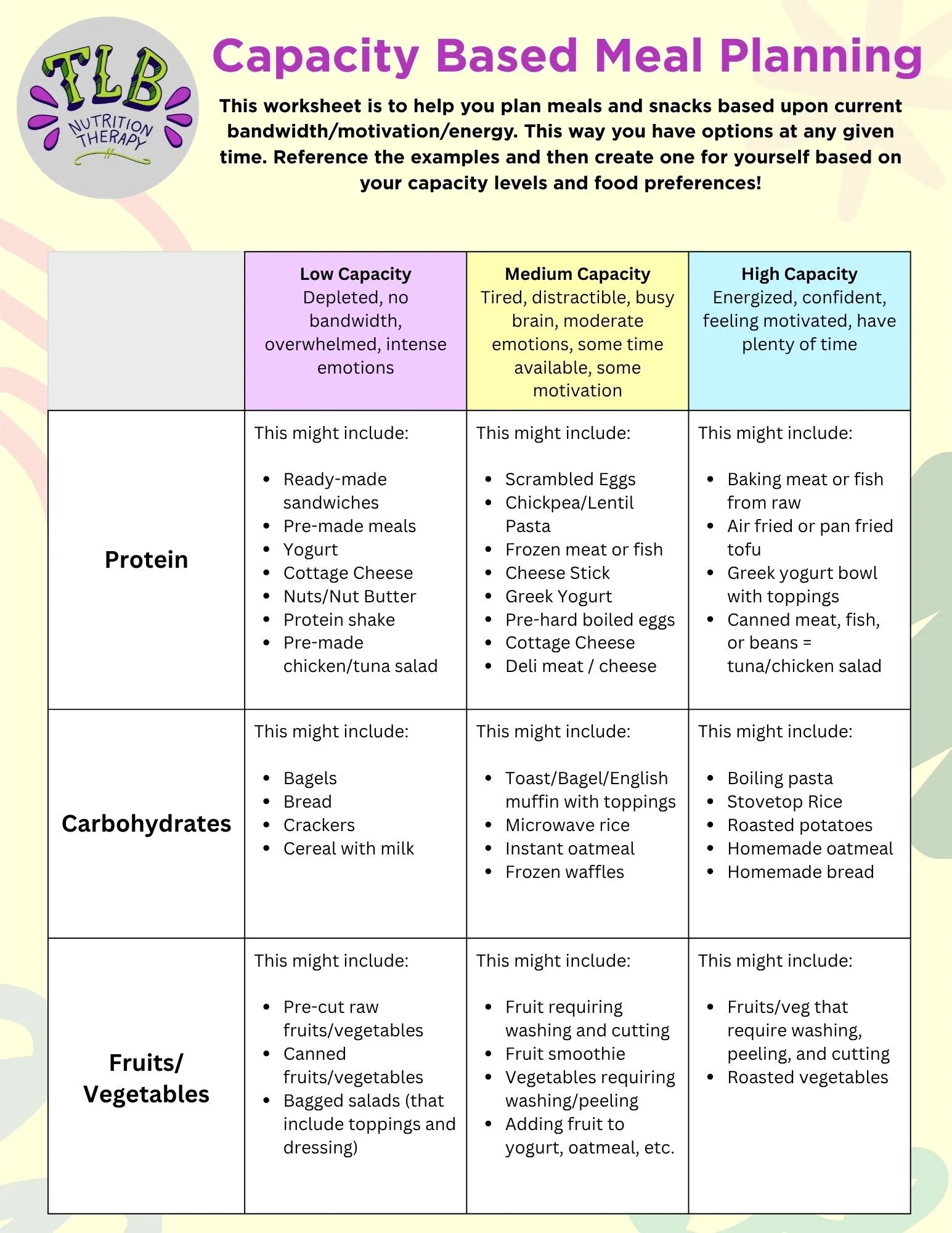
Click the image above for the PDF to download
Some days you have the time and energy to cook a meal from scratch. Other days, making toast feels like an accomplishment. Both are okay.
At TLB Nutrition Therapy, we use Capacity-Based Meal Planning to help clients match their meals to their current physical, emotional, and mental capacity. Instead of expecting yourself to prepare the same type of meal every day, this approach recognizes that your energy, motivation, stress levels, and bandwidth naturally fluctuate.
Our Capacity-Based Meal Planning handout walks you through creating meal options for low-, medium-, and high-capacity days. Rather than seeing convenience foods as a failure, this framework encourages having nourishing options available at every level—from ready-made sandwiches and yogurt on low-capacity days to homemade meals when you have more energy. The goal isn't perfection—it's making nourishment more accessible, no matter what your day looks like.
By planning ahead for different levels of capacity, you can reduce decision fatigue, decrease all-or-nothing thinking, and build a more compassionate, sustainable relationship with food. Honoring your capacity isn't lowering the bar—it's giving yourself the support you need to stay nourished through every season of life.
Capacity-Based Meal Planning
Some days cooking feels easy. Other days, even deciding what to eat can feel overwhelming. In this episode of Snack Chats, Curissa and Stefanie introduce the concept of capacity-based meal planning—a flexible approach that helps you match your meals to your current physical, emotional, and mental capacity.
Whether you're navigating recovery, chronic illness, neurodivergence, burnout, or simply a busy week, this framework can help reduce stress around food while supporting consistent nourishment.
In this episode, you'll learn:
What "capacity" means and how it changes from day to day
The difference between low-, medium-, and high-capacity days
How to build a personalized capacity-based meal plan
Why convenience foods are valuable nutrition tools
How to reduce decision fatigue around meals
Strategies for preventing all-or-nothing thinking
Why low-capacity meals are still nourishing meals
How to plan ahead for busy or overwhelming days
What to do when you feel like you have no capacity at all
How to individualize meal planning with your dietitian
Curissa and Stefanie emphasize that capacity-based meal planning isn't about lowering your expectations—it's about meeting yourself where you are. By creating realistic options for every level of energy and motivation, you can make eating feel more manageable while building a more compassionate relationship with food.
Download our free handout: Capacity-Based Meal Planning. This interactive worksheet helps you create personalized meal ideas for low-, medium-, and high-capacity days using realistic options for proteins, carbohydrates, and fruits and vegetables based on your current bandwidth, motivation, and energy.
Disclaimer:
The information shared in this episode is intended for educational purposes only and is not a substitute for individualized nutrition counseling, medical advice, or mental health treatment. If you're struggling to meet your nutrition needs, we encourage you to work with a registered dietitian or healthcare provider for personalized support.