Disordered Eating Deserves Attention, Too
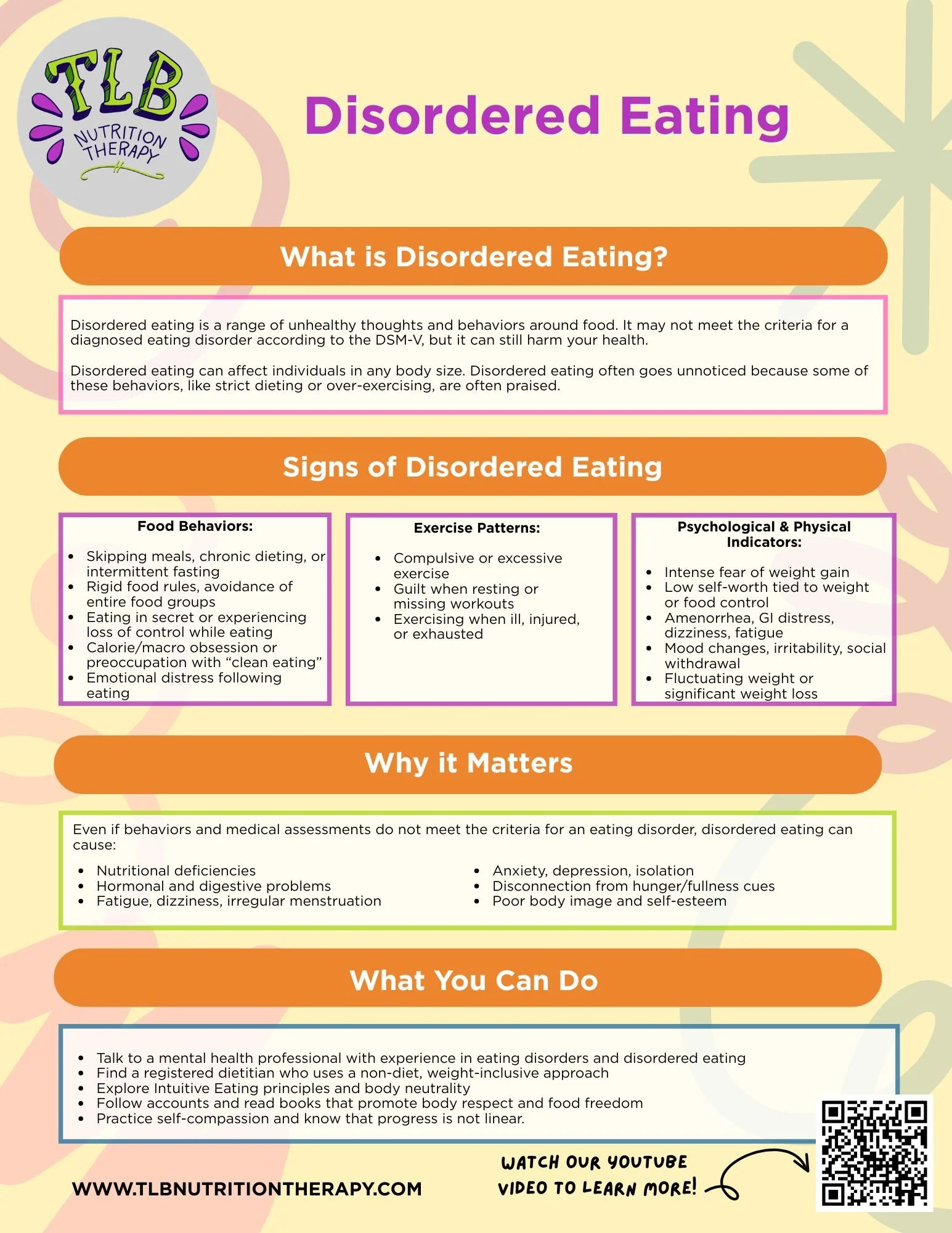
Click the image above for the PDF to download
Many people believe they have to meet the criteria for an eating disorder before they deserve help. The truth is that disordered eating exists on a spectrum, and even without a formal diagnosis, these thoughts and behaviors can have a significant impact on physical health, mental wellbeing, and quality of life.
At TLB Nutrition Therapy, we work with individuals experiencing everything from diagnosed eating disorders to more subtle patterns of food and body distress. Disordered eating may include chronic dieting, rigid food rules, skipping meals, compulsive exercise, calorie counting, body checking, or feeling anxious around food. While these behaviors may be normalized by diet culture, they can still interfere with your relationship with food, movement, and yourself.
Our Disordered Eating handout outlines common signs, explains why these behaviors matter, and offers practical next steps toward healing. Recovery isn't reserved for those who are "sick enough." If thoughts about food, body image, or exercise are taking up significant mental space or affecting your daily life, you deserve support.
Healing is about more than changing behaviors—it's about building trust with your body, letting go of rigid food rules, and creating a relationship with food that supports your physical, emotional, and social wellbeing.
Understanding Disordered Eating
Disordered eating is more common than many people realize, yet it often goes unrecognized because many of these behaviors are normalized by diet culture. In this episode of Snack Chats, Sarah and Marcie discuss what disordered eating is, how it differs from a diagnosed eating disorder, and why you don't need a diagnosis to deserve support.
Whether you're struggling yourself, supporting a loved one, or simply wanting to learn more, this conversation offers compassionate, evidence-based guidance for building a healthier relationship with food, body, and movement.
In this episode, you'll learn:
What disordered eating is and how it differs from an eating disorder
Common signs of disordered eating
How diet culture and social media can normalize unhealthy behaviors
Why quality of life matters more than a diagnosis
How food, body, and exercise thoughts can begin to take over your mental space
The difference between supportive movement and compulsive exercise
Why you don't have to be "sick enough" to seek help
How working with a dietitian can support healing and food freedom
Sarah and Marcie emphasize that healing isn't determined by a diagnosis—it's determined by your experiences. If food, body image, or movement are causing distress or impacting your daily life, you deserve compassionate, individualized support.
Download our free handout: Disordered Eating. This resource explains what disordered eating is, common food and exercise behaviors, psychological and physical warning signs, why these behaviors matter, and practical steps you can take toward building a healthier relationship with food and your body.
To learn more, head over to our website.
To get more information about this handout, head over to our website.
Disclaimer:
The information shared in this episode is intended for educational purposes only and is not a substitute for individualized nutrition counseling, medical advice, or mental health treatment. If you're struggling with disordered eating or an eating disorder, we encourage you to seek support from a qualified healthcare professional or multidisciplinary treatment team.