Halloween Candy: Building Trust, Not Fear
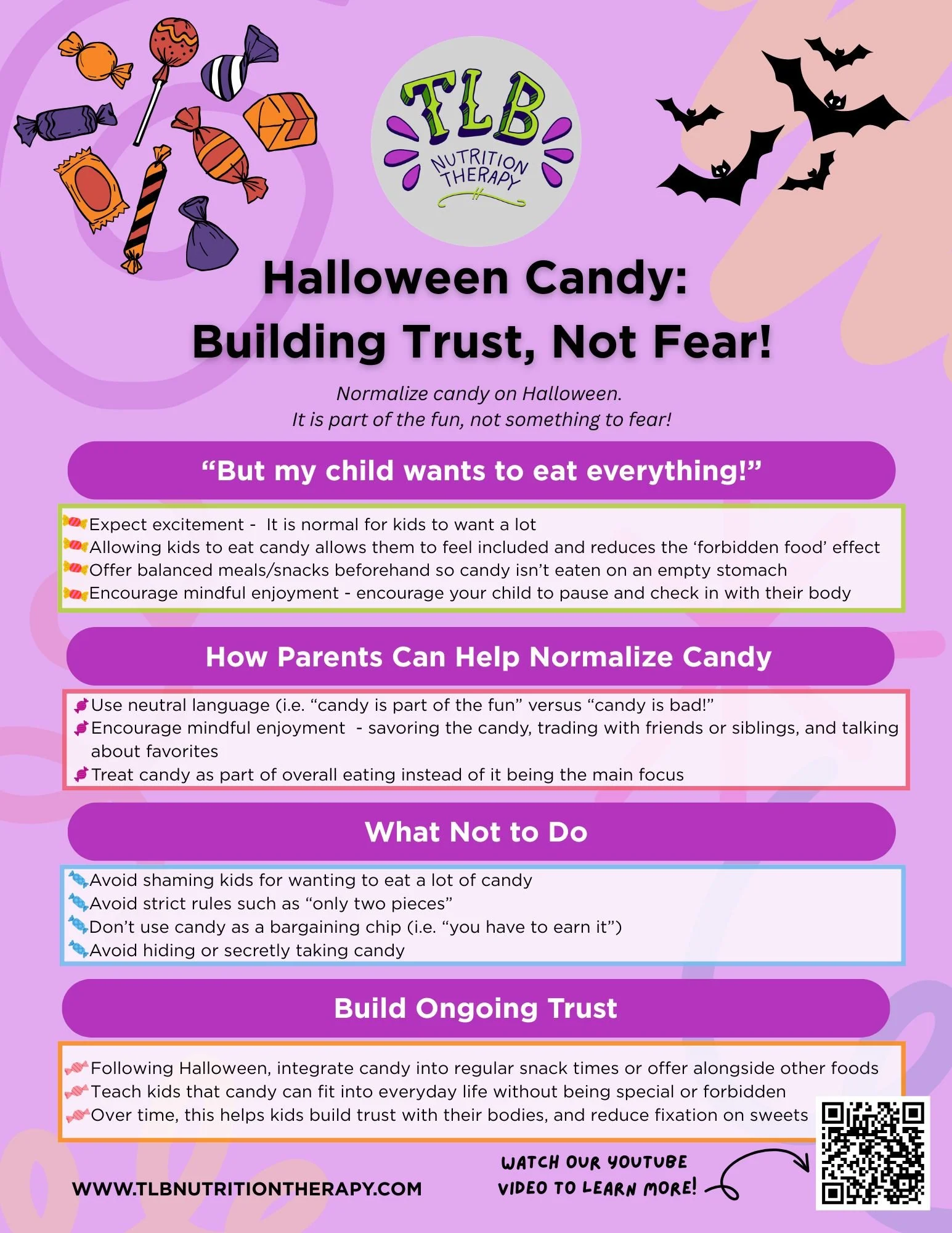
Click the image above for the PDF to download
Halloween can bring excitement, fun, and...a lot of questions about candy. Many parents worry about how much candy their child will eat, but creating strict rules or labeling candy as "bad" often has the opposite effect. Restriction can increase a child's focus on candy and make it feel even more exciting or forbidden.
At TLB Nutrition Therapy, we encourage families to approach Halloween with curiosity, flexibility, and trust. Candy is simply one type of food—it doesn't need to be earned, feared, or placed on a pedestal. Offering balanced meals before trick-or-treating, using neutral language about candy, and allowing children to listen to their own hunger and fullness cues can help support a healthier relationship with food.
Our Halloween Candy: Building Trust, Not Fear handout shares practical strategies for navigating the holiday without shame or power struggles. It includes tips for talking about candy, helping children enjoy treats mindfully, avoiding common mistakes like bargaining or hiding candy, and building trust by incorporating leftover candy into regular snack times after Halloween.
Remember, Halloween happens once a year, but your child's relationship with food lasts a lifetime. By focusing on connection instead of control, you can help build confidence, body trust, and positive memories around food.
Halloween Candy—Building Trust, Not Fear
Halloween is meant to be fun—but for many parents, it can also bring questions and worries about candy. In this episode of Snack Chats, Tina and Marcie discuss how to navigate Halloween from a food- and weight-neutral perspective that supports body trust, flexibility, and a healthy relationship with food.
Whether you're a parent, caregiver, or provider, this conversation offers practical strategies for helping kids enjoy Halloween without creating fear, guilt, or shame around candy.
In this episode, you'll learn:
Why normalizing candy helps reduce obsession and secrecy
How to talk about Halloween candy without labeling foods as "good" or "bad"
Why balanced meals before trick-or-treating support self-regulation
How to avoid common food rules that can backfire
Why candy shouldn't be earned through behavior or eating certain foods
Practical ways to encourage mindful enjoyment
How to support neurodivergent children with flexibility and structure
Why it's never too late to repair past food messages with your child
Creative ways to incorporate leftover candy into everyday life
Tina and Marcie emphasize that Halloween isn't about perfect eating—it's about helping children build trust with their bodies while enjoying a fun holiday. By reducing pressure and creating a shame-free environment, families can support a lifelong positive relationship with food.
Download our free handout: Halloween Candy: Building Trust, Not Fear. This resource shares practical strategies for normalizing candy, using neutral food language, avoiding common pitfalls around Halloween treats, and helping children build trust with food long after Halloween is over.
Disclaimer: The information shared in this episode is intended for educational purposes only and is not a substitute for individualized nutrition counseling, medical advice, or mental health treatment. Every child and family is unique, and we encourage you to work with a qualified healthcare professional if additional feeding or nutrition support is needed.