
Supporting Kids in Building a Healthy Relationship with Food
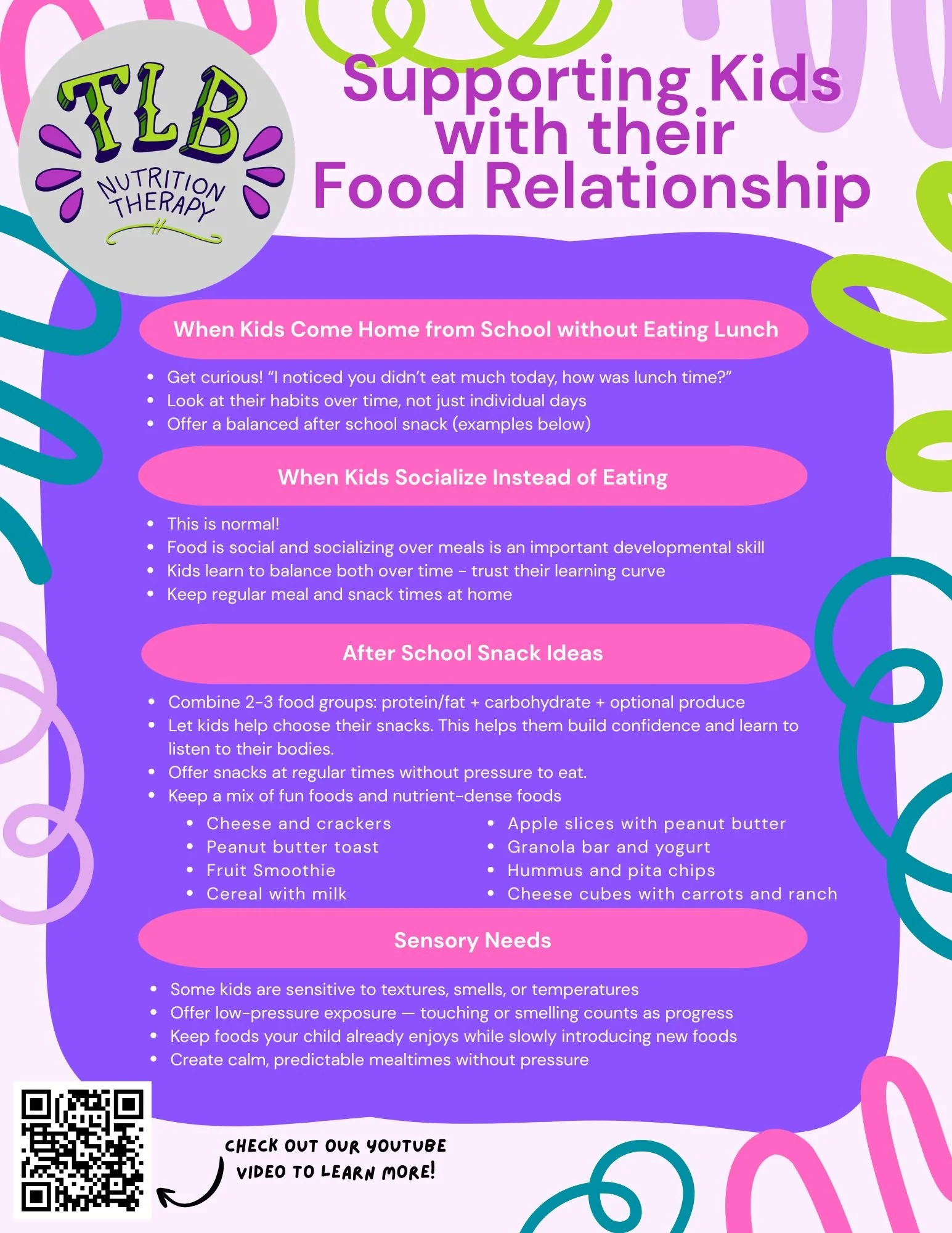
Click the image above for the PDF to download
Many parents worry when their child comes home from school with a full lunchbox. It's easy to assume they're being picky or refusing to eat—but often, there's much more going on.
At TLB Nutrition Therapy, we encourage parents to approach these situations with curiosity instead of judgment. School cafeterias can be overwhelming. Busy schedules, sensory sensitivities, short lunch periods, excitement about friends, anxiety, and transitions can all make it difficult for kids to recognize or respond to hunger cues.
Rather than focusing on what wasn't eaten, try reconnecting with your child after school. Offering a balanced snack, asking open-ended questions about their day, and creating a calm, pressure-free environment can help meet both emotional and physical needs. We also encourage parents to involve children in choosing snacks, maintain predictable meal routines, and support sensory needs by honoring safe foods while gently introducing new experiences over time.
Building a healthy relationship with food isn't about raising perfect eaters. It's about creating an environment where children feel safe, trusted, and supported as they learn to listen to their own bodies. Small moments of connection today can help build lifelong confidence around food tomorrow.
Supporting Kids with Their Food Relationship
School lunches can be challenging for many children—and it doesn't always mean they're being picky or refusing to eat. In this episode of Snack Chats, Tina and Curissa share practical, compassionate strategies for supporting kids who struggle with eating at school while building a food- and weight-neutral home environment.
Whether your child is overwhelmed by the cafeteria, prefers socializing over eating, has sensory sensitivities, or simply comes home hungry every day, this conversation offers realistic tools that parents can start using right away.
In this episode, you'll learn:
Why some kids don't eat during the school day
How sensory needs, anxiety, transitions, and social dynamics affect eating
Why curiosity works better than pressure or punishment
How to use reconnection snacks after school to support nourishment
Practical lunch packing and after-school snack ideas
Ways to support children with sensory differences around food
How to help kids balance eating and socializing during lunch
Why creating a shame-free home environment supports lifelong confidence with food
When additional support from a dietitian, occupational therapist, or feeding specialist may be helpful
Tina and Curissa emphasize that children thrive when adults focus on connection instead of control. By creating predictable routines, offering balanced food choices, and honoring each child's unique experiences, parents can help foster trust, confidence, and a positive relationship with food.
Download our free handout: Supporting Kids with Their Food Relationship. This resource includes conversation starters for kids who come home without eating lunch, after-school snack ideas, strategies for navigating social lunches, and practical tips for supporting sensory needs around food.
Disclaimer: The information shared in this episode is intended for educational purposes only and is not a substitute for individualized nutrition counseling, medical advice, occupational therapy, feeding therapy, or mental health treatment. Every child develops differently, and we encourage families to work with qualified professionals when additional support is needed.