
How to Navigate Medical Visits when Struggling with Disordered Eating or an Eating Disorder. For Clients
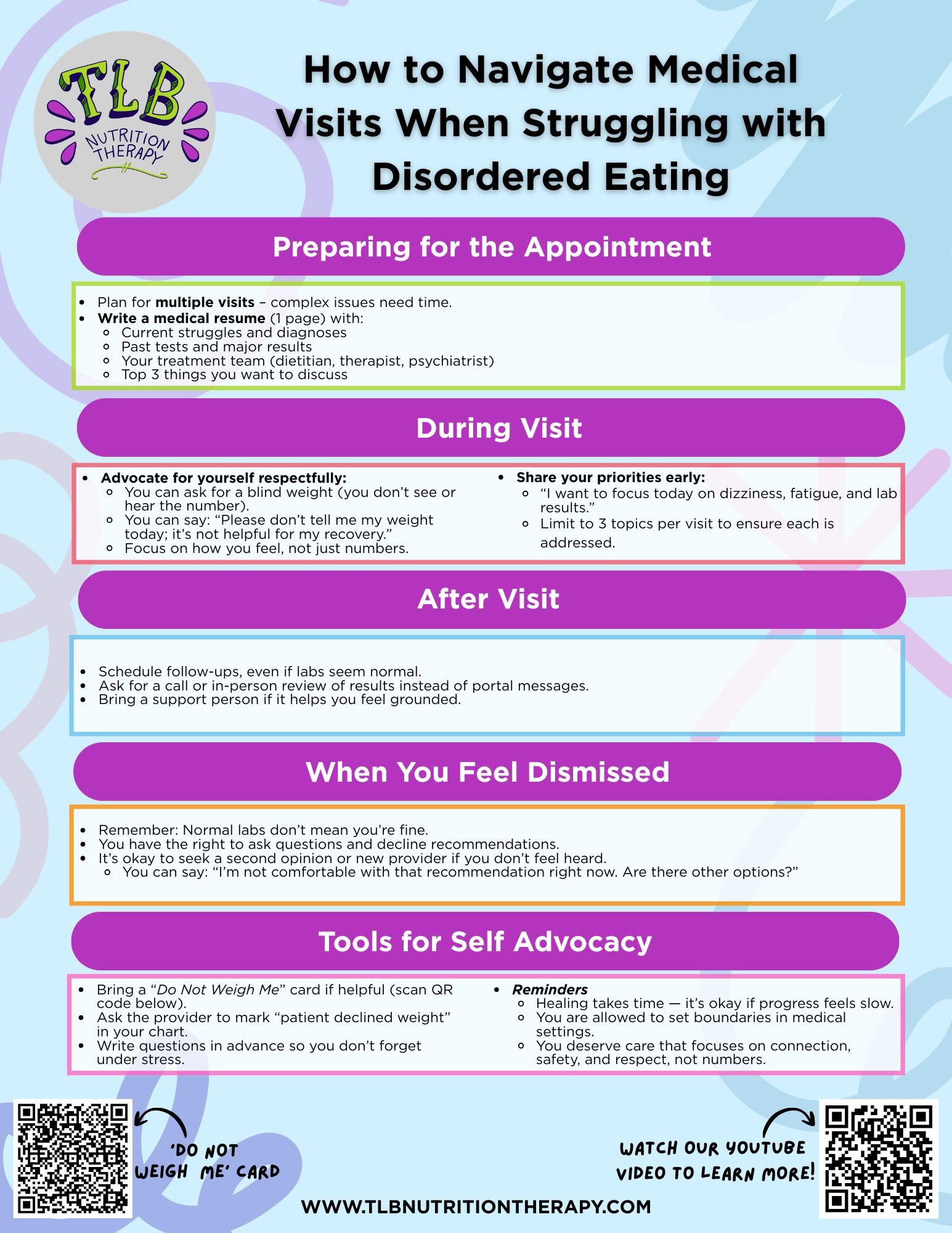
Click the image for a PDF to download
For many people in eating disorder recovery, visiting a medical provider can feel overwhelming. Short appointments, discussions about weight, confusing lab results, and feeling dismissed can make it difficult to get the care you deserve.
That's why we created our How to Navigate Medical Visits When Struggling with Disordered Eating handout—to help you feel more prepared, confident, and empowered during medical appointments.
The handout walks you through practical strategies for every stage of a medical visit. Before your appointment, it encourages preparing a one-page medical summary, identifying your top priorities, and planning for follow-up visits when needed. During the appointment, it offers self-advocacy tools such as requesting a blind weight, asking providers to focus on your symptoms rather than the number on the scale, and limiting the visit to your most important concerns. After your appointment, it emphasizes following up on results, asking questions, and remembering that normal lab work does not always mean everything is okay.
Perhaps most importantly, the handout reminds you that you deserve respectful, compassionate healthcare. You have the right to ask questions, set boundaries, seek a second opinion, and advocate for the care that best supports your recovery. Healing is about much more than numbers—it's about feeling heard, safe, and supported.
Whether you're preparing for your first appointment or have been navigating the healthcare system for years, we hope this resource helps you feel more confident advocating for yourself and your recovery.
Navigating Medical Visits During Eating Disorder Recovery
Medical appointments can feel intimidating when you're living with an eating disorder or disordered eating. In this episode of Snack Chats, Tina sits down with Dr. Rebecca Berens, family physician and founder of Vida Family Medicine, to discuss how patients, dietitians, therapists, and physicians can work together to create more compassionate, weight-inclusive healthcare experiences.
Together, they explore the realities of today's healthcare system, why medical visits often feel rushed, and practical ways clients can advocate for themselves while receiving the care they deserve.
In this episode, you'll learn:
What healthcare providers should assess when disordered eating is suspected
Dr. Berens' Five S's of lifestyle assessment: Sleep, Salt (Nutrition), Sedentary Behavior, Stress, and Substances
How labs, vital signs, and medical monitoring fit into eating disorder recovery
Why automated patient portal messages can sometimes cause harm
Practical strategies for making the most of short primary care appointments
How dietitians, therapists, physicians, and clients can collaborate as a treatment team
The impact of insurance and healthcare systems on patient care
Why weight-inclusive, trauma-informed medicine matters
Whether you're a client, caregiver, dietitian, therapist, or physician, this conversation offers practical insights into navigating medical care with greater confidence, compassion, and collaboration.
Download our free handout: How to Navigate Medical Visits When Struggling with Disordered Eating. This resource includes practical tips for preparing for appointments, advocating for yourself during visits, understanding follow-up care, and using tools like blind weights and "Do Not Weigh Me" cards to support your recovery.
You can also download our Do Not Weigh Me cards to help communicate your preferences during medical appointments.
Featured Guest
Dr. Rebecca Berens, MD
Family Physician | Weight-Inclusive Primary Care
Disclaimer:
The information shared in this episode is intended for educational purposes only and is not a substitute for individualized medical advice, nutrition counseling, or mental health treatment. If you are struggling with an eating disorder or disordered eating, we encourage you to seek care from a qualified healthcare professional or multidisciplinary treatment team.