
Polyendocrine Metabolic Ovarian Syndrome (PMOS)
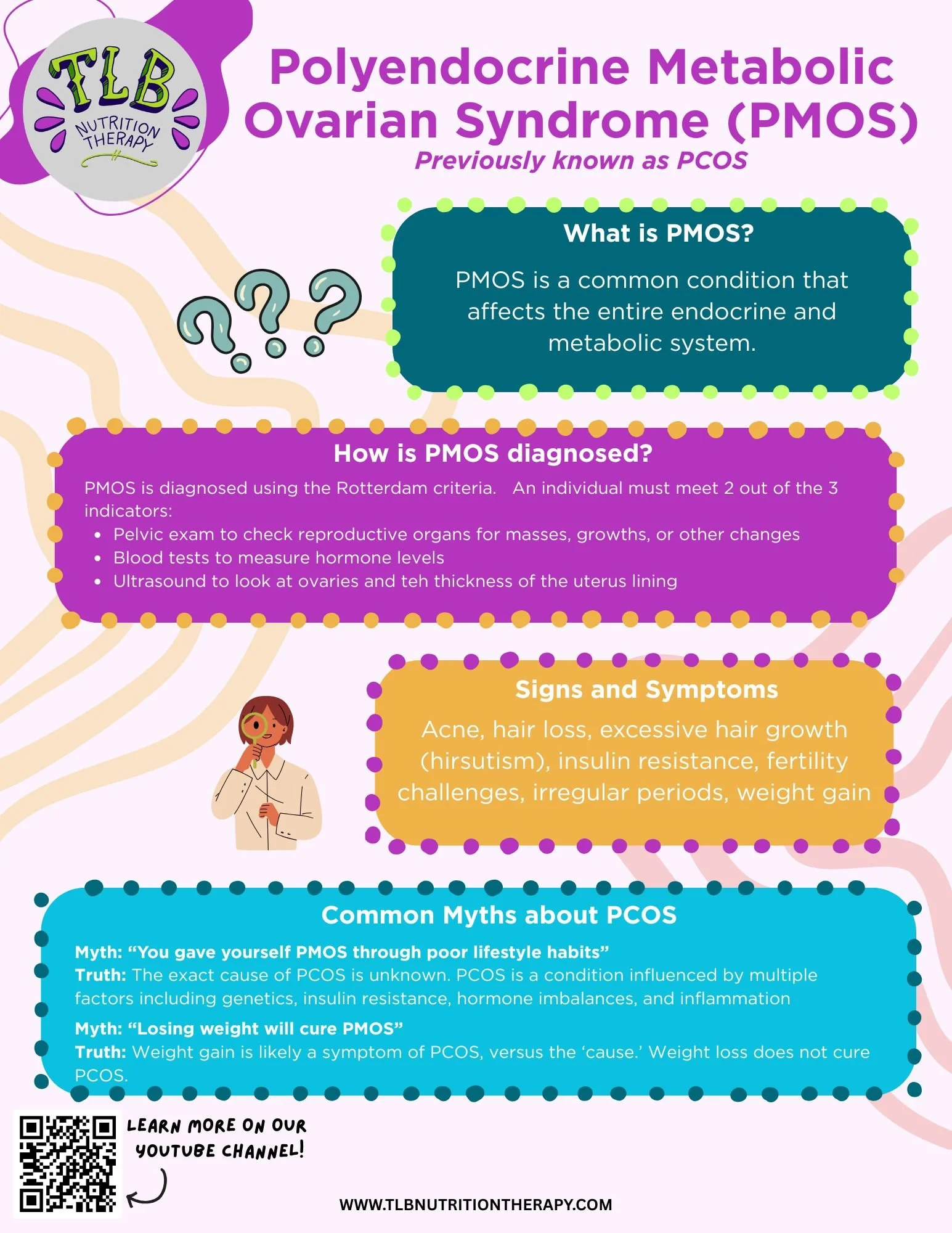
Click the image above for the PDF to download
Polycystic Ovary Syndrome (PCOS)—now more accurately referred to as Polyendocrine Metabolic Ovarian Syndrome (PMOS)—is one of the most common endocrine conditions, affecting approximately 1 in 10 individuals. Yet despite how common it is, many people receive confusing, incomplete, or weight-focused advice after diagnosis.
At TLB Nutrition Therapy, we believe managing PMOS is about much more than weight. PMOS affects the endocrine, metabolic, and reproductive systems, which means symptoms can vary significantly from person to person. Common symptoms may include irregular periods, acne, excess hair growth, insulin resistance, fertility challenges, and changes in energy levels.
Instead of focusing on restrictive diets, we encourage sustainable habits that support long-term health. Regular meals, balanced nutrition, joyful movement, adequate sleep, stress management, and individualized supplementation can all play an important role in managing symptoms. Most importantly, every treatment plan should be personalized to your unique body and experiences.
If you've been told that weight loss is the only answer for PMOS, know that there are other evidence-based, compassionate approaches available. Weight-inclusive care focuses on improving health behaviors, reducing stigma, and helping you build a sustainable relationship with food, movement, and your body.
Understanding PMOS Beyond the Myths
PCOS - now known as PMOS is often talked about as a reproductive condition—but it's so much more than that. In this episode of Snack Chats, Anamarie and Dani discuss what PMOS really is, common misconceptions, and how a weight-neutral approach can support long-term health and symptom management.
Whether you've recently been diagnosed, have been living with PMOS for years, or support someone who has it, this episode provides practical, evidence-based information without relying on restrictive diet advice.
In this episode, you'll learn:
What PMOS is and how it is diagnosed
Why PMOS is both a metabolic and reproductive condition
Common myths and misconceptions about PMOS
How nutrition supports hormone health and blood sugar regulation
Why carbohydrates are an important part of managing PMOS
The role of joyful movement, sleep, and stress management
Research-supported supplements for PMOS and when they may be helpful
Why weight-neutral care is essential for compassionate, individualized treatment
How dietitians can help you advocate for yourself during medical visits
Anamarie and Dani emphasize that there is no one-size-fits-all approach to PMOS. Sustainable nourishment, flexible movement, quality sleep, stress management, and individualized care can all play important roles in supporting your health and wellbeing.
Download our free handout: Intro to PMOS. This resource reviews what PMOS is, common symptoms, how it is diagnosed, myths about the condition, and weight-neutral strategies for nutrition, movement, and supplementation.
Disclaimer:
The information shared in this episode is intended for educational purposes only and is not a substitute for individualized medical advice, nutrition counseling, or mental health treatment. If you have PMOS or think you may have PMOS, please consult with your physician and healthcare team for personalized recommendations.
Hashtags
#SnackChats #TLBNutritionTherapy #PCOS #PMOS #PCOSAwareness #HormoneHealth #Women'sHealth #WeightNeutralCare #InsulinResistance #NutritionCounseling #PCOSNutrition #GentleNutrition #FoodAndBodyRelationship #HealthAtEverySize #HormoneBalance #ChronicConditionSupport #DietitianSupport #NutritionEducation #BodyRespect #PCOSSupport