
Sports Nutrition Starts Before Your Workout
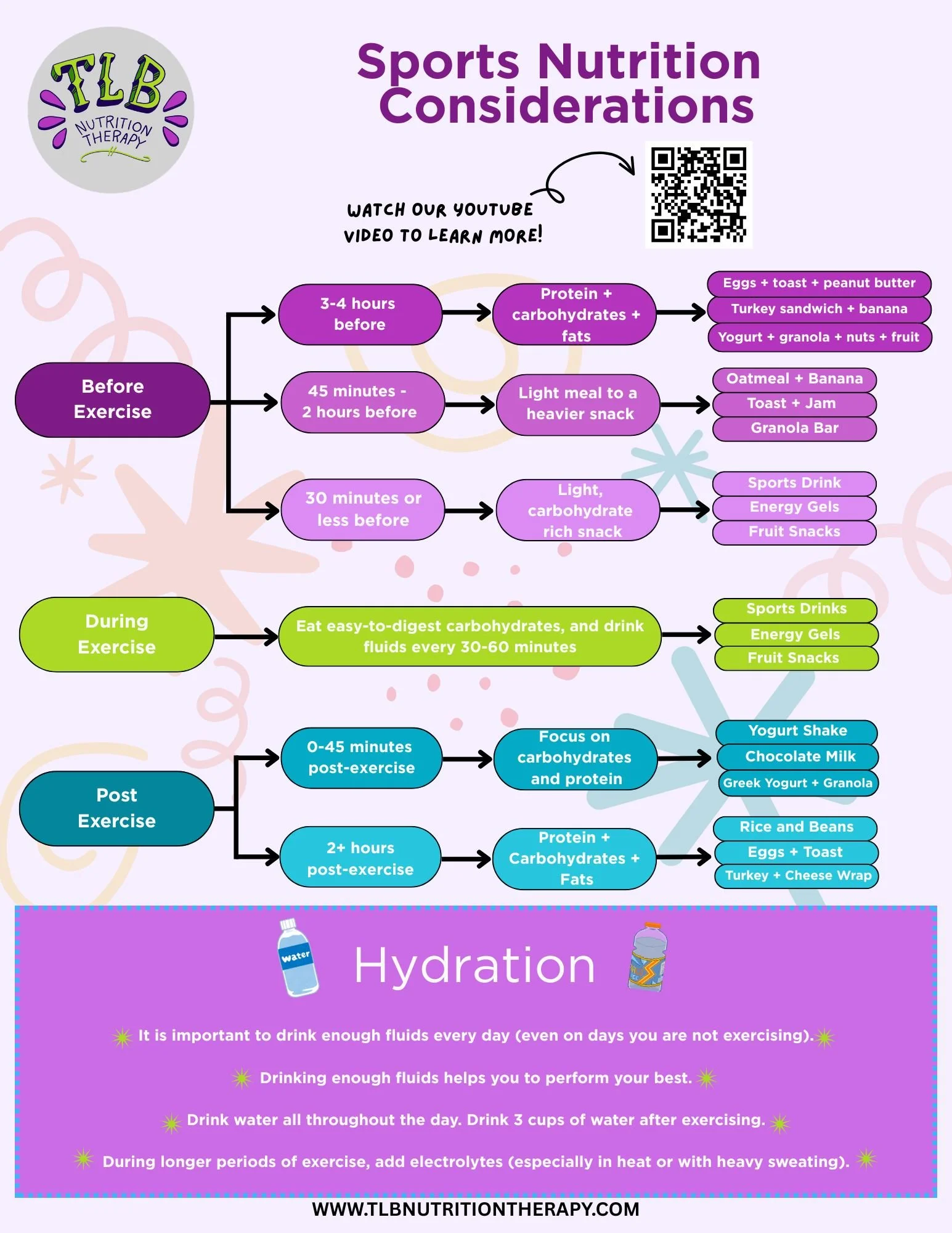
Click the image above for the PDF to download
When people think about sports nutrition, they often focus on what to eat immediately before or after exercise. While those moments are important, performance nutrition actually begins long before your workout.
At TLB Nutrition Therapy, we encourage athletes to think about fueling as an ongoing process rather than a single meal or snack. Consistently nourishing your body throughout the day helps support energy levels, recovery, muscle repair, bone health, and overall performance.
A balanced approach to sports nutrition includes carbohydrates for energy, protein for muscle repair, healthy fats, colorful fruits and vegetables, and adequate hydration. Timing also matters. Eating before exercise, fueling during longer workouts, and prioritizing recovery nutrition afterward all help your body perform and recover more effectively.
Perhaps most importantly, sports nutrition doesn't have to be rigid. Flexibility, variety, and enjoyment are just as important as structure. Sustainable fueling habits support both performance and your relationship with food, helping you train with confidence while avoiding unnecessary restriction.
Sports Nutrition Basics
Whether you're a competitive athlete, weekend warrior, or simply enjoy moving your body, proper nutrition plays an important role in performance, recovery, and overall health. In this episode of Snack Chats, Dani and Lauren break down the fundamentals of sports nutrition using a flexible, weight-inclusive approach.
From everyday fueling habits to pre- and post-workout nutrition, they share practical strategies that can help you feel energized, recover well, and build sustainable habits without becoming overly rigid around food.
In this episode, you'll learn:
Why performance nutrition starts before your workout
How consistent nourishment supports energy, recovery, and injury prevention
What to eat before, during, and after exercise
Simple meal and snack timing strategies
Budget-friendly fueling ideas
Hydration recommendations and when electrolytes may be helpful
How to build a balanced performance plate
Why carbohydrates are essential for athletic performance
The importance of nutrition flexibility and avoiding restrictive food rules
How sports nutrition can support both performance and a healthy relationship with food
Whether you're training for competition, exercising recreationally, or returning to movement after recovery, this episode offers practical tools to help you fuel your body with confidence.
Download our free handout: Sports Nutrition Considerations. This resource includes pre-, during-, and post-workout fueling ideas, hydration recommendations, a balanced performance plate, and tips for building flexibility into your nutrition routine.
Disclaimer: The information shared in this episode is intended for educational purposes only and is not a substitute for individualized nutrition counseling, medical advice, or sports medicine recommendations. Every athlete has unique nutrition needs, and we encourage you to work with a registered dietitian or healthcare provider for personalized guidance.