
What is Weight Inclusive Care
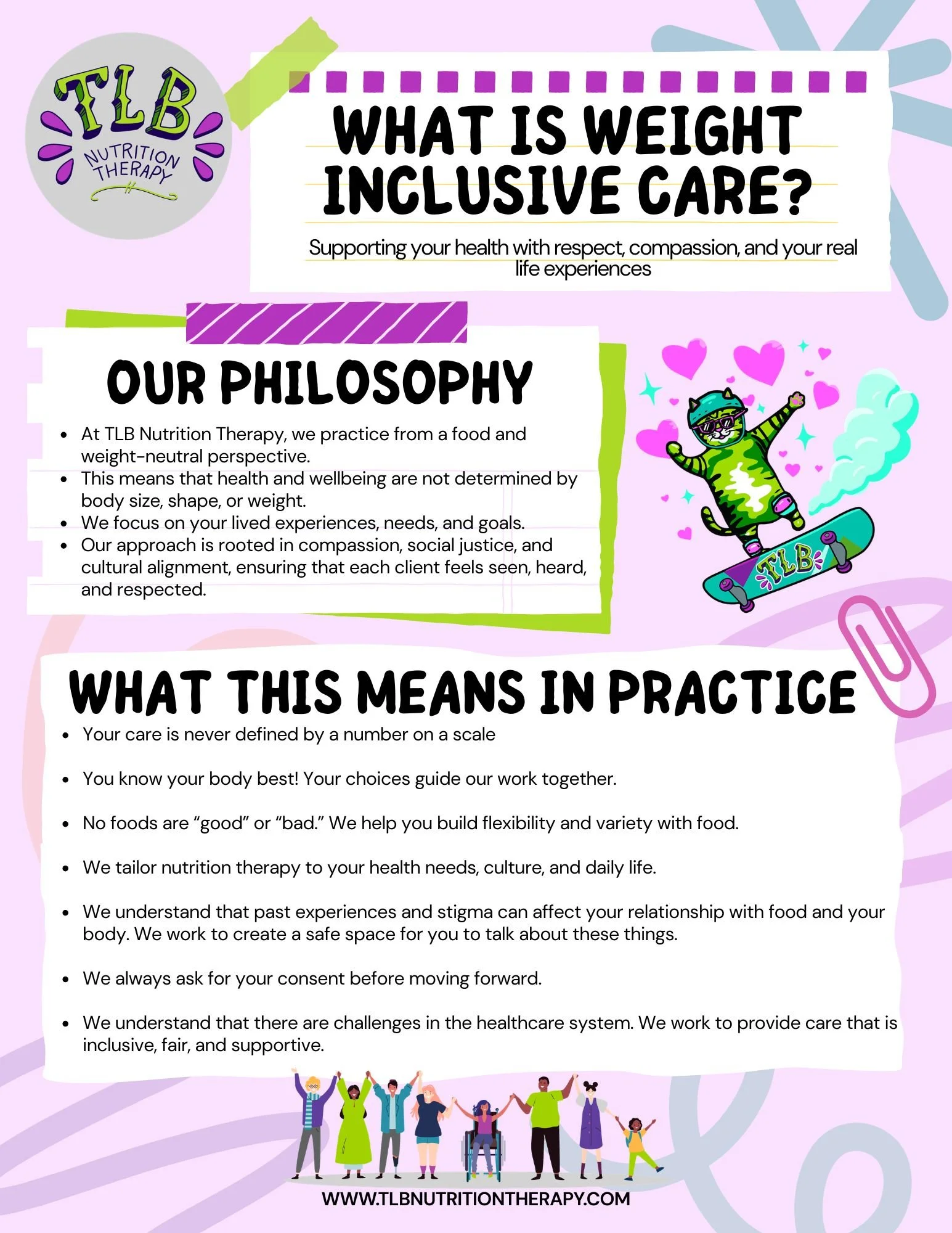
Click the image above for a PDF to download
Weight-inclusive care is a healthcare approach that recognizes that health cannot be determined by a number on the scale alone. Instead of centering weight as the primary measure of wellbeing, weight-inclusive care focuses on the whole person—their lived experiences, medical history, goals, culture, and daily life.
At TLB Nutrition Therapy, we practice from a food- and weight-neutral perspective because we know that every person's relationship with food, body, and movement is unique. Rather than labeling foods as "good" or "bad" or defining health by body size, we work collaboratively with clients to build flexibility, trust, and sustainable habits that support long-term wellbeing.
Weight-inclusive care also means creating a safe environment where consent, compassion, and respect are prioritized. We recognize that weight stigma and past healthcare experiences can impact a person's willingness to seek care. Our goal is to provide nutrition therapy that honors your lived experience while supporting your physical and emotional health.
When healthcare focuses on the whole person instead of a number, clients are often better able to build trust with providers, explore new health behaviors without shame, and create lasting changes that align with their values—not someone else's expectations.
Do I Have to Be Weighed at the Doctor?
Being weighed at a medical appointment isn't always necessary—but many people don't realize they have options. In this episode of Snack Chats, Tina and Sarah discuss why some patients choose to decline weight checks, when weight may be clinically important, and how to advocate for weight-inclusive, trauma-informed medical care.
Whether you're navigating eating disorder recovery, body image concerns, medical trauma, or simply want a more respectful healthcare experience, this episode offers practical tools for both patients and healthcare providers.
In this episode, you'll learn:
Why some patients choose to decline being weighed
Common reasons weight can be triggering, including eating disorders, anxiety, trauma, and weight stigma
When weight may be clinically necessary—and when it may not be
What a blind weight is and how to request one
How to advocate for yourself during medical appointments
Practical scripts you can use at the front desk or in the exam room
Ways providers can create more weight-inclusive, patient-centered experiences
How documenting patient preferences can improve future visits
Whether you're a patient, caregiver, dietitian, therapist, or medical provider, this conversation highlights practical ways to reduce harm, respect body autonomy, and create healthcare experiences that prioritize compassion over numbers.
Download our free handout: What Is Weight Inclusive Care? This resource explains TLB Nutrition Therapy's weight-inclusive philosophy, what this approach looks like in practice, why it matters, and how we support clients through compassionate, individualized nutrition care.
You can also download or request one of our Do Not Weigh Me cards to help communicate your preferences during medical appointments.
Disclaimer: The information shared in this episode is intended for educational purposes only and is not a substitute for individualized medical advice, nutrition counseling, or mental health treatment. If you have questions about your healthcare, medications, or medical conditions, please consult your physician or healthcare team.