Do Not Weigh Me
Click the image above for the PDF to download
For many people, stepping on the scale at a medical appointment is routine. For others, it can be one of the most stressful parts of the visit. If you've experienced an eating disorder, body image concerns, weight stigma, or medical trauma, being weighed may not support your health—or the reason you're seeking care.
The good news is that you have the right to ask questions, set boundaries, and advocate for your needs.
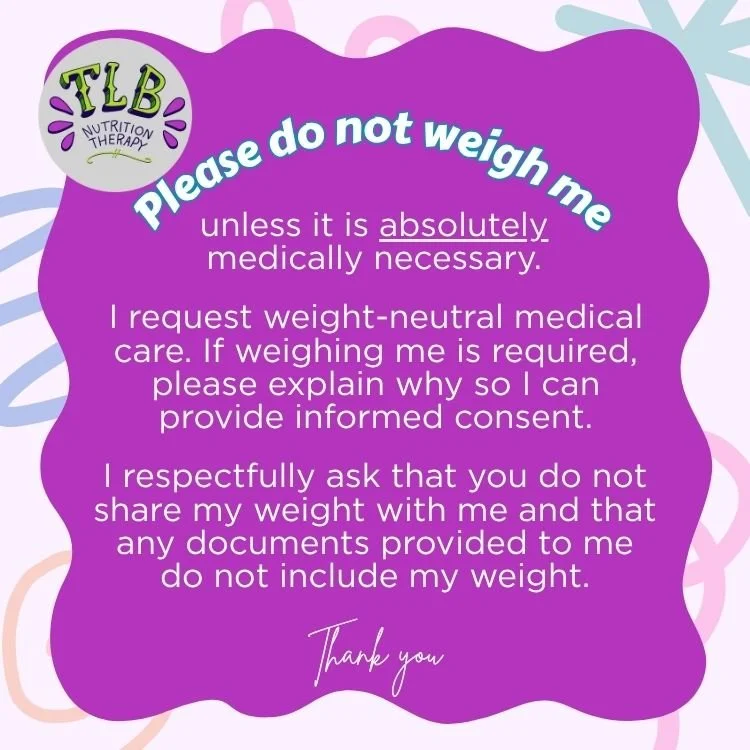
At TLB Nutrition Therapy, we believe healthcare should be collaborative, compassionate, and centered around your wellbeing—not just a number on the scale. Our "Do Not Weigh Me" card is designed to help patients communicate their preferences with confidence. The card respectfully requests that weight only be obtained when medically necessary, asks providers to explain why it is needed, and requests that the number not be shared or included on printed paperwork.
There are certainly times when weight is clinically important, such as medication dosing, pregnancy monitoring, certain medical conditions, or tracking pediatric growth. However, many routine appointments can focus on your symptoms, vital signs, labs, and overall health without making weight the center of the conversation.
Advocating for yourself isn't being difficult—it's participating in your healthcare. Whether you request a blind weight, ask why your weight is needed, or choose to decline being weighed altogether, you deserve care that respects your boundaries and supports your recovery.
Do I Have to Be Weighed at the Doctor?
Being weighed at a medical appointment isn't always necessary—but many people don't realize they have options. In this episode of Snack Chats, Tina and Sarah discuss why some patients choose to decline weight checks, when weight may be clinically important, and how to advocate for weight-neutral, trauma-informed medical care.
If you found us through our Do Not Weigh Me cards—welcome! This conversation expands on why these cards were created and how they can help you communicate your preferences with healthcare providers.
In this episode, you'll learn:
Why some patients choose to decline being weighed
How eating disorders, anxiety, trauma, and weight stigma can make weight checks harmful
What healthcare providers can focus on instead of weight
When weight may be medically necessary—and when it may not be
What a blind weight is and how to request one
Practical self-advocacy scripts for medical appointments
How providers can offer more weight-inclusive, trauma-informed care
Ways to reduce bias and create more collaborative healthcare experiences
Whether you're a patient, caregiver, dietitian, therapist, or medical provider, this episode offers practical strategies for creating healthcare experiences that prioritize respect, informed consent, and compassionate care.
Download or request one of our Do Not Weigh Me cards, which respectfully asks providers to only obtain a weight when medically necessary, explain why it is needed, and avoid sharing the number unless requested.
Disclaimer: The information shared in this episode is intended for educational purposes only and is not a substitute for individualized medical advice, nutrition counseling, or mental health treatment. If you have questions about your healthcare, medications, or medical conditions, please consult your physician or healthcare team.