Body Respect — Caring for Your Body Without Having to Love It
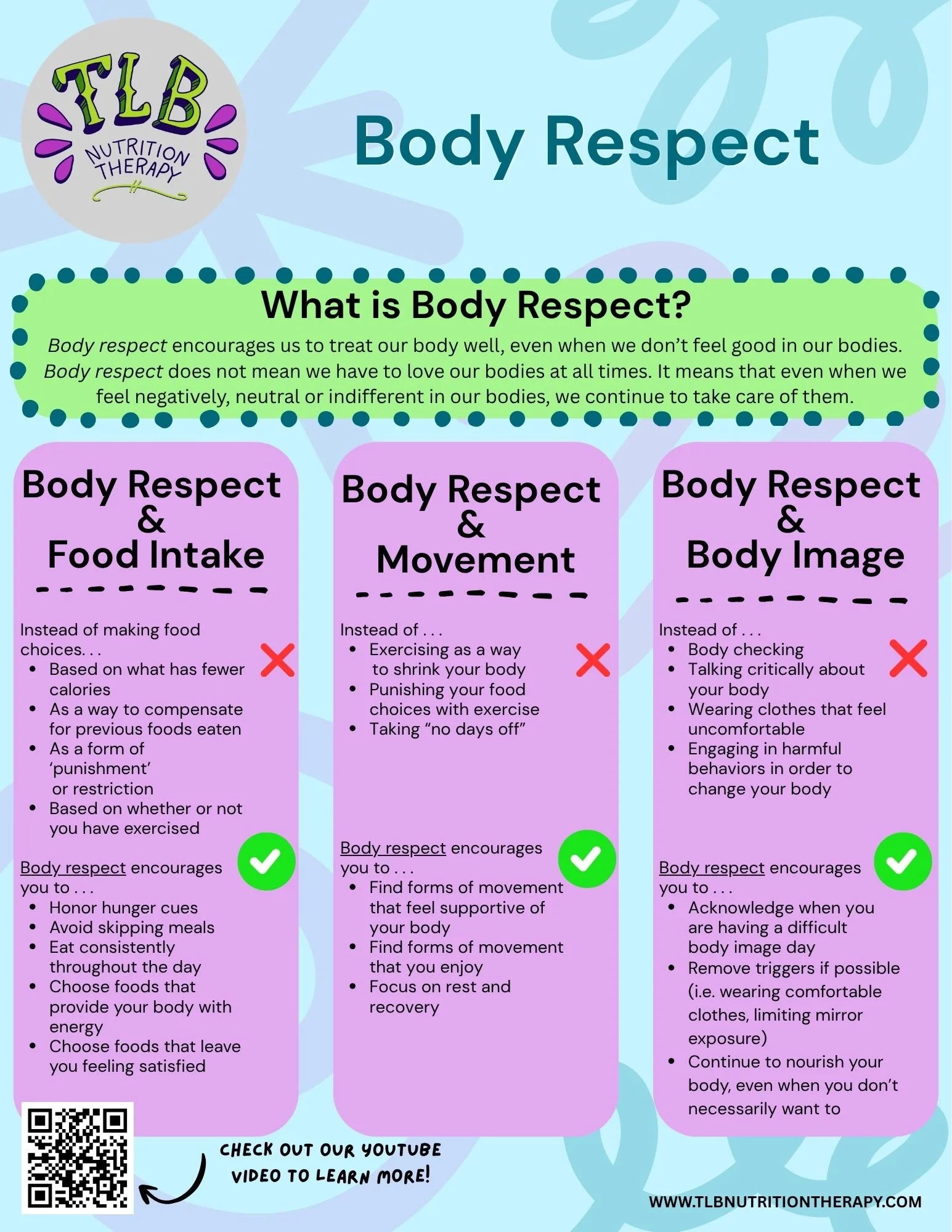
Click the image above for the PDF to download
There can be a lot of pressure to love your body. But what happens when body positivity doesn't feel realistic—or when you're simply having a really hard body image day?
Body respect offers another option.
Body respect doesn't require loving, celebrating, or even feeling positively about your body. Instead, it asks: Can I continue caring for my body even when I don't feel good about it?
At TLB Nutrition Therapy, body respect can show up through food, movement, and body image. With food, it may mean eating consistently, avoiding restriction or compensation, honoring hunger when possible, and choosing foods that provide energy and satisfaction. With movement, it means shifting away from exercise as punishment and toward movement that feels supportive, while recognizing the importance of rest and recovery.
Body respect also gives us practical tools for difficult body image days. Rather than demanding that you change how you feel, you might acknowledge that today is hard, wear clothing that feels comfortable, reduce mirror exposure or body checking, and continue nourishing yourself even when the urge is to do otherwise.
You don't have to love your body every day to care for it every day. Sometimes respect is a much more accessible place to begin.
Body Respect: You Don't Have to Love Your Body to Care for It
What if the goal isn't to love your body all the time?
In this episode of Snack Chats with TLB, Lead Dietitians Sarah and Marcie explore body respect and why it can offer a more realistic and compassionate approach to body image than expecting ourselves to always feel body-positive.
For individuals navigating eating disorders, chronic illness, body image distress, stigma, or other difficult experiences with their bodies, “love your body” may feel inaccessible. Body respect offers another path: you can continue caring for your body regardless of how you feel about it today.
In this episode, you'll learn:
Why body positivity doesn't resonate with everyone
The differences between body positivity, body neutrality, body respect, and body liberation
Why body respect may be a more accessible starting point
How stigma, chronic illness, identity, and lived experiences can influence body image
The role of distress tolerance on difficult body image days
How food, movement, and body image can all be approached through a body-respect lens
Practical ways to care for yourself without requiring yourself to love your body
Body Respect & Food
Body respect can mean:
Eating consistently throughout the day
Honoring hunger cues when they are available
Choosing foods that provide energy and satisfaction
Moving away from restriction and compensation
Nourishing yourself even on difficult body image days
Using food as a form of care rather than punishment
Body Respect & Movement
Body respect can mean:
Moving away from exercise as punishment or a way to control your body
Finding forms of movement that feel supportive
Choosing movement you enjoy when movement is accessible
Allowing yourself to rest and recover
Recognizing that more movement isn't always better
Body Respect & Body Image
Body respect doesn't require you to change how you feel about your body.
Instead, it might mean acknowledging that you're having a difficult body image day, wearing clothes that feel comfortable, reducing mirror exposure or other triggers when possible, and continuing to nourish and care for yourself. These are some of the practical strategies included in TLB's Body Respect handout.
How Are You Respecting Your Body Today?
Body respect will look different for everyone.
Maybe it's eating lunch even though you're struggling with body image. Maybe it's resting instead of exercising. Maybe it's wearing clothes that actually fit your current body, setting a boundary, drinking some water, or asking someone for support.
How are you respecting your body today? Share in the comments.
Download our free handout: Body Respect. This resource provides practical examples of shifting from restriction, punitive movement, and body criticism toward nourishment, supportive movement, rest, and compassionate care.
Disclaimer:
The information shared in this episode and handout is intended for educational purposes only and is not a substitute for individualized nutrition counseling, medical advice, or mental health treatment. We encourage you to work with a registered dietitian, therapist, physician, or other qualified healthcare provider for individualized support.