The Nuances of Intuitive Eating
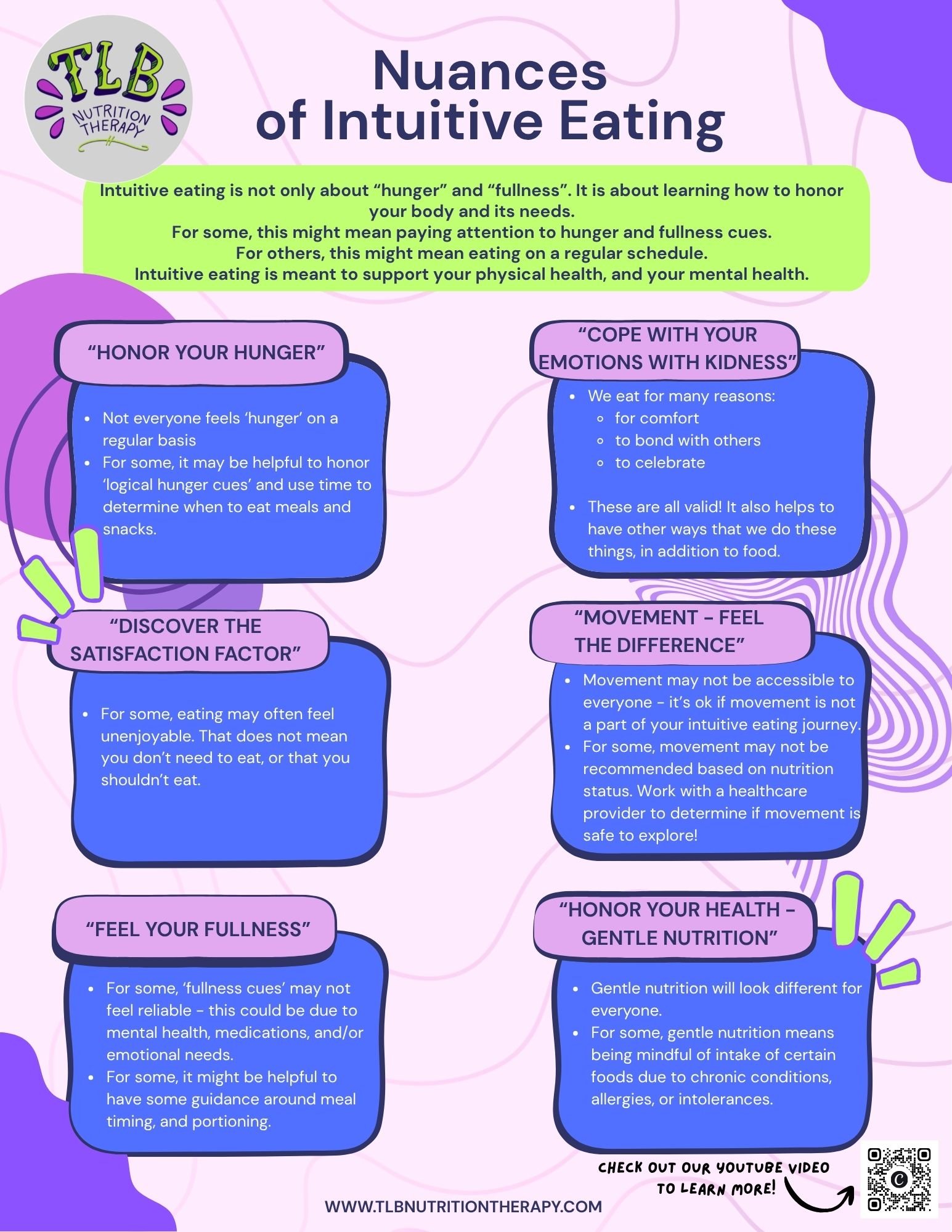
Click the image above for the PDF to download
Intuitive eating is sometimes reduced to a simple message: “eat when you're hungry and stop when you're full.” But for many people, it isn't that simple—and it doesn't need to be.
The 10 Principles of Intuitive Eating are meant to be flexible guides, not another set of food rules to follow perfectly. Hunger, fullness, satisfaction, movement, emotional eating, and gentle nutrition can all look different depending on someone's lived experiences, health, access, neurodivergence, medications, trauma, and individual needs.
Our Nuances of Intuitive Eating handout explores some of these differences. For example, not everyone experiences reliable physical hunger cues. Honoring hunger might mean using logical hunger and eating according to time. Fullness cues may also be difficult to identify, making meal timing or portion guidance helpful. And satisfaction doesn't always mean food needs to be pleasurable—sometimes eating simply meets a physical need.
The same flexibility applies to movement, emotional eating, and gentle nutrition. Food can provide comfort, connection, and celebration. Movement may not be accessible or medically appropriate for everyone. Gentle nutrition may include considering chronic conditions, allergies, or intolerances. There is room for all of these experiences within an individualized approach.
Intuitive eating isn't a checklist, and it isn't something you can fail. It's a framework that can be adapted—with curiosity and compassion—to support your physical and mental health.
The 10 Principles & Nuances of Intuitive Eating
Intuitive eating isn't just about eating when you're hungry and stopping when you're full—and the 10 principles aren't another checklist you need to master.
In this episode of Snack Chats, TLB dietitians Sarah and Ana walk through the 10 Principles of Intuitive Eating, exploring the nuance, real-life applications, and individual differences that can shape what intuitive eating actually looks like from person to person.
Whether you're exploring your own relationship with food or you're a provider supporting clients, this conversation offers a more flexible and individualized way to think about intuitive eating.
In this episode, you'll learn:
Why intuitive eating isn't a one-size-fits-all framework
How diet culture can affect hunger, fullness, and body trust
What “making peace with food” can look like in real life
Why physical hunger isn't the only reason to eat
The role of logical hunger and structured eating
Why fullness cues aren't reliable or accessible for everyone
How to approach emotional eating with curiosity and kindness
Why satisfaction doesn't necessarily mean pleasure for everyone
How neurodivergence can affect hunger, fullness, sensory needs, and eating patterns
Why movement isn't required—and may not be accessible or appropriate for everyone
How chronic conditions, allergies, and intolerances can fit within gentle nutrition
Why providers should avoid projecting their own assumptions onto clients
How to individualize intuitive eating based on someone's lived experiences and needs
Sarah and Ana emphasize that intuitive eating is meant to support both physical and mental health. For one person, honoring hunger may mean responding to physical cues. For someone else, it may mean setting an alarm and eating every few hours because physical hunger isn't reliable. Both can be valid ways of honoring the body's needs.
Download our free handout: Nuances of Intuitive Eating. This resource explores how several intuitive eating principles can be individualized, including Honor Your Hunger, Feel Your Fullness, Discover the Satisfaction Factor, Cope With Your Emotions With Kindness, Movement—Feel the Difference, and Honor Your Health With Gentle Nutrition.
An important note: Intuitive eating may not be relevant or accessible for everyone. Food insecurity, systemic barriers, trauma, neurodivergence, chronic illness, medications, mental health, and other lived experiences can all influence someone's ability or desire to engage with these principles. Individualized care matters.
Disclaimer:
The information shared in this episode and handout is intended for educational purposes only and is not a substitute for individualized medical, psychological, or nutrition care. We encourage you to work with a registered dietitian, therapist, physician, or other qualified healthcare provider for support tailored to your individual needs.