Intuitive Eating Is More Than “Just Listen to Your Body”
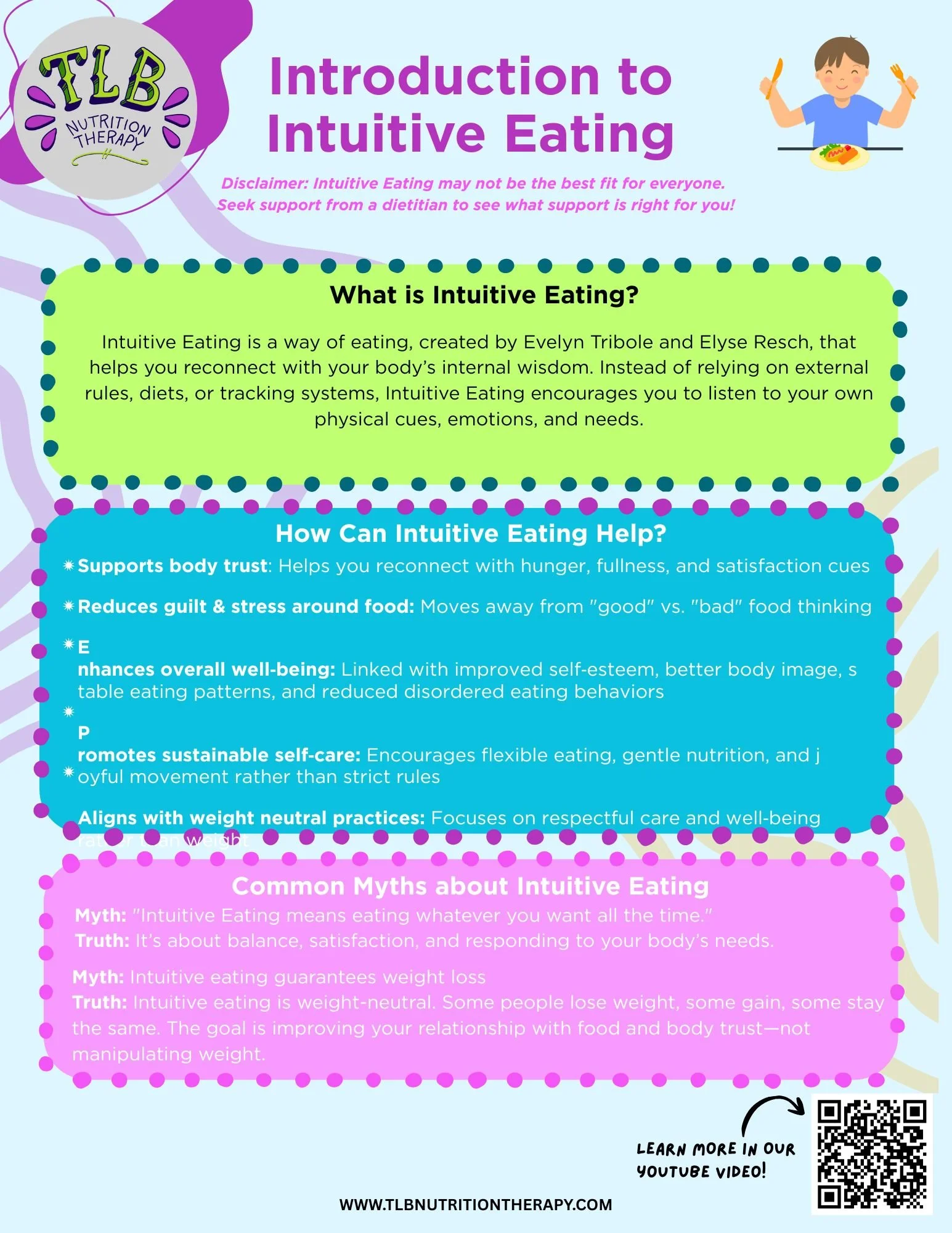
Click the image above for the PDF to download
Intuitive eating is often simplified to “eat when you’re hungry and stop when you’re full.” In reality, it is a much more nuanced framework for rebuilding trust with food and your body.
Created by Evelyn Tribole and Elyse Resch, Intuitive Eating encourages people to move away from external food rules, diets, and tracking systems and begin exploring their own physical cues, emotions, satisfaction, and individual needs. The goal isn't to eat perfectly—it’s to develop a more flexible and supportive relationship with food.
Our Introduction to Intuitive Eating handout walks through all ten principles, including rejecting the diet mentality, honoring hunger, making peace with food, challenging the food police, discovering satisfaction, respecting your body, exploring enjoyable movement, and practicing gentle nutrition. It also addresses common misconceptions, including the idea that intuitive eating means eating whatever you want all the time or that it is a weight-loss approach.
But intuitive eating may not look the same for everyone. Neurodivergence, trauma, medications, chronic stress, eating disorder recovery, and difficulty identifying internal body cues can all affect someone's ability to rely on hunger and fullness signals. Sometimes honoring your body means using structure, reminders, meal plans, or other external supports.
Intuitive eating isn't another set of rules to master. It's an invitation to approach food with more curiosity, flexibility, satisfaction, and compassion—and to discover what caring for your individual body actually looks like.
Introduction to Intuitive Eating
What exactly is intuitive eating—and does it really mean you should just “eat whatever you want”?
In this episode of Snack Chats, TLB dietitians Sarah and Ana introduce the fundamentals of intuitive eating, a non-diet approach developed by Evelyn Tribole and Elyse Resch that focuses on reconnecting with your body's needs rather than relying on external diet rules.
They also explore an important piece of the conversation that can sometimes get missed: intuitive eating isn't necessarily going to look the same for everyone.
In this episode, you'll learn:
What intuitive eating is and what it isn't
Why intuitive eating focuses on body trust rather than food rules
How diet culture can disconnect us from hunger, fullness, and satisfaction
An introduction to the principles of intuitive eating
Why rejecting the diet mentality is an important part of the framework
How honoring hunger and making peace with food can support body trust
Why satisfaction matters when we're talking about nourishment
How neurodivergence can affect hunger, fullness, sensory experiences, and body attunement
How trauma, chronic stress, and medications may influence internal cues
Why some people may continue to benefit from meal structure or other external supports
How a dietitian can help individualize intuitive eating
Sarah and Ana emphasize that intuitive eating isn't another diet or another set of rules to follow perfectly. It's a framework centered around curiosity, flexibility, satisfaction, body respect, and learning what supports your individual needs.
Download our free handout: Introduction to Intuitive Eating. This two-page resource introduces intuitive eating, addresses common myths, and walks through the ten key principles: Reject the Diet Mentality, Honor Your Hunger, Make Peace With Food, Challenge the Food Police, Feel Your Fullness, Discover the Satisfaction Factor, Cope With Emotions With Kindness, Respect Your Body, Movement—Feel the Difference, and Honor Your Health With Gentle Nutrition.
The handout also includes an important reminder: intuitive eating may not be the best fit for everyone. Working with a dietitian can help determine what type of nutrition support works best for you.
Disclaimer:
The information shared in this episode is intended for educational purposes only and is not a substitute for individualized nutrition counseling, medical advice, or mental health treatment. Nutrition needs and experiences are highly individual, and we encourage you to work with a registered dietitian, therapist, or healthcare provider for personalized support.