Pregnancy Nutrition Basics - For Providers
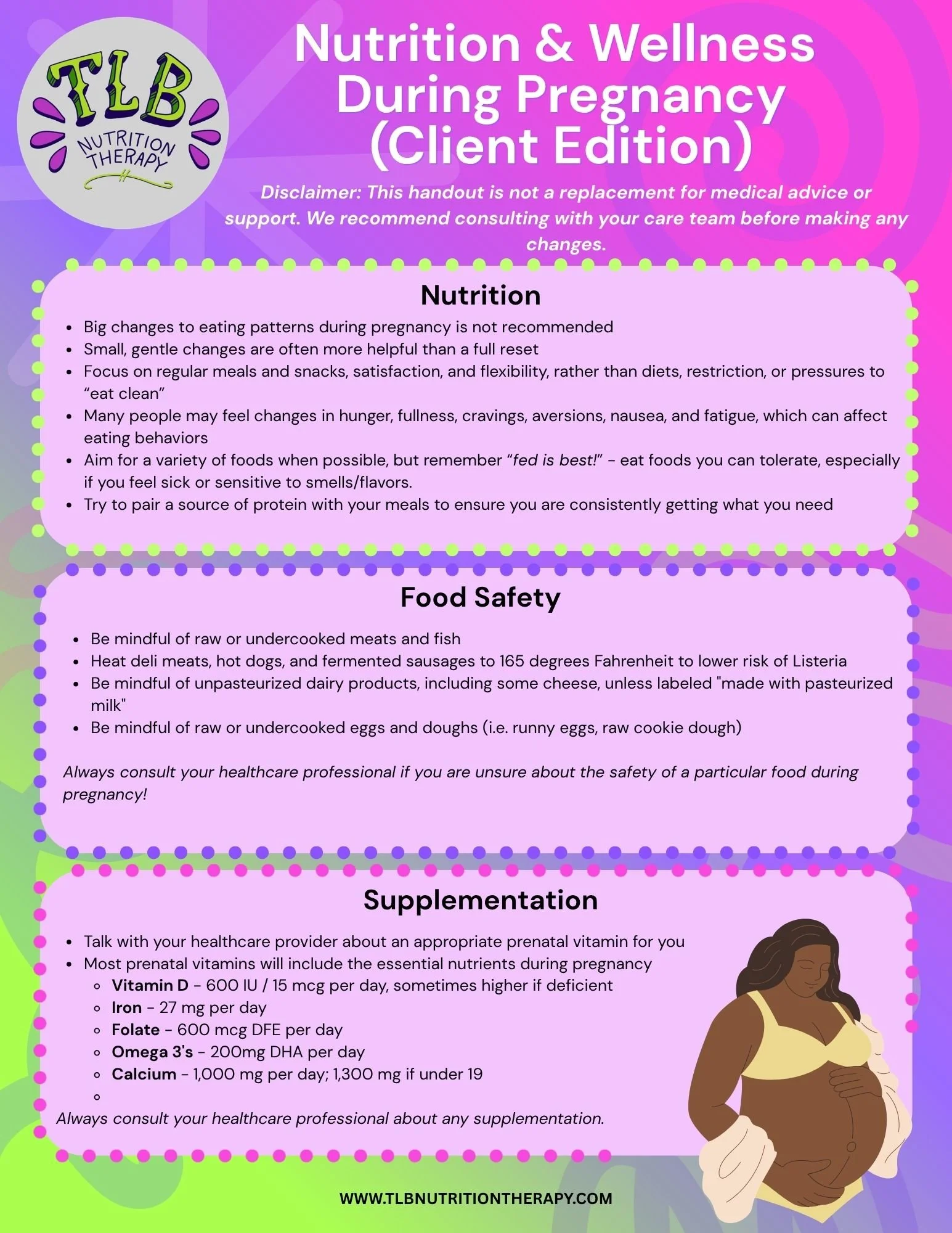
Click the image above for the PDF to download
Pregnancy nutrition can quickly become overwhelming for clients. Between social media, family advice, books, and recommendations from different healthcare professionals, many people enter pregnancy feeling like they suddenly need to change everything about the way they eat.
For providers, one of the most helpful things we can offer is permission to move away from perfection.
TLB Nutrition Therapy’s Nutrition & Wellness During Pregnancy: Provider Edition encourages gentle adjustments rather than a complete nutrition “reset.” Pregnancy is not the time for dieting, restriction, or pressure to “eat clean.” Instead, the handout emphasizes regular meals and snacks, enjoyment, satisfaction, flexibility, and prioritizing foods that are tolerable when nausea, fatigue, smell sensitivities, or food aversions make eating more difficult.
Providers can also help clients understand important pregnancy nutrients without turning nutrition into another source of anxiety. The handout reviews iron, folate, vitamin D, calcium, and omega-3 fatty acids, including their roles during pregnancy and common food sources. It also addresses prenatal supplementation and food safety considerations.
Most importantly, individualized care matters. Additional dietitian support may be particularly valuable for clients navigating gestational diabetes, severe nausea or vomiting, anemia or nutrient deficiencies, a history of eating disorders, or significant anxiety around food during pregnancy.
Pregnancy nutrition doesn't have to be perfect to be supportive. Providers can help reduce fear by focusing on nourishment, flexibility, access, and the individual needs of the person in front of them.
Pregnancy Nutrition Basics
Pregnancy nutrition can feel overwhelming. Between social media, books, family advice, and recommendations from healthcare providers, it can be difficult to figure out what you actually need to do.
In this episode of Snack Chats, TLB dietitians Tabitha and Lauren break down the basics of pregnancy nutrition while challenging some of the fear and perfectionism that can surround eating during pregnancy.
Rather than focusing on eating “perfectly,” they discuss how balanced nutrition, flexibility, body cues, and individualized support can help nourish both parent and baby.
In this episode, you'll learn:
Why pregnancy doesn't require completely overhauling your eating habits overnight
How to approach pregnancy nutrition without perfection or unnecessary restriction
Why hunger, fullness, cravings, aversions, nausea, and fatigue may change throughout pregnancy
How regular meals and snacks can support consistent nourishment
Important pregnancy nutrients, including iron, folate, vitamin D, calcium, omega-3 fatty acids, and protein
The role of prenatal vitamins and individualized supplementation
How to think about pregnancy food safety without creating unnecessary fear
Why food safety recommendations focus on reducing risk
Why some individuals may benefit from additional nutrition support during pregnancy
Tabitha and Lauren emphasize that pregnancy nutrition doesn't need to be fear-based or perfection-driven. Your needs may change throughout pregnancy, and flexibility can be an important part of caring for yourself.
For healthcare providers: Download our free Nutrition & Wellness During Pregnancy: Provider Edition handout. This resource provides practical talking points for discussing nutrition, food safety, prenatal supplementation, and key nutrients with clients. It also highlights situations in which individualized dietitian support may be beneficial, including a history of eating disorders, gestational diabetes, severe nausea or vomiting, anemia or nutrient deficiencies, and high anxiety around food during pregnancy.
Disclaimer:
The information shared in this episode and handout is intended for educational purposes only and is not a substitute for individualized medical or nutrition advice. Nutrition and supplementation needs during pregnancy vary, and individuals should work with their physician, registered dietitian, or healthcare team before making changes to their nutrition or supplement routine.