Pregnancy Nutrition Without the Pressure - For Clients
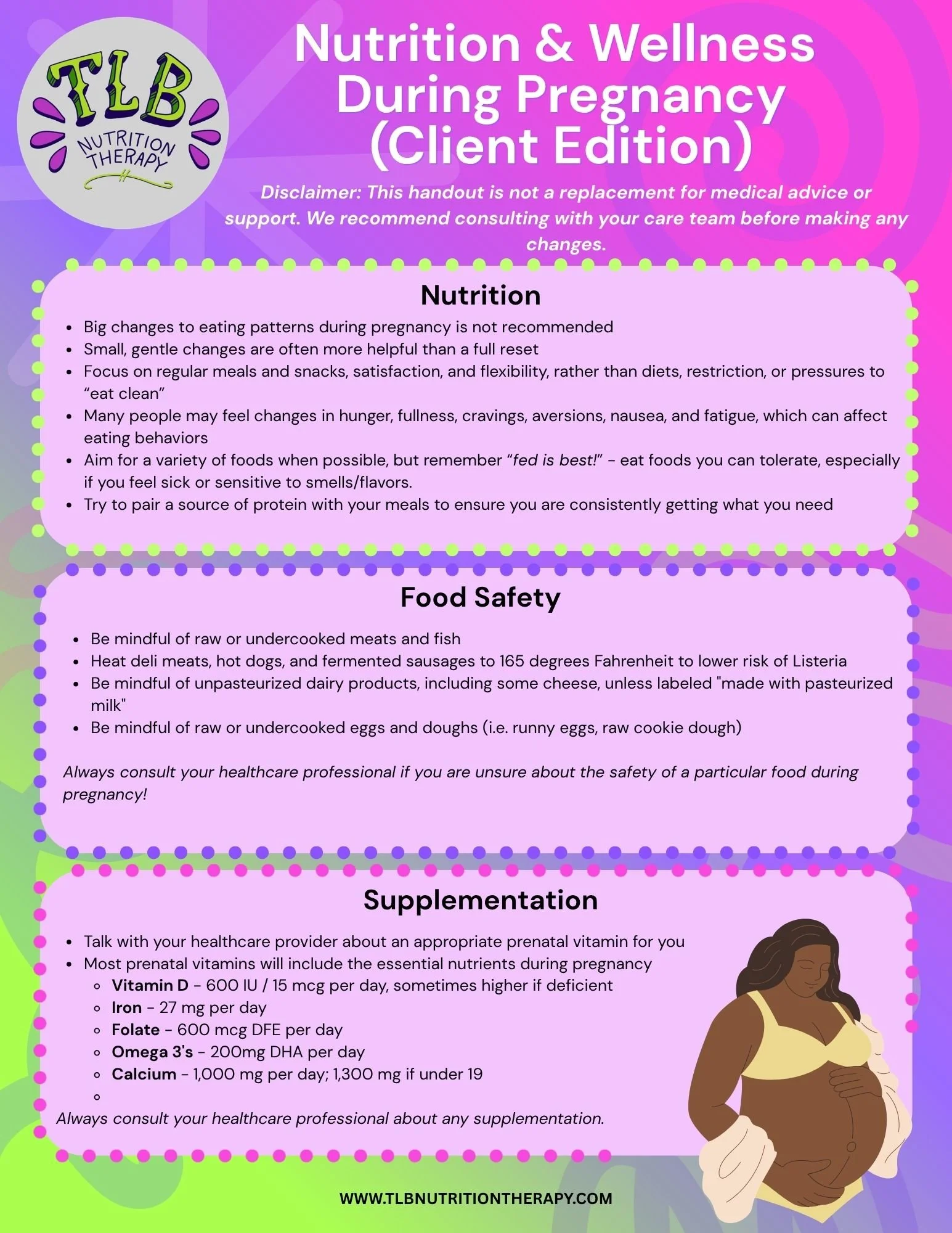
Click the image above for the PDF to download
Pregnancy can come with a lot of nutrition advice—and sometimes, a lot of anxiety. Suddenly there are lists of foods to avoid, nutrients to think about, supplements to take, and messages about what you “should” be eating. It can make something as basic as feeding yourself feel incredibly complicated.
At TLB Nutrition Therapy, we encourage a more flexible approach. Pregnancy doesn't necessarily require completely changing the way you eat overnight. Our Nutrition & Wellness During Pregnancy handout emphasizes regular meals and snacks, satisfaction, flexibility, and making small, gentle changes when needed. Hunger, fullness, cravings, food aversions, nausea, and fatigue can all change throughout pregnancy, so sometimes the priority really is finding foods you can tolerate and getting yourself fed.
Certain nutrients—including iron, folate, vitamin D, calcium, and omega-3 fatty acids—play important roles during pregnancy. A prenatal vitamin may help meet many needs, while food can provide additional nutrition. The handout also reviews food safety considerations and encourages working with your healthcare provider when you have questions about supplements or specific foods.
Most importantly, pregnancy nutrition doesn't have to be perfect to be supportive. Nourishment, flexibility, and individualized care can help you navigate pregnancy without turning food into another source of stress.
Pregnancy Nutrition Basics
Pregnancy nutrition can feel overwhelming. Between social media, books, family advice, and recommendations from healthcare providers, it can be difficult to figure out what you actually need to do.
In this episode of Snack Chats, TLB dietitians Tabitha and Lauren break down the basics of pregnancy nutrition while challenging some of the fear and perfectionism that can surround eating during pregnancy.
Rather than focusing on eating “perfectly,” they discuss how balanced nutrition, flexibility, body cues, and individualized support can help nourish both parent and baby.
In this episode, you'll learn:
Why pregnancy doesn't require completely overhauling your eating habits overnight
How to approach pregnancy nutrition without perfection or unnecessary restriction
Why hunger, fullness, cravings, aversions, nausea, and fatigue may change throughout pregnancy
How regular meals and snacks can support consistent nourishment
Important pregnancy nutrients, including iron, folate, vitamin D, calcium, omega-3 fatty acids, and protein
The role of prenatal vitamins and individualized supplementation
How to think about pregnancy food safety without creating unnecessary fear
Why food safety recommendations are about reducing risk rather than guaranteeing an outcome
Why gestational diabetes isn't something you caused through your food choices
When working with a dietitian may provide additional support
Tabitha and Lauren emphasize that pregnancy nutrition doesn't need to be fear-based or perfection-driven. Your needs may change throughout pregnancy, and flexibility can be an important part of caring for yourself.
Download our free handout: Nutrition & Wellness During Pregnancy. This two-page resource reviews practical pregnancy nutrition guidance, food safety considerations, prenatal supplementation, and important nutrients including iron, folate, vitamin D, calcium, and omega-3 fatty acids. It also discusses when individualized nutrition support may be helpful, including for those navigating gestational diabetes, severe nausea or vomiting, nutrient deficiencies, a history of eating disorders, or significant anxiety around food during pregnancy.
Disclaimer:
The information shared in this episode and handout is intended for educational purposes only and is not a substitute for individualized medical or nutrition advice. Nutrition and supplementation needs during pregnancy vary, and we encourage you to work with your physician, registered dietitian, or healthcare team before making changes to your nutrition or supplement routine.