
Redefining Success at the Family Table - Part 2
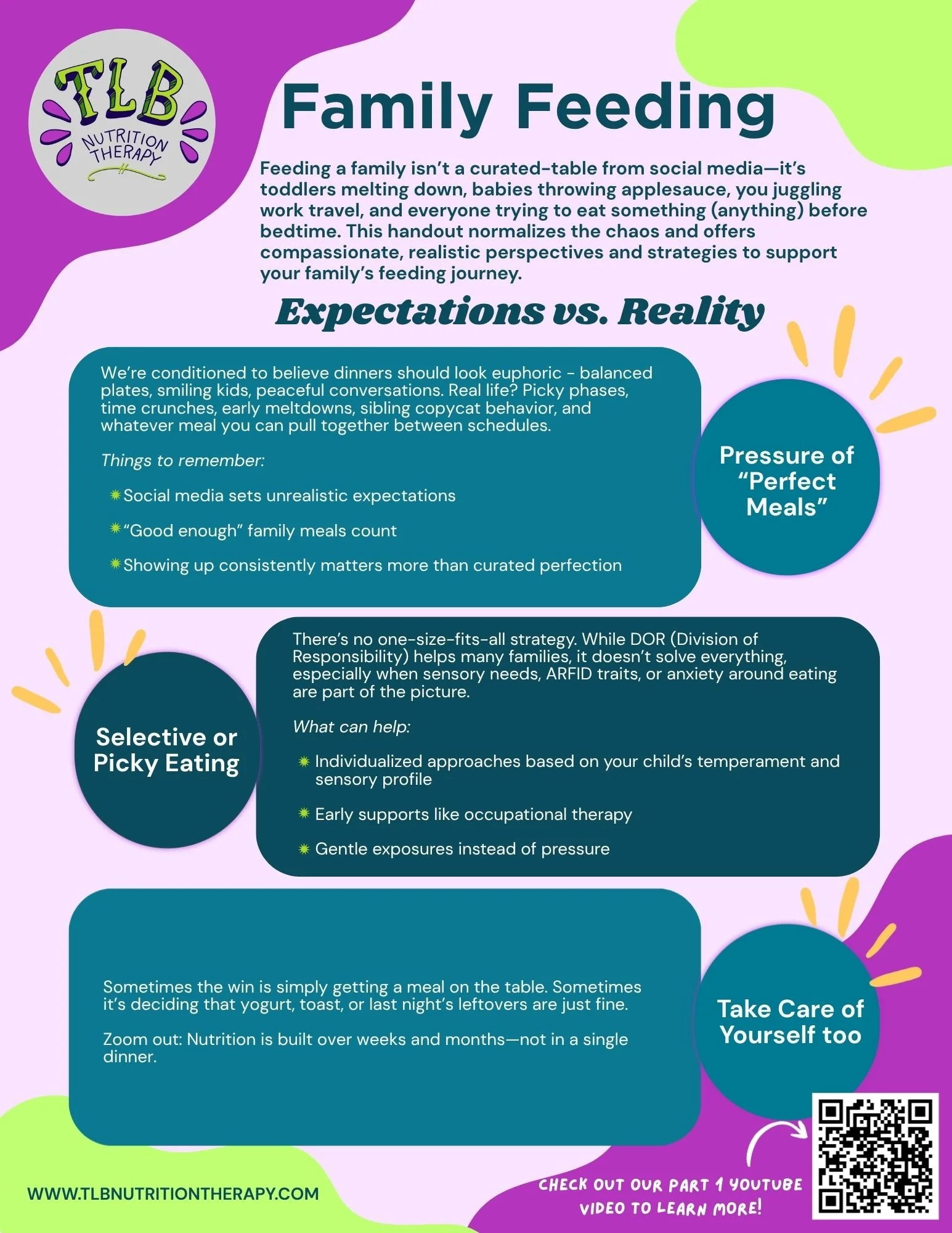
Click the image above for the PDF to download
What makes a family meal “successful”? It might not be everyone eating the same food, a perfectly balanced plate, or a peaceful dinner from start to finish.
Sometimes success is your child trying something new. Sometimes it’s everyone finding something they can eat. And sometimes it’s recognizing that you’re exhausted and serving the easiest meal possible.
In Part 2 of our Family Feeding series, we focus on redefining success at the table. Our Family Feeding handout emphasizes that individualized care matters more than following textbook feeding rules. Creating a calm, lower-pressure environment can support regulation and curiosity around food—even if that means dimming the lights, playing gentle music, slowing down the meal, or having a floor picnic with a sensory-sensitive child.
Practical strategies can also make feeding a family more manageable. Using flexible “base meals” like pasta, rice, quesadillas, or potatoes allows family members to add what works for them. Including a safe or familiar food ensures there is something your child feels comfortable eating, while convenience foods, repeated meals, and shortcuts can help protect caregiver capacity.
Most importantly, feeding a family is physical, mental, emotional, and logistical work. You don't have to do it perfectly. Nutrition happens over time, and a sustainable approach that works for your actual family is far more valuable than chasing an idealized version of family dinner.
Connection over perfection. That's the goal.
Family Feeding Part 2 — Redefining Success at the Table
What does a “successful” family meal actually look like?
In Part 2 of our Family Feeding series, Tina and Tabitha—with a cameo from Little Nugget—continue their candid, judgment-free conversation about feeding a family in real life.
This time, they're talking about how to redefine success, lower the pressure around family meals, reduce decision fatigue, and create routines that work for your child, your family, and your current season of life.
In this episode, you'll learn:
Why successful family meals look different for every family
How to adjust expectations for different children, needs, resources, and seasons of life
Why connection can matter more than creating a “perfect” meal
How to zoom out and think about nutrition over weeks and months
Why repeating the same meals is completely okay
How safe and familiar foods can support selective eaters
Ways to make meals flexible without cooking completely separate dinners
How sensory-friendly changes can reduce stress at the table
Why convenience foods and shortcuts can be valuable tools
How to involve kids in food without creating pressure
Why caregiver burnout and emotional capacity matter
How community and professional support can make family feeding more manageable
Practical ideas for real-life family meals:
Use a flexible base such as pasta, rice, potatoes, quesadillas, taco bowls, or stir-fry and offer optional additions.
Include at least one safe or familiar food when possible so your child has something they feel comfortable eating.
Use convenience foods. Frozen fruits and vegetables, rotisserie chicken, batch-cooked grains, and snack-plate dinners can make feeding your family much easier.
Repeat meals. Having four to six reliable dinners on rotation can dramatically reduce decision fatigue.
Consider the environment. Softer lighting, gentle music, a slower pace, or even eating on the floor may make meals more comfortable for sensory-sensitive kids.
Invite participation when it works for your family—stirring, washing produce, choosing between two options, or simply talking about a food's taste, texture, or color without pressure.
Tina and Tabitha emphasize one of the biggest themes from our Family Feeding Handout: connection over perfection. A successful meal may mean your child tries something new, everyone finds something that works for them, or you simply lower the bar because you're exhausted.
Feeding a family takes physical, mental, emotional, and logistical energy. You don't have to do it alone. Partners, friends, caregivers, dietitians, therapists, OTs, and other professionals can all be part of your family's support system.
Join the conversation: What's one “lower the bar” meal that saves your week? Share it in the comments—you might give another caregiver their next easy dinner idea.
Download our free Family Feeding Handout. Part 2 includes strategies for redefining success at the table, creating a lower-pressure environment, making meals more flexible, including familiar foods, increasing nutrient density when appropriate, and building community around family feeding.
Disclaimer:
The information shared in this episode is intended for educational purposes only and is not a substitute for individualized nutrition counseling, medical advice, occupational therapy, feeding therapy, or mental health treatment. Every child and family is different, and individualized support may be helpful when feeding challenges affect nutrition, growth, family functioning, or quality of life.