Understanding Eating Disorders Beyond the Diagnosis
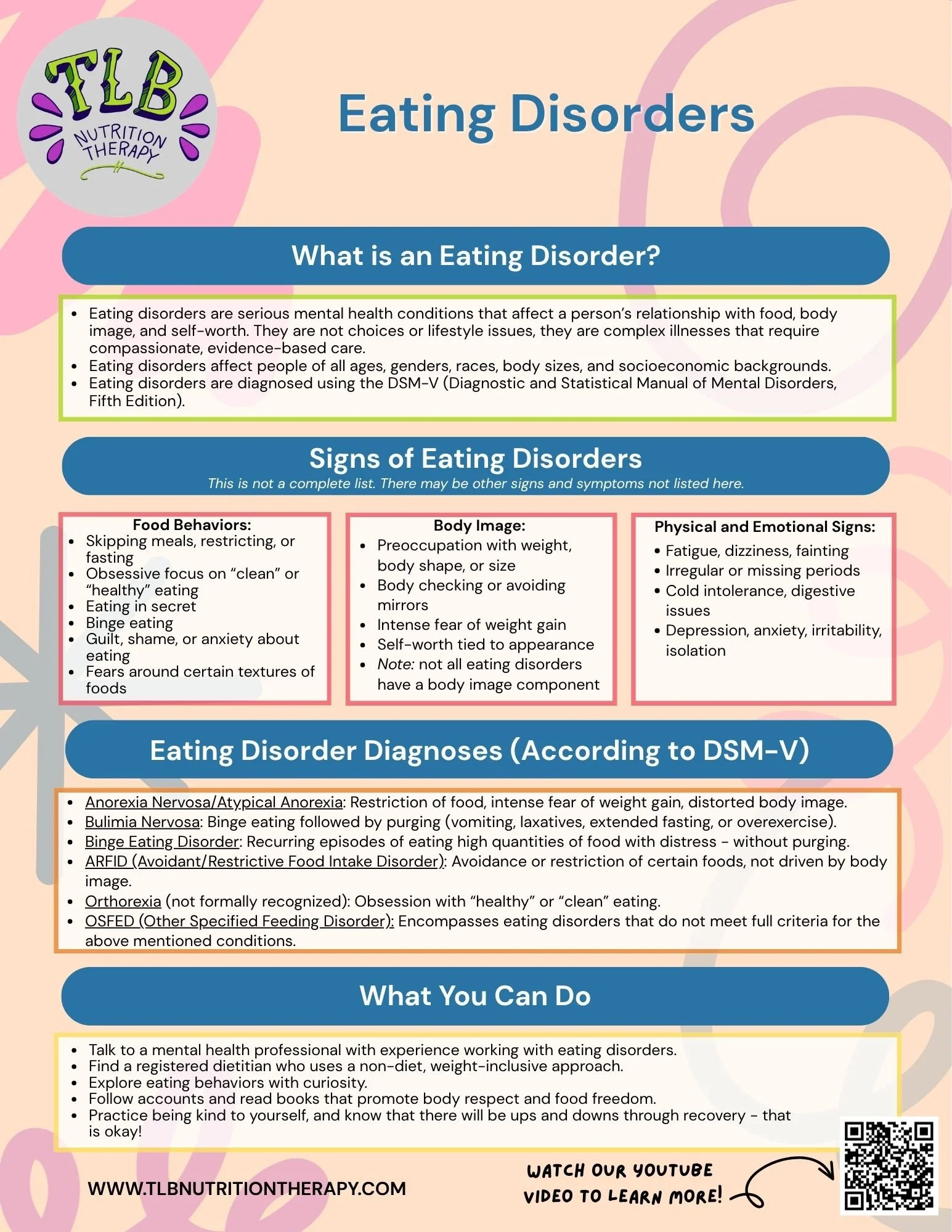
Click the image above for the PDF to download
Eating disorders are often misunderstood. Many people believe they only affect certain body sizes or that someone must meet strict diagnostic criteria before they deserve help. The reality is that eating disorders are complex mental health conditions that affect people of all ages, genders, races, body sizes, and backgrounds.
At TLB Nutrition Therapy, we recognize that diagnoses are important for treatment coordination and insurance, but they do not tell the whole story. Whether someone is experiencing anorexia nervosa, bulimia nervosa, binge eating disorder, ARFID, OSFED, or disordered eating that doesn't fit neatly into a diagnosis, our focus is always on the person's behaviors, experiences, medical needs, and recovery goals—not just the label.
Our Eating Disorders handout provides an overview of common eating disorder diagnoses, warning signs, and practical next steps for seeking support. It also highlights an important reminder: you don't have to wait until things get worse to ask for help. Recovery is possible, and compassionate, evidence-based care can make a meaningful difference at any stage of the journey.
If thoughts about food, body image, or eating behaviors are impacting your life, you deserve support. Healing isn't about fitting into a diagnostic box—it's about receiving the care you need to build a healthier relationship with food, your body, and yourself.
Understanding Eating Disorder Diagnoses
Eating disorder diagnoses can feel confusing, overwhelming, or even validating—but they don't define a person's worth or determine whether they deserve care. In this episode of Snack Chats, Sarah and Ana discuss the different types of eating disorders, the purpose and limitations of diagnostic criteria, and why treatment should always focus on the individual rather than the diagnosis.
Whether you're navigating recovery yourself, supporting a loved one, or simply looking to better understand eating disorders, this conversation offers a compassionate, behavior-focused perspective on recovery.
In this episode, you'll learn:
Why eating disorder diagnoses exist and how they are used
The role of dietitians within the treatment team
An overview of anorexia nervosa, bulimia nervosa, binge eating disorder (BED), ARFID, and OSFED
Why behaviors matter more than diagnostic labels
The medical and emotional impacts of eating disorders
The importance of an interdisciplinary treatment team
Different levels of eating disorder care, including outpatient, IOP, PHP, and residential treatment
Why you don't have to be "sick enough" to seek support
How individualized, compassionate care supports long-term recovery
Sarah and Ana emphasize that eating disorders are serious mental health conditions—not lifestyle choices—and that every person's recovery journey is unique. Whether or not someone meets full diagnostic criteria, they deserve compassionate, evidence-based care that addresses both their physical and emotional wellbeing.
Download our free handout: Eating Disorders. This resource explains common eating disorder diagnoses, signs and symptoms, common food and body image behaviors, physical and emotional warning signs, and practical next steps for finding compassionate, weight-inclusive support.
Disclaimer:
The information shared in this episode is intended for educational purposes only and is not a substitute for individualized nutrition counseling, medical advice, or mental health treatment. If you or someone you know is struggling with an eating disorder, we encourage you to seek support from a qualified healthcare professional or multidisciplinary treatment team.