Understanding Emotional Hunger and Emotional Eating
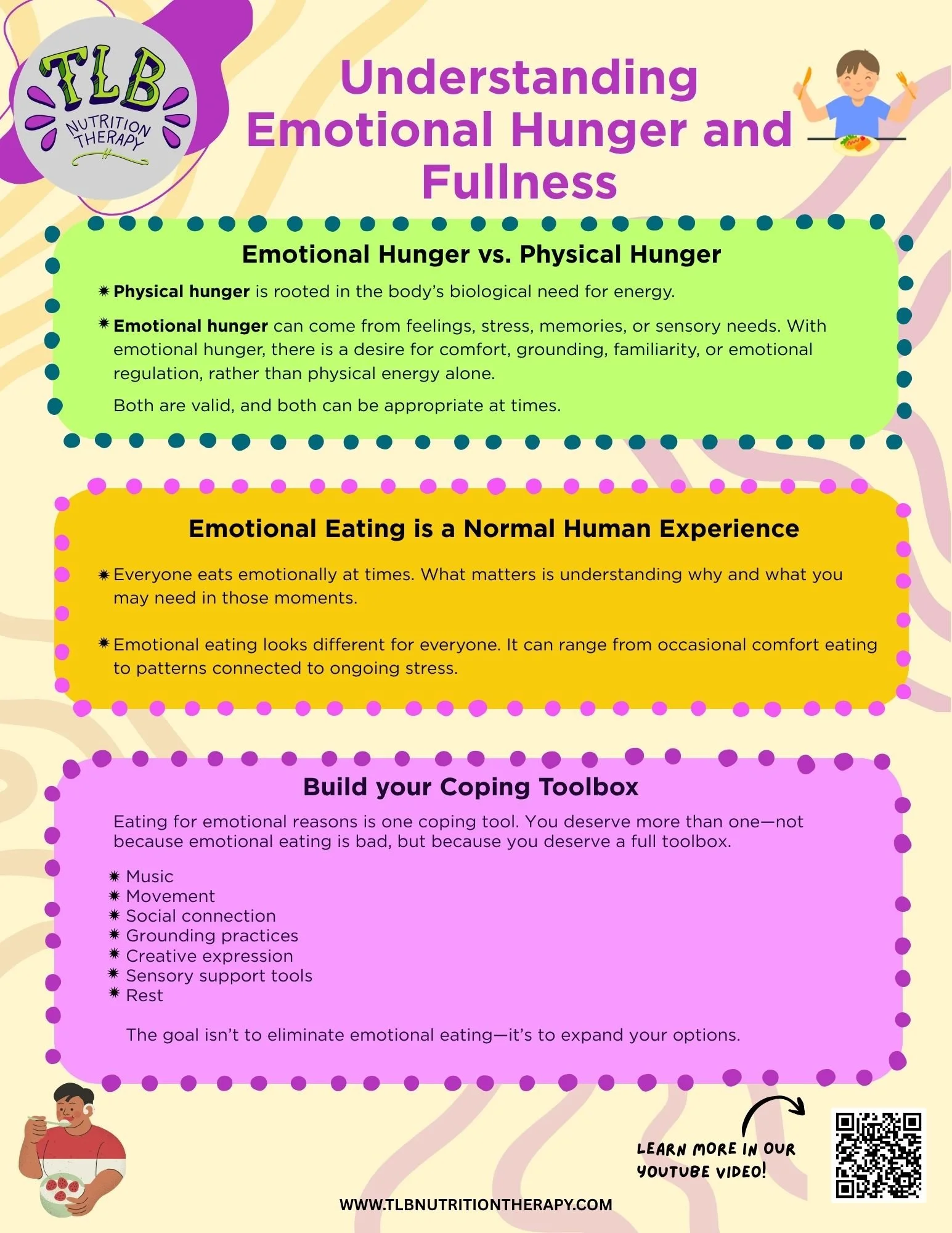
Click the image above for the PDF to download
Emotional eating gets a bad reputation. We often hear that we should only eat when we're physically hungry or that turning to food for comfort is something we need to “fix.” But eating is about so much more than meeting our biological need for energy.
Emotional hunger can come from feelings, stress, memories, or sensory needs. In those moments, we may be looking for comfort, grounding, familiarity, or emotional regulation—and that's a very human experience. Physical hunger and emotional hunger are different, but both are valid and can be appropriate at different times.
In this episode of Snack Chats with TLB, Ana and Marcie explore emotional hunger and emotional eating, including how diet and wellness culture have shaped the belief that eating for emotional reasons is inherently “bad.” Instead of approaching emotional eating with judgment, they invite us to get curious about what food may be doing for us in that moment.
Food can soothe. It can remind us of home, family, culture, or a particular memory. Certain tastes, smells, textures, and temperatures can provide sensory comfort and familiarity. Eating can also be part of celebration, connection, grief, joy, stress, and countless other emotional experiences.
The goal isn't necessarily to stop emotional eating. Instead, it can be helpful to expand your coping toolbox so food isn't the only option available when you're experiencing emotional distress. Music, movement, social connection, grounding practices, creative expression, sensory supports, and rest are just a few other tools that might exist alongside food—not replace it.
Most importantly, exploring emotional hunger doesn't need to involve shame. Instead of asking, “Why did I eat that? What's wrong with me?” we can practice asking: “What was I feeling? What did I need in that moment? Did the food help me soften, soothe, or feel safe?”
Emotional eating can be information rather than evidence that you've done something wrong. Curiosity and compassion give us an opportunity to better understand what our bodies and emotions may be communicating.
Emotional Hunger: Reframing Emotional Eating With Compassion
Is emotional eating actually a bad thing?
In this episode of Snack Chats with TLB, Ana and Marcie explore the often misunderstood topic of emotional hunger and emotional eating. They unpack common myths, discuss how diet and optimization culture have influenced the way we think about eating for comfort, and offer a more compassionate way to understand our emotional connection with food.
Rather than treating emotional eating as something that automatically needs to be stopped, this conversation encourages curiosity: What might I actually need right now?
In this episode, you'll learn:
How emotional hunger differs from physical hunger
Why eating for emotional reasons is a normal human experience
How diet and optimization culture have shaped our views of emotional eating
Why emotional eating can be a supportive coping strategy
How food can provide comfort, grounding, familiarity, and emotional regulation
How culture, family, memories, and nostalgia can influence emotional eating
How sensory experiences and neurodivergence may play a role
Why having coping tools beyond food can be helpful without demonizing eating
How secrecy and shame can make our relationship with food more difficult
Why curiosity and self-compassion matter when exploring emotional hunger
Emotional Hunger vs. Physical Hunger
Physical hunger is rooted in the body's biological need for energy.
Emotional hunger may arise from feelings, stress, memories, or sensory needs and may involve seeking comfort, familiarity, grounding, or emotional regulation.
One isn't automatically more legitimate than the other. Both forms of hunger are valid, and both can be appropriate at times.
Emotional Eating Is a Normal Human Experience
Everyone eats emotionally sometimes.
Food is woven into our families, cultures, traditions, celebrations, relationships, and memories. It makes sense that food can also provide comfort and connection.
Emotional eating exists on a spectrum. It may look like occasionally choosing a nostalgic food after a difficult day, or it may become part of a larger pattern connected to ongoing stress or distress. Instead of automatically labeling the behavior as “bad,” we can explore what is happening and what we may need in those moments.
Building a Coping Toolbox
Food can be a coping tool—and it doesn't have to be the only one.
Depending on your needs, your toolbox might also include:
Music
Movement
Social connection
Grounding practices
Creative expression
Sensory support tools
Rest
Adding other strategies isn't about eliminating emotional eating. It's about giving yourself more options for care and support.
Replacing Judgment With Curiosity
When emotional eating happens, our first response doesn't have to be criticism.
Instead of:
“Why did I eat that? What's wrong with me?”
Try getting curious:
“What was I feeling?”
“What did I need in that moment?”
“Did the food help me soften, soothe, or feel safe?”
This shift can help us understand emotional eating as information rather than something we need to hide or feel ashamed of.
Reducing Shame Around Emotional Eating
Shame tends to thrive in secrecy. Naming emotional hunger and talking about it openly can create space for curiosity, healing, and support.
You don't have to have a “perfect” relationship with food. You deserve a relationship with food that feels grounded, flexible, and kind.
Download our free handout: Understanding Emotional Hunger and Fullness. This resource explores the differences between emotional and physical hunger, normalizes emotional eating, and offers practical ways to approach emotional hunger with curiosity and compassion.
Disclaimer:
The information shared in this episode and handout is intended for educational purposes only and is not a substitute for individualized nutrition counseling, medical advice, or mental health treatment. Recovery is a personal and complex journey, and we encourage you to work with a registered dietitian, therapist, physician, or treatment team for support tailored to your individual needs.