Signs Your Relationship With Food May Need Support
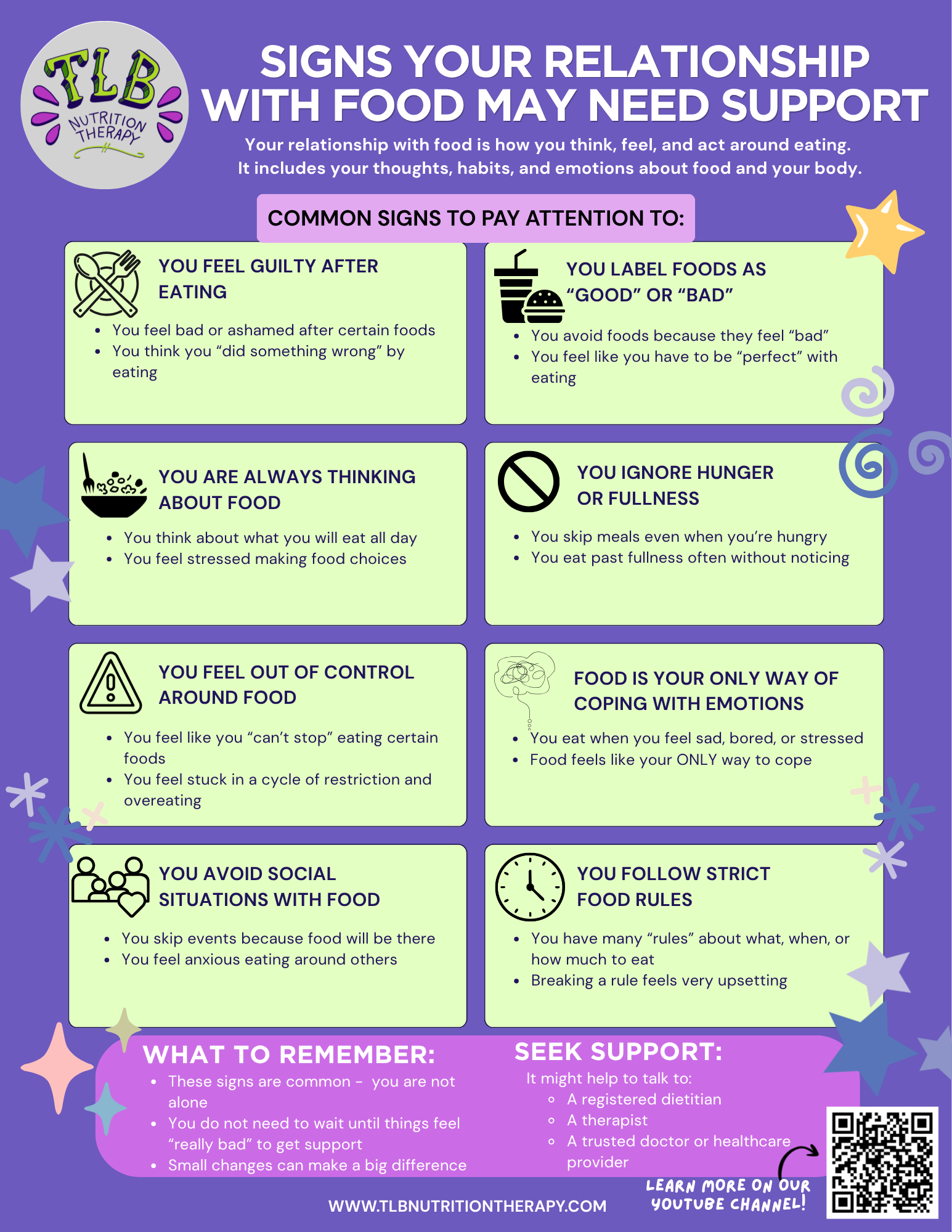
Click the image above for the PDF to download
Our relationship with food includes much more than what we eat. It includes the thoughts, emotions, habits, and beliefs we carry around food and our bodies. And because diet culture and food rules are so normalized, it isn't always easy to recognize when that relationship has started to negatively affect our lives.
Maybe you feel guilty after eating certain foods. Maybe you're constantly thinking about what you'll eat next, feel stressed when plans around food change, or have a long list of rules about what, when, and how much you're “allowed” to eat. These experiences can become such a regular part of life that they may not immediately feel like something worth addressing.
Sometimes concerns show up in other ways. You might ignore hunger or fullness, feel out of control around certain foods, avoid social situations involving food, or feel like food is your only way of coping when you're stressed, bored, sad, or overwhelmed.
Having some of these experiences doesn't mean you've done something wrong—and you don't need to fit neatly into a diagnosis before you're allowed to ask for help. One of the most important things to consider is how much food and body concerns are affecting your quality of life.
Is food taking up a significant amount of mental space? Are food rules keeping you from being spontaneous? Are you skipping experiences because you're worried about what you'll eat? Does breaking a food rule cause significant distress?
Your relationship with food doesn't have to become “really bad” before it deserves attention. Small changes can make a meaningful difference, and support from a registered dietitian, therapist, or trusted healthcare provider can help you begin exploring what's happening with more curiosity and less judgment.
When Your Relationship With Food May Need More Support
How do you know when your relationship with food might need a little more attention?
In this episode of Snack Chats with TLB, Sarah and Lauren discuss some common signs that thoughts about food, eating, exercise, or body image may be taking up more space in your life than you'd like.
Food concerns don't always look extreme from the outside. Sometimes they're subtle: constantly planning what you'll eat, feeling guilty after certain foods, needing to follow specific food rules, or feeling anxious when eating socially. Over time, these patterns can begin affecting your emotional wellbeing, relationships, daily activities, and overall quality of life.
In this episode, you'll learn:
How food guilt can show up after eating
Why labeling foods as “good” or “bad” can contribute to rigidity
What it can look like when food takes up excessive mental space
How stress around food choices can affect everyday life
Signs you may be ignoring hunger or fullness
Why restriction can contribute to feeling out of control around food
When emotional eating may signal a need for additional coping tools
How food concerns can interfere with social situations
What rigid food rules can look like
Why you don't need to wait until things feel “really bad” to ask for help
When Food Takes Up Too Much Mental Space
Thinking about food is normal—we all have to decide what we're going to eat.
But it may be worth getting curious when thoughts about food begin taking up a significant portion of your day. Maybe you're constantly thinking about your next meal, calories, macros, ingredients, or whether a food fits your rules. Perhaps making a food choice feels stressful rather than flexible.
The TLB handout identifies frequently thinking about what you'll eat and feeling stressed when making food choices as signs worth paying attention to.
Food Guilt & “Good” and “Bad” Foods
Food guilt can sound like:
“I shouldn't have eaten that.”
“I was bad today.”
“I need to make up for what I ate.”
When food becomes tied to morality, eating something you've labeled as “bad” can feel like you've personally done something wrong.
You may also notice pressure to eat “perfectly” or avoid certain foods because they don't fit your rules.
When Food Rules Start Limiting Your Life
Food rules can sometimes create a sense of predictability or control. But when those rules become rigid, they may also begin limiting your life.
Maybe you have specific rules about what, when, or how much you're allowed to eat. Breaking one of those rules might cause significant anxiety or distress. You may even start avoiding restaurants, celebrations, travel, or other social situations because food will be involved.
When your relationship with food starts determining what you're able to participate in, it may be worth asking whether those rules are still serving you.
Emotional Eating & Coping
Eating when you're sad, bored, stressed, celebrating, or seeking comfort is part of being human. Emotional eating itself isn't inherently a problem.
What may be worth exploring is whether food feels like your only available coping strategy. The goal doesn't have to be eliminating emotional eating—it may simply be expanding the number of tools available to support yourself when emotions feel difficult.
You Don't Have to Wait Until It Gets Worse
You don't need a diagnosis to deserve support.
You don't have to wait until food concerns have taken over your life.
And you don't need to prove that you're struggling “enough.”
If your relationship with food is creating guilt, anxiety, rigidity, isolation, or distress—or simply taking up more mental space than you want it to—it's okay to ask for help.
Download our free handout: Signs Your Relationship With Food May Need Support. This resource highlights common signs to pay attention to and can be a helpful starting point for reflecting on your own relationship with food.
Disclaimer:
The information shared in this episode and handout is intended for educational purposes only and is not a substitute for individualized nutrition counseling, medical advice, or mental health treatment. We encourage you to work with a registered dietitian, therapist, physician, or other qualified healthcare provider for individualized support.