
TLB Nutrition Therapy Handouts
At TLB Nutrition Therapy, we believe that access to nutrition education shouldn't be limited by insurance coverage, finances, or location. That's why we've created a growing library of free educational handouts and YouTube videos designed to provide reliable, evidence-based nutrition information to anyone who needs it.
Our resources have been thoughtfully developed by the registered dietitians and staff at TLB Nutrition Therapy and reflect our commitment to compassionate, inclusive, and evidence-based care. They cover a variety of topics, including eating disorders, intuitive eating, body image, chronic health conditions, sports nutrition, family feeding, women's health, and more. Whether you're a current client, a healthcare provider, or simply looking to learn, our goal is to make nutrition education approachable, practical, and accessible.
These resources are provided for educational purposes only and are not intended to replace individualized medical or nutrition advice. We encourage you to work with your healthcare provider or registered dietitian to determine the recommendations that are most appropriate for your unique needs.
We know that healing doesn't just happen during appointments. By offering these resources at no cost, we hope to empower individuals, families, and communities with the knowledge and tools they need to support their relationship with food, body, and health.
We invite you to explore our free handouts and YouTube library and share them with anyone who may benefit. Together, we can increase access to compassionate, inclusive nutrition care—one resource at a time. 💜
Use the search tool to search for a specific handout or youtube video.
Otherwise, feel free to scroll this page for all of our handout and video resources.
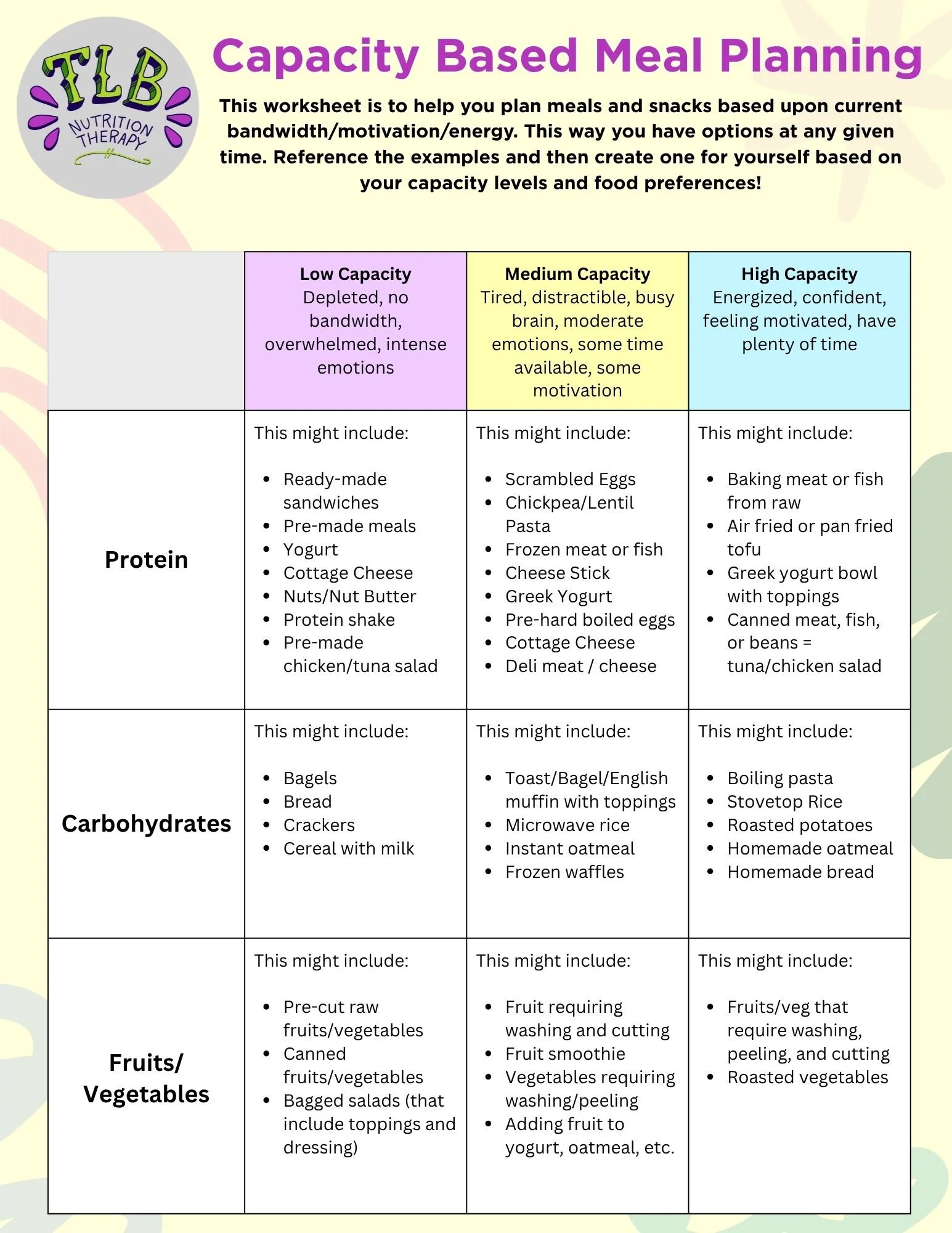
Meet Yourself Where You Are with Capacity-Based Meal Planning
Our Capacity-Based Meal Planning handout walks you through creating meal options for low-, medium-, and high-capacity days. Rather than seeing convenience foods as a failure, this framework encourages having nourishing options available at every level—from ready-made sandwiches and yogurt on low-capacity days to homemade meals when you have more energy. The goal isn't perfection—it's making nourishment more accessible, no matter what your day looks like.

Halloween Candy: Building Trust, Not Fear
At TLB Nutrition Therapy, we encourage families to approach Halloween with curiosity, flexibility, and trust. Candy is simply one type of food—it doesn't need to be earned, feared, or placed on a pedestal. Offering balanced meals before trick-or-treating, using neutral language about candy, and allowing children to listen to their own hunger and fullness cues can help support a healthier relationship with food.
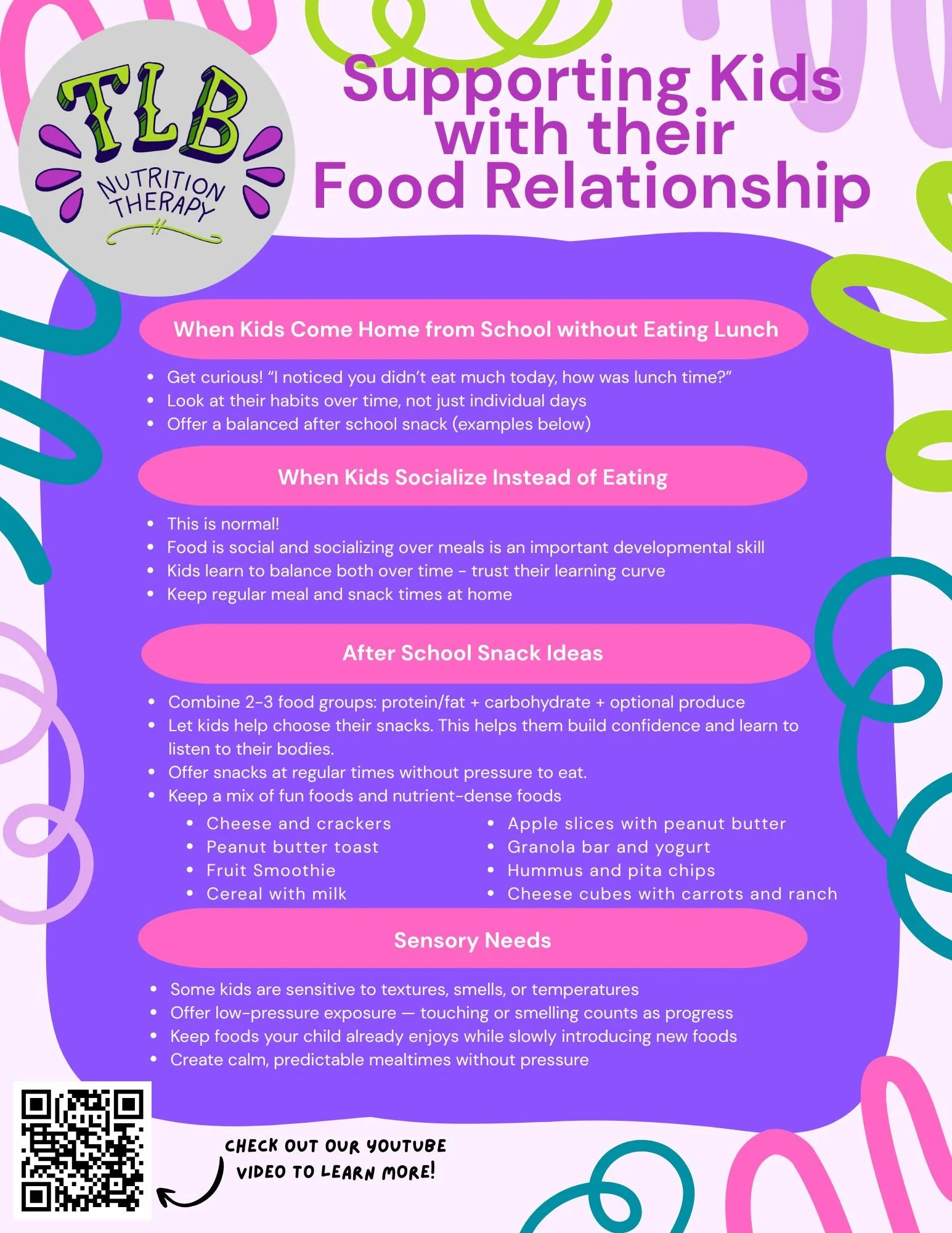
Supporting Kids in Building a Healthy Relationship with Food
Rather than focusing on what wasn't eaten, try reconnecting with your child after school. Offering a balanced snack, asking open-ended questions about their day, and creating a calm, pressure-free environment can help meet both emotional and physical needs. We also encourage parents to involve children in choosing snacks, maintain predictable meal routines, and support sensory needs by honoring safe foods while gently introducing new experiences over time.

Supporting Clients with Eating Disorders in Medical Settings
The handout emphasizes taking a whole-person approach by looking beyond weight alone. Comprehensive care includes reviewing medical history, assessing the "5 S's" (Sleep, Salt/Nutrition, Sedentary Behavior, Stress, and Substances), evaluating mental health, and completing an appropriate medical assessment with vital signs, laboratory work, and physical examination. It also reminds providers that laboratory values may appear normal even when an eating disorder is medically significant.
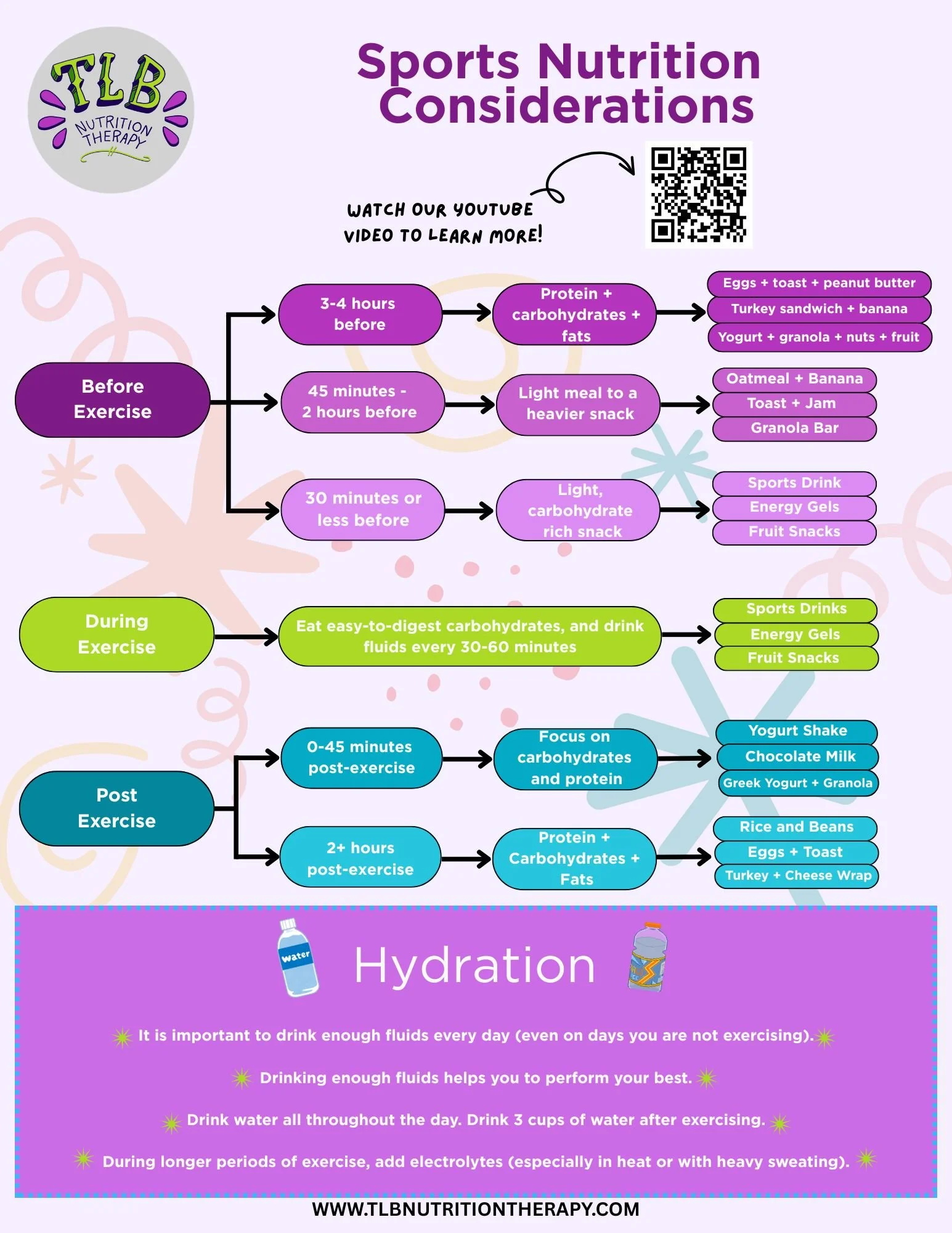
Sports Nutrition Starts Before Your Workout
A balanced approach to sports nutrition includes carbohydrates for energy, protein for muscle repair, healthy fats, colorful fruits and vegetables, and adequate hydration. Timing also matters. Eating before exercise, fueling during longer workouts, and prioritizing recovery nutrition afterward all help your body perform and recover more effectively.
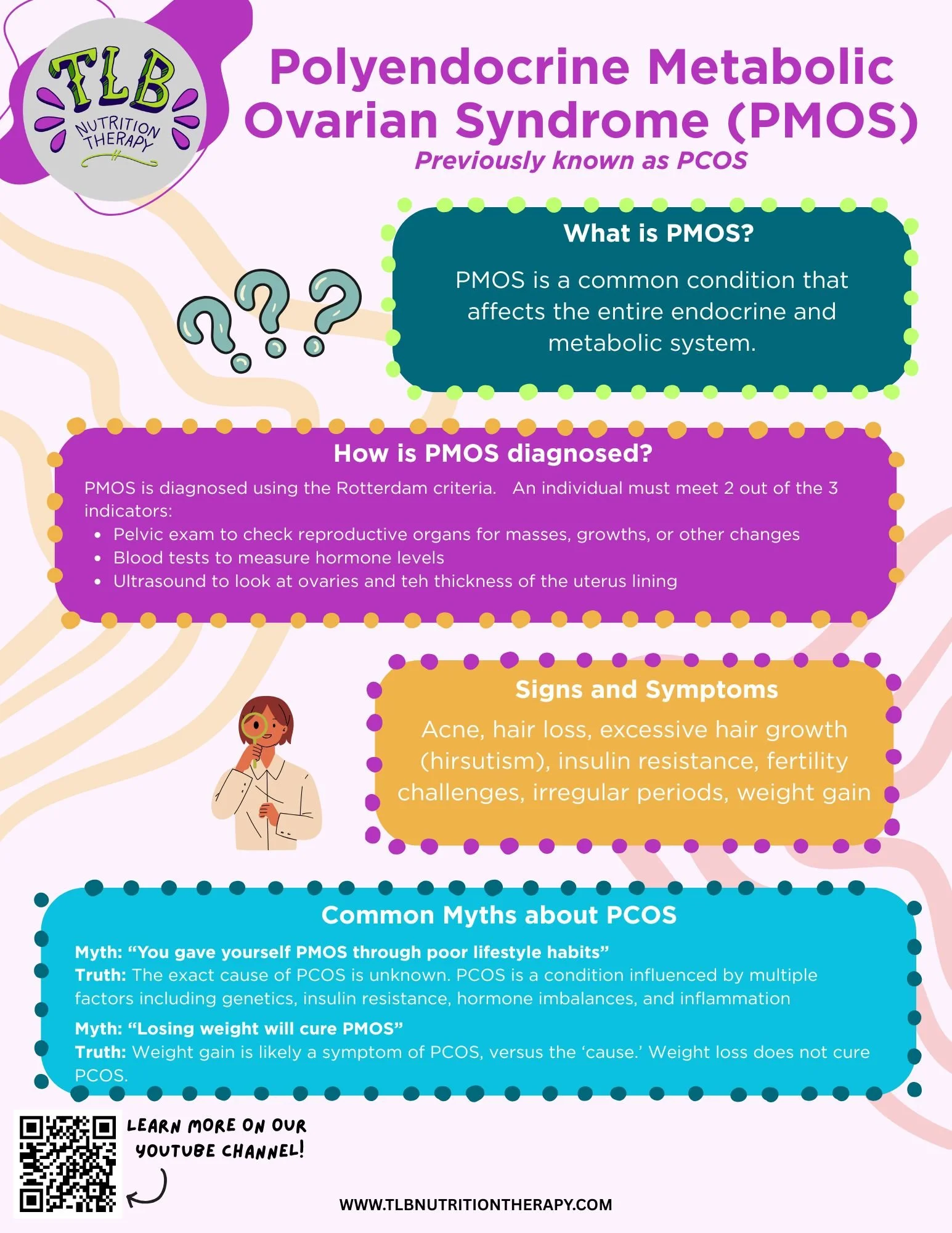
Polyendocrine Metabolic Ovarian Syndrome (PMOS)
At TLB Nutrition Therapy, we believe managing PMOS is about much more than weight. PMOS affects the endocrine, metabolic, and reproductive systems, which means symptoms can vary significantly from person to person. Common symptoms may include irregular periods, acne, excess hair growth, insulin resistance, fertility challenges, and changes in energy levels.
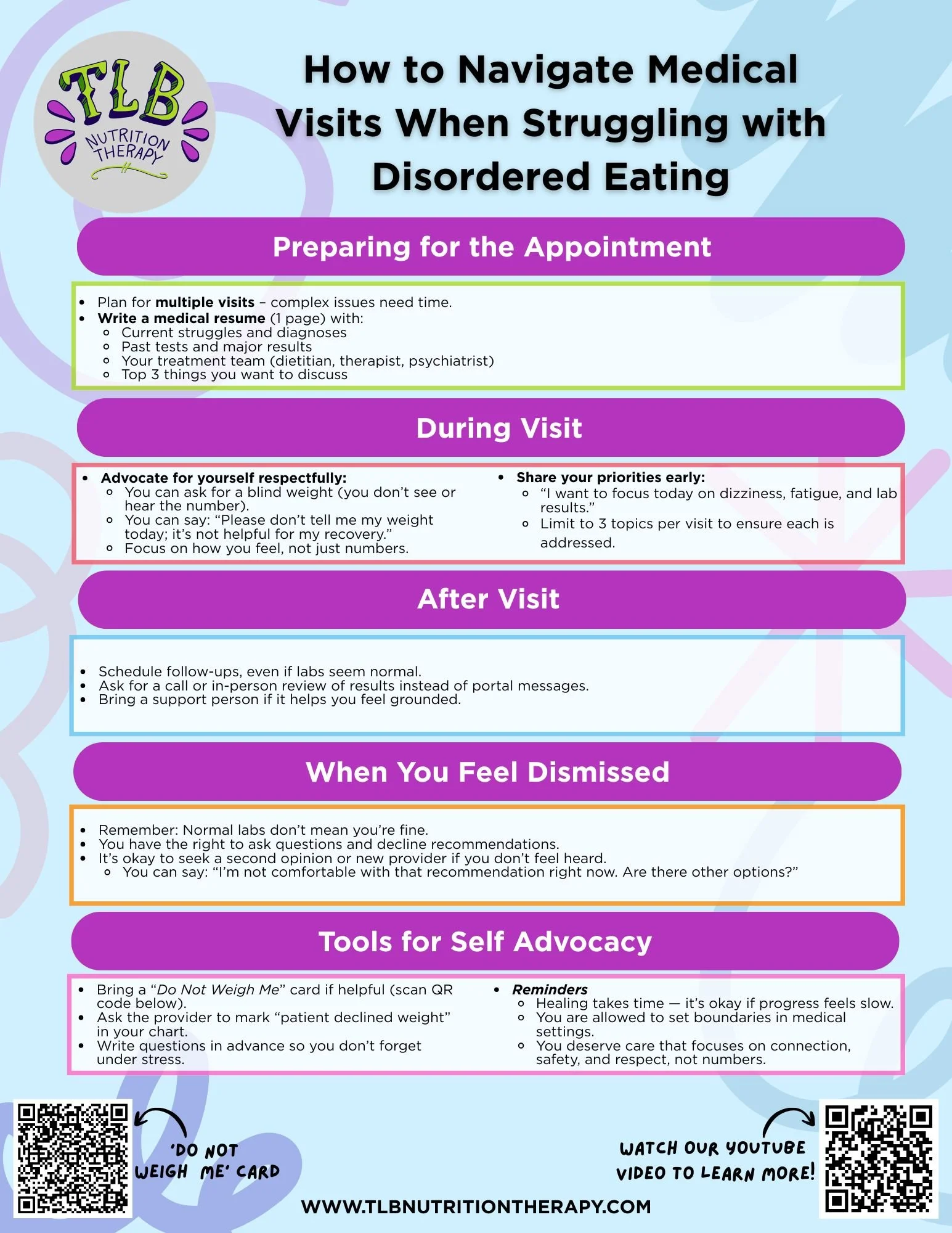
How to Navigate Medical Visits when Struggling with Disordered Eating or an Eating Disorder. For Clients
The handout walks you through practical strategies for every stage of a medical visit. Before your appointment, it encourages preparing a one-page medical summary, identifying your top priorities, and planning for follow-up visits when needed. During the appointment, it offers self-advocacy tools such as requesting a blind weight, asking providers to focus on your symptoms rather than the number on the scale, and limiting the visit to your most important concerns. After your appointment, it emphasizes following up on results, asking questions, and remembering that normal lab work does not always mean everything is okay.
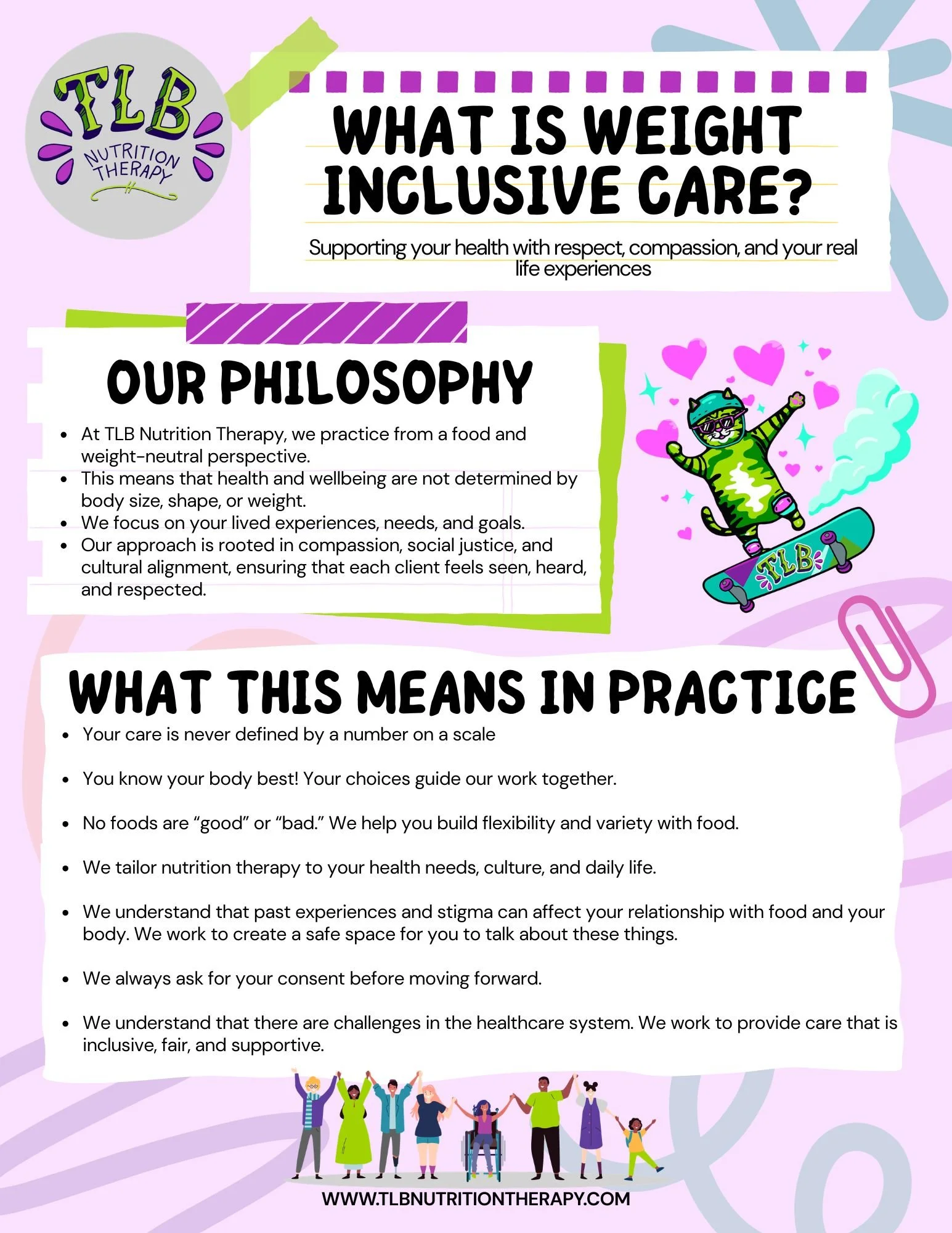
What is Weight Inclusive Care
Weight-inclusive care is a healthcare approach that recognizes that health cannot be determined by a number on the scale alone. Instead of centering weight as the primary measure of wellbeing, weight-inclusive care focuses on the whole person—their lived experiences, medical history, goals, culture, and daily life.
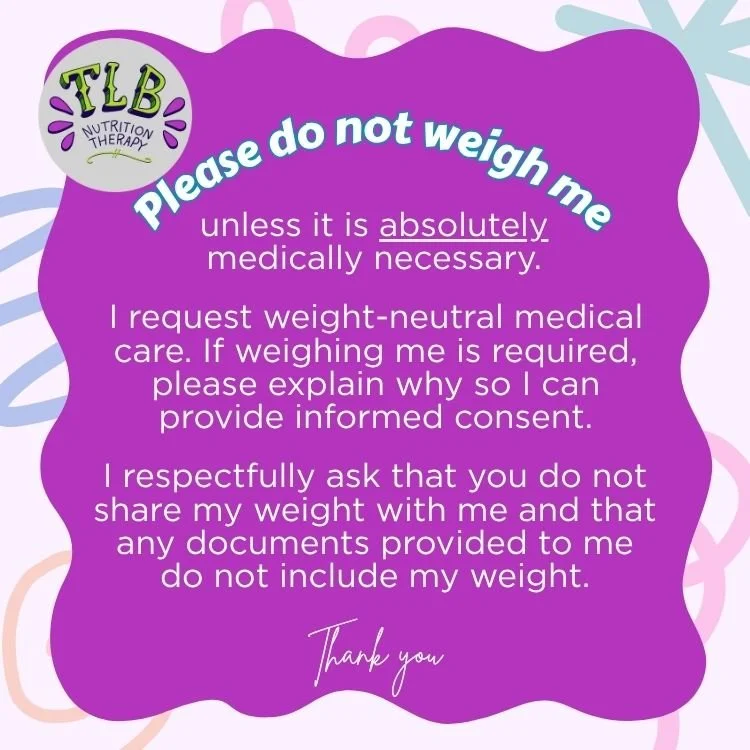
Do Not Weigh Me
At TLB Nutrition Therapy, we believe healthcare should be collaborative, compassionate, and centered around your wellbeing—not just a number on the scale. Our "Do Not Weigh Me" card is designed to help patients communicate their preferences with confidence. The card respectfully requests that weight only be obtained when medically necessary, asks providers to explain why it is needed, and requests that the number not be shared or included on printed paperwork.
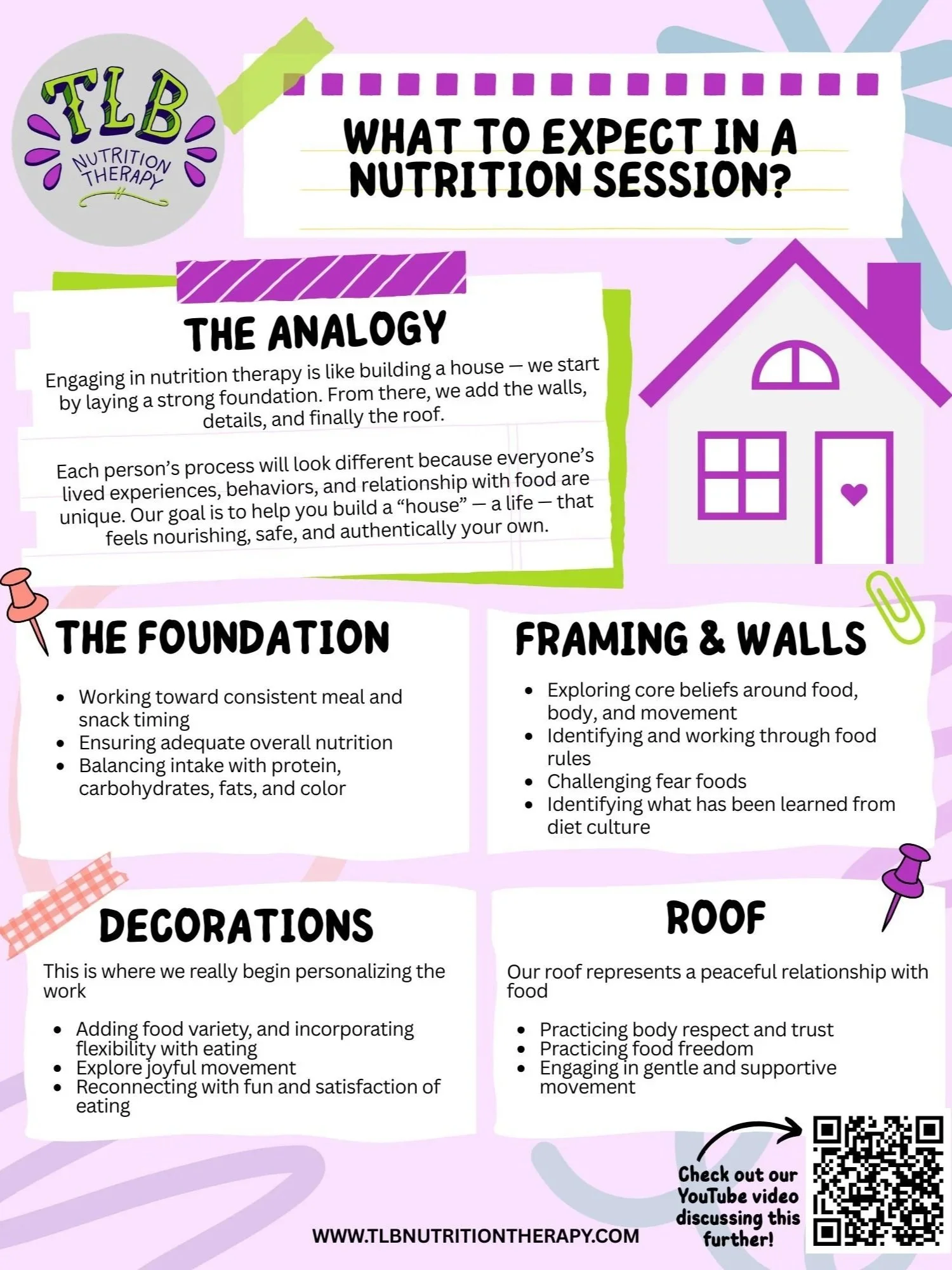
What to Expect in a Nutrition Session?
Starting nutrition counseling can feel intimidating, especially if you're not sure what to expect. One of the most common questions we hear at TLB Nutrition Therapy is, "What will we actually do during a session?" The answer is simple: it depends on you.