Nutrition Support for Neurodivergent Individuals
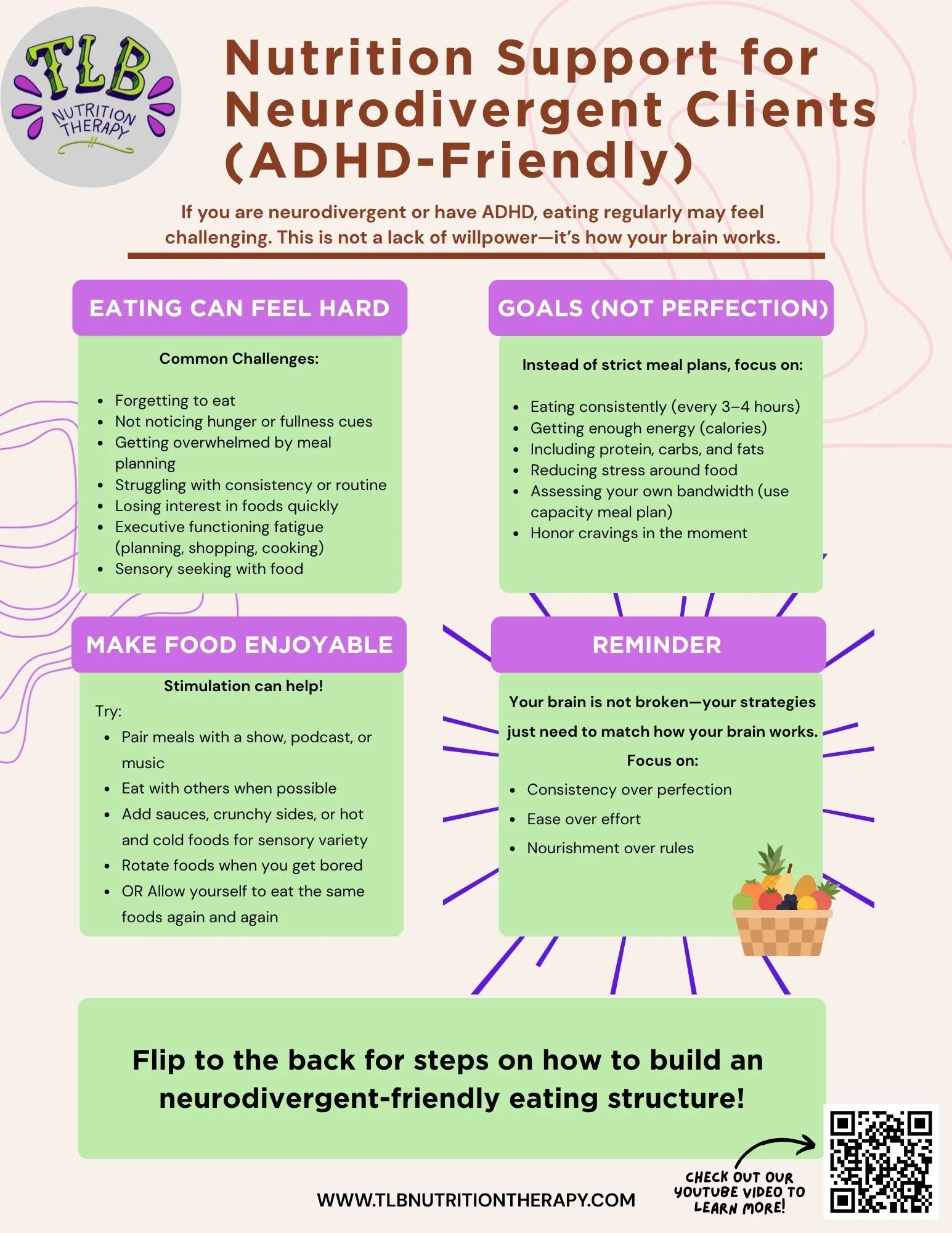
Click the image above for the PDF to download
Eating can feel different when you're neurodivergent—and that's okay. For many individuals with ADHD, autism, or other forms of neurodivergence, challenges with eating aren't about willpower. Executive functioning, sensory processing, interoception, appetite regulation, and daily routines can all influence how, when, and what someone eats.
At TLB Nutrition Therapy, we believe nutrition strategies should work with your brain, not against it. Our Nutrition Support for Neurodivergent Clients (ADHD-Friendly) handout focuses on practical tools that reduce stress rather than adding more food rules. Instead of striving for perfect meal plans, we encourage consistency over perfection, ease over effort, and nourishment over rigid expectations.
The handout includes strategies such as using time instead of hunger cues to remember meals, creating a short list of go-to foods, keeping low-effort meals available, using visual reminders, planning for low-capacity days, and reducing all-or-nothing thinking. It also emphasizes that repeated foods, convenience foods, and sensory preferences are valid tools—not failures.
Nutrition should support your life, not make it harder. By honoring your unique needs and building systems that fit the way your brain works, eating can become more manageable, less stressful, and more sustainable.
Nutrition Support for Neurodivergent Individuals
Food isn't one-size-fits-all—and that includes the way our brains interact with eating. In this episode of Snack Chats, TLB dietitians Marcie and Curissa discuss how autism, ADHD, and other forms of neurodivergence can influence eating patterns, hunger cues, sensory experiences, and daily nutrition.
Using a neurodivergent-affirming, weight-neutral approach, they share practical strategies that help reduce food-related stress while supporting nourishment, flexibility, and quality of life.
In this episode, you'll learn:
How autism and ADHD can impact eating habits
Why sensory sensitivities and safe foods are important
How interoception affects hunger and fullness cues
The difference between hunger and appetite
Why mechanical eating and structured meal timing can be helpful
How ADHD medications may influence appetite
What hyperfixation foods are and how to work with them
Capacity-based meal planning for executive functioning challenges
How dietitians collaborate with therapists, occupational therapists, physicians, and coaches
Why individualized, shame-free nutrition support matters
Marcie and Curissa emphasize that neurodivergent individuals don't need more food rules—they need nutrition strategies that work with their brains. By honoring sensory needs, reducing decision fatigue, and creating supportive routines, eating can become less overwhelming and more sustainable.
Download our free handout: Nutrition Support for Neurodivergent Clients (ADHD-Friendly). This resource provides practical strategies for building a neurodivergent-friendly eating routine, including time-based reminders, low-effort meals, capacity-based planning, visual supports, executive functioning tools, and ways to reduce all-or-nothing thinking around food.
You can also explore our Hunger & Fullness Scale, ARFID support groups, meal support groups, and expressive arts groups by visiting our website.
Disclaimer:
The information shared in this episode is intended for educational purposes only and is not a substitute for individualized nutrition counseling, medical advice, occupational therapy, or mental health treatment. Every neurodivergent person has unique strengths and support needs, and we encourage you to work with a qualified healthcare team to develop strategies that fit your individual life.