ARFID Is More Than "Picky Eating"
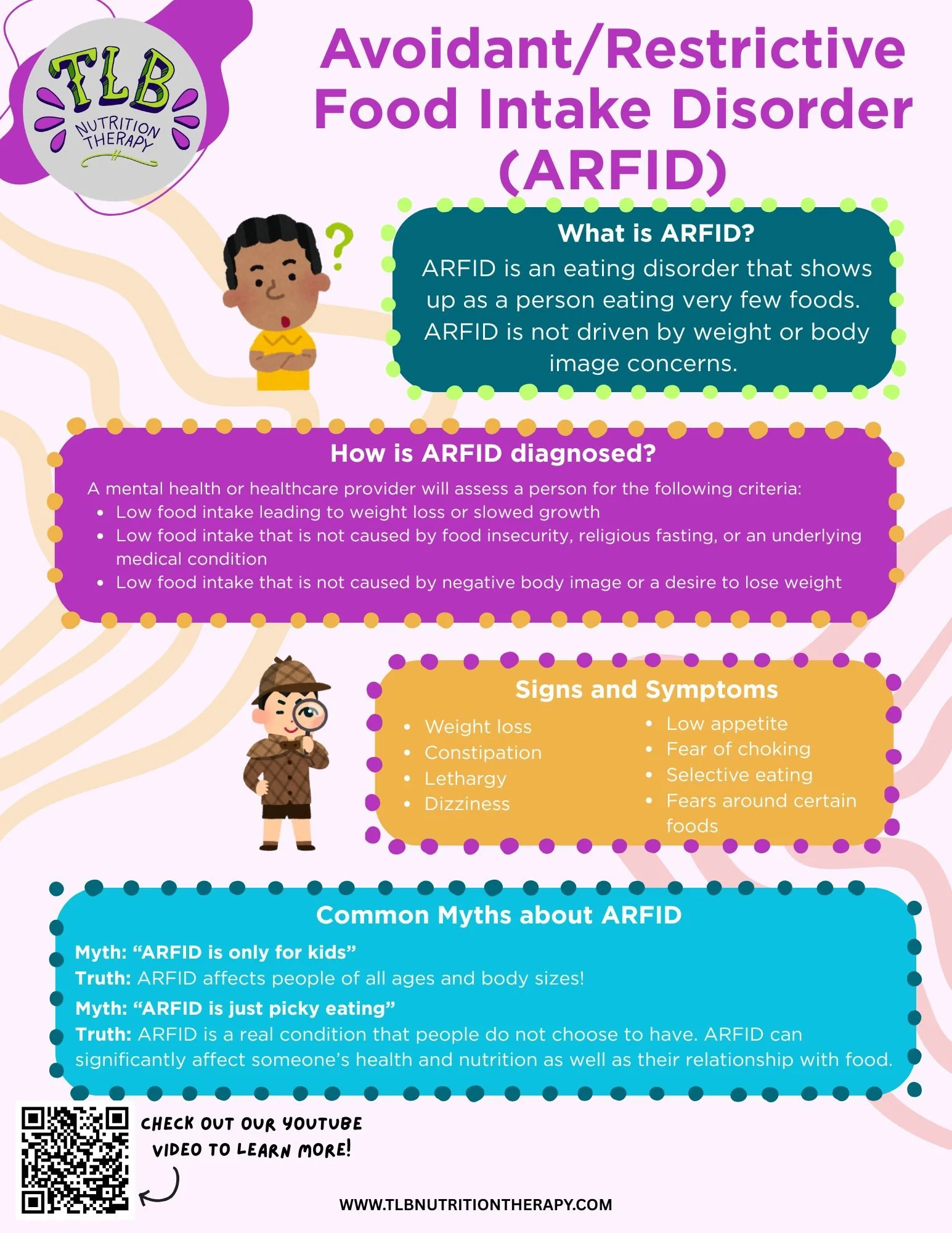
Click the image above for the PDF to download
ARFID (Avoidant/Restrictive Food Intake Disorder) is often misunderstood. Many people hear the term and assume it simply means someone is a picky eater, but ARFID is a recognized eating disorder that can significantly impact nutrition, health, daily functioning, and quality of life.
At TLB Nutrition Therapy, we approach ARFID through a weight-neutral, compassionate, and individualized lens. ARFID is not driven by body image concerns. Instead, it often develops because of sensory sensitivities, fear around eating (such as choking or vomiting), or a naturally low interest in food. Every person's experience is different, which is why treatment should always be tailored to the individual.
Our ARFID handout explains what ARFID is, common signs and symptoms, myths surrounding the diagnosis, and practical nutrition considerations. It emphasizes the importance of honoring safe foods, building consistent eating routines, approaching food exposures with consent, and working with a multidisciplinary treatment team. Recovery isn't about forcing foods—it's about reducing anxiety, expanding flexibility, and helping people feel more confident around food over time.
Whether you're living with ARFID yourself or supporting someone who is, know that recovery is possible. Small, compassionate steps can lead to meaningful progress, and you don't have to navigate it alone.
Understanding ARFID
ARFID (Avoidant/Restrictive Food Intake Disorder) is much more than picky eating. In this episode of Snack Chats, registered dietitians Marcie and Harley explain what ARFID is, how it commonly presents across children, teens, and adults, and the practical, compassionate ways treatment can help reduce anxiety around food while improving quality of life.
Whether you're living with ARFID, supporting a loved one, or wanting to better understand this often misunderstood eating disorder, this conversation offers evidence-based education and practical guidance.
In this episode, you'll learn:
What ARFID is and what it is not
The three common ARFID presentations: sensory-based, fear-based, and low interest in food
Common signs and symptoms of ARFID
How ARFID differs from picky eating
The relationship between ARFID and neurodivergence
How ARFID can impact school, work, travel, family meals, and social situations
The role of dietitians, therapists, occupational therapists, physicians, and collaborative care
How consent-based food exposures and honoring safe foods support recovery
Why recovery focuses on reducing anxiety, increasing flexibility, and improving quality of life
Marcie and Harley emphasize that ARFID is a real, valid, and treatable eating disorder. Recovery is not about forcing someone to eat foods they fear—it's about creating safety, building trust, and gradually expanding flexibility in a way that feels supportive and sustainable.
Download our free handout: ARFID. This resource explains what ARFID is, how it is diagnosed, common signs and symptoms, myths about the disorder, weight-neutral nutrition considerations, the importance of safe foods, and how building a supportive treatment team can help foster recovery.
Learn more about our ARFID Support Groups for teens, young adults, and adults, as well as individualized nutrition counseling, by visiting our website.
Disclaimer:
The information shared in this episode is intended for educational purposes only and is not a substitute for individualized nutrition counseling, medical advice, occupational therapy, feeding therapy, or mental health treatment. Every person experiences ARFID differently, and we encourage individuals and families to work with a multidisciplinary healthcare team to receive personalized support.