
Supporting Your Child with ARFID
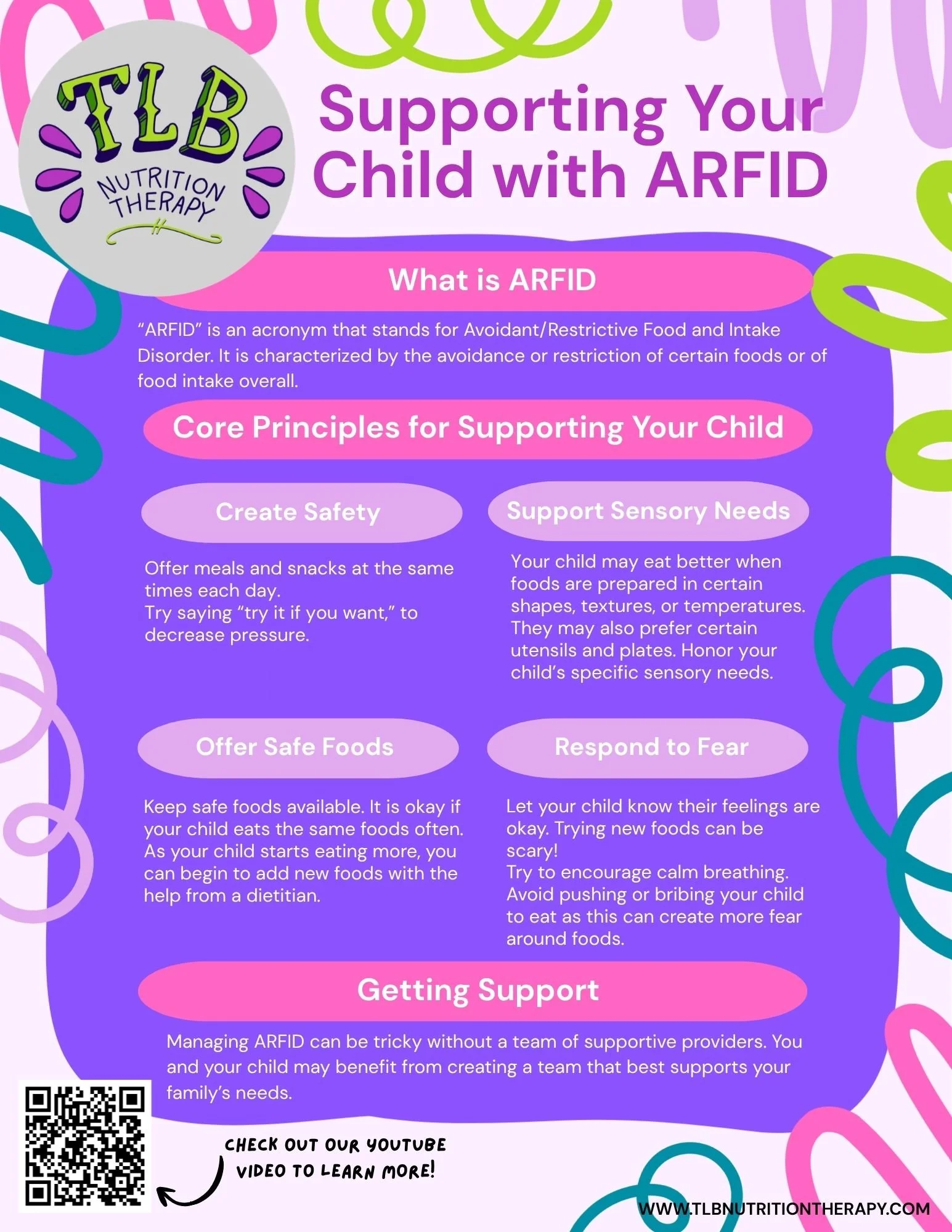
Click the image above for the PDF to download
When a child struggles with eating, it's easy to wonder if they're simply a "picky eater." For children with Avoidant/Restrictive Food Intake Disorder (ARFID), however, eating challenges go far beyond food preferences. ARFID is a recognized eating disorder that can affect nutrition, growth, daily functioning, and family life.
At TLB Nutrition Therapy, we encourage families to approach ARFID with curiosity, patience, and compassion. Our goal isn't to force children to eat new foods but to create a safe environment where they can gradually build trust with food. That often begins with honoring safe foods, respecting sensory needs, maintaining predictable meal and snack routines, and responding to fear with support instead of pressure.
Our Supporting Your Child with ARFID handout provides practical strategies for making mealtimes feel calmer and more successful. It encourages families to reduce pressure, support sensory preferences, validate children's experiences, and build a collaborative care team that may include a dietitian, occupational therapist, therapist, physician, and other providers. Recovery is a gradual process, and small steps truly matter.
If you're parenting a child with ARFID, know that you are not alone. With the right support, patience, and evidence-based care, children can expand their relationship with food while feeling safe, respected, and understood.
Supporting Your Child with ARFID
ARFID (Avoidant/Restrictive Food Intake Disorder) is much more than picky eating. In this episode of Snack Chats, registered dietitians Marcie and Harley discuss ARFID specifically for parents and caregivers, explaining what it is, how it differs from typical picky eating, and how families can create a supportive environment that encourages progress without pressure.
Whether your child has recently been diagnosed with ARFID or you've been navigating feeding challenges for years, this conversation offers practical strategies, reassurance, and hope.
In this episode, you'll learn:
What ARFID is and how it differs from picky eating
Common early warning signs and symptoms
How sensory sensitivities, fear, and low interest in food contribute to ARFID
The impact ARFID can have on children and their families
How to create calmer, lower-pressure mealtimes
Why honoring safe foods and sensory needs is important
The role of dietitians, occupational therapists, therapists, physicians, and parent coaching
Practical ways to support your child's progress while reducing stress
Why caregiver wellbeing is an important part of the recovery process
Marcie and Harley emphasize that ARFID is a real, treatable eating disorder—not a parenting failure. Recovery takes time, and meaningful progress often happens through small, consistent steps built on trust, safety, and collaboration.
Download our free handout: Supporting Your Child with ARFID. This resource reviews the core principles of ARFID support, including creating safety at mealtimes, honoring sensory needs, offering safe foods, responding compassionately to fear, and building a multidisciplinary support team for your child and family.
Learn more about our ARFID Support Groups for teens, young adults, and adults, as well as individual nutrition counseling and parent coaching, by visiting our website.
Disclaimer:
The information shared in this episode is intended for educational purposes only and is not a substitute for individualized nutrition counseling, medical advice, occupational therapy, feeding therapy, or mental health treatment. Every child experiences ARFID differently, and we encourage families to work with a multidisciplinary healthcare team to receive personalized support.