Your Story Matters: Understanding the Life Tiers Framework
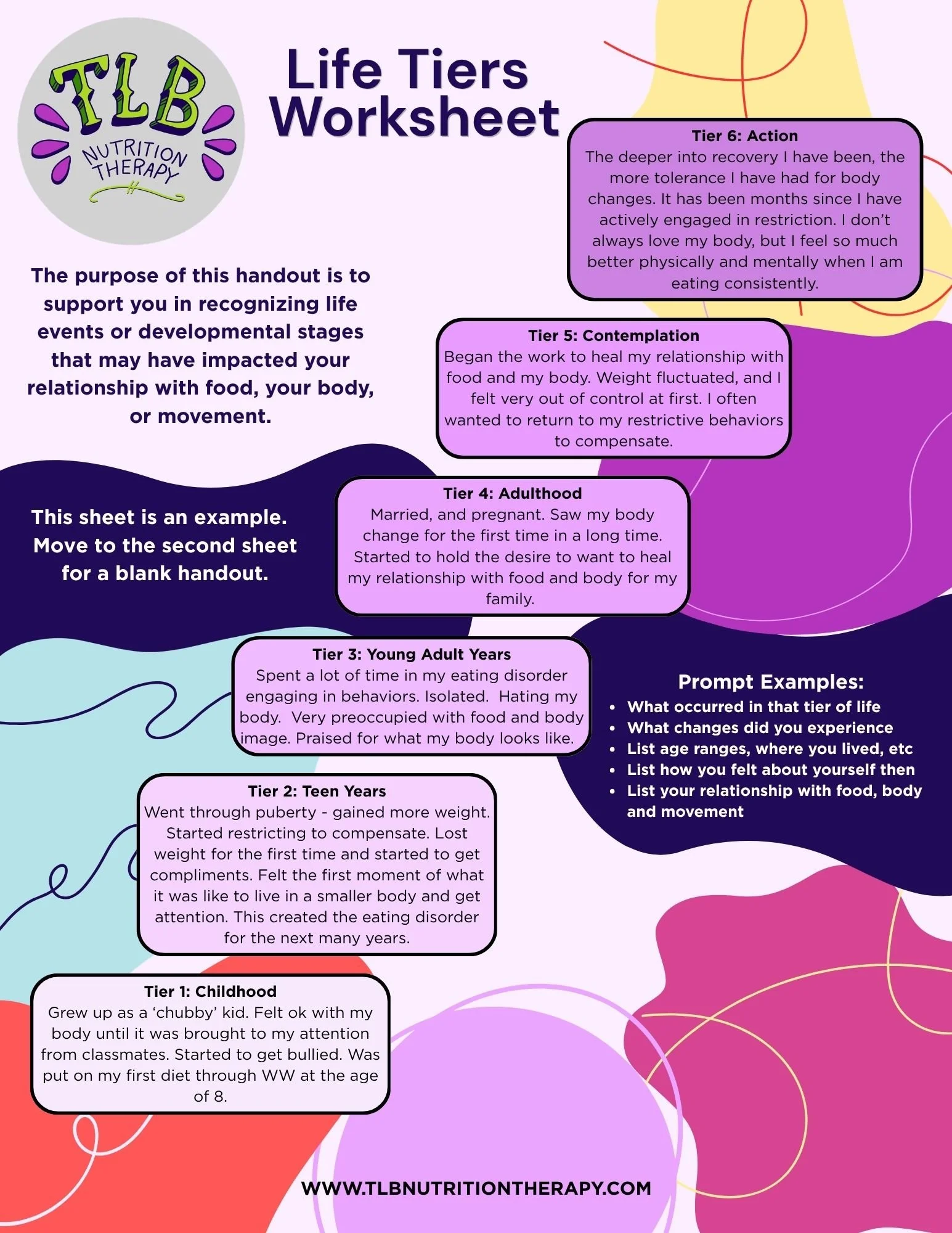
Click the image above for the PDF to download
Our relationship with food, body image, and movement doesn't develop overnight. It's shaped by years of lived experiences—family messages, friendships, cultural influences, major life events, health changes, and personal milestones. Understanding those experiences can be an important step toward healing.
At TLB Nutrition Therapy, we use the Life Tiers framework to help clients explore how different stages of life have influenced their beliefs about food, body, and movement. Rather than focusing only on current behaviors, this tool encourages reflection on the experiences that helped shape them. Whether it's childhood food rules, puberty, college, pregnancy, illness, or recovery itself, every life stage offers important insight into your story.
Our Life Tiers Worksheet provides a structured way to reflect on each phase of life while considering questions such as what was happening during that time, how you felt about yourself, and what your relationship with food, body, and movement looked like. The goal isn't to judge your past—it's to better understand it so you can move forward with greater self-compassion.
Healing doesn't require erasing your story. Instead, it begins by understanding where your beliefs came from and recognizing that your experiences have shaped you—but they don't have to define your future.
Understanding Your Food Story Through Life Tiers
Our relationships with food, body image, and movement are shaped by the experiences we've had throughout our lives. In this episode of Snack Chats, Tina and Sarah introduce one of TLB Nutrition Therapy's foundational counseling tools: Life Tiers.
Using this framework, they explore how different stages of life—from childhood through adulthood—can influence the beliefs, behaviors, and experiences we carry into our relationships with food and our bodies today.
In this episode, you'll learn:
What the Life Tiers framework is and how it is used in nutrition counseling
How different stages of life influence food, body image, and movement beliefs
Why childhood, adolescence, and adulthood all contribute to your food story
How major life events can shape eating behaviors and body image
The role of identity, trauma, and social messaging throughout life
How neurodivergent experiences may influence food relationships
Why curiosity is more helpful than judgment during recovery
How reflecting on your story can support healing and self-awareness
Why recovery isn't about perfection—it's about understanding yourself with compassion
Tina and Sarah emphasize that every person's story is unique. The Life Tiers framework isn't about finding something to blame—it's about recognizing patterns, understanding where beliefs originated, and creating opportunities for healing through greater self-awareness and self-compassion.
Download our free handout: Life Tiers Worksheet. This guided reflection tool walks you through six stages of life, encouraging you to explore meaningful events, changes, relationships with food, body image, and movement, while identifying the experiences that have shaped your journey.
Disclaimer:
The information shared in this episode is intended for educational purposes only and is not a substitute for individualized nutrition counseling, medical advice, or mental health treatment. Healing is deeply personal, and we encourage you to work with a licensed dietitian, therapist, or healthcare provider for support tailored to your unique experiences.