
TLB Nutrition Therapy Handouts
At TLB Nutrition Therapy, we believe that access to nutrition education shouldn't be limited by insurance coverage, finances, or location. That's why we've created a growing library of free educational handouts and YouTube videos designed to provide reliable, evidence-based nutrition information to anyone who needs it.
Our resources have been thoughtfully developed by the registered dietitians and staff at TLB Nutrition Therapy and reflect our commitment to compassionate, inclusive, and evidence-based care. They cover a variety of topics, including eating disorders, intuitive eating, body image, chronic health conditions, sports nutrition, family feeding, women's health, and more. Whether you're a current client, a healthcare provider, or simply looking to learn, our goal is to make nutrition education approachable, practical, and accessible.
These resources are provided for educational purposes only and are not intended to replace individualized medical or nutrition advice. We encourage you to work with your healthcare provider or registered dietitian to determine the recommendations that are most appropriate for your unique needs.
We know that healing doesn't just happen during appointments. By offering these resources at no cost, we hope to empower individuals, families, and communities with the knowledge and tools they need to support their relationship with food, body, and health.
We invite you to explore our free handouts and YouTube library and share them with anyone who may benefit. Together, we can increase access to compassionate, inclusive nutrition care—one resource at a time. 💜
Use the search tool to search for a specific handout or youtube video.
Otherwise, feel free to scroll this page for all of our handout and video resources.
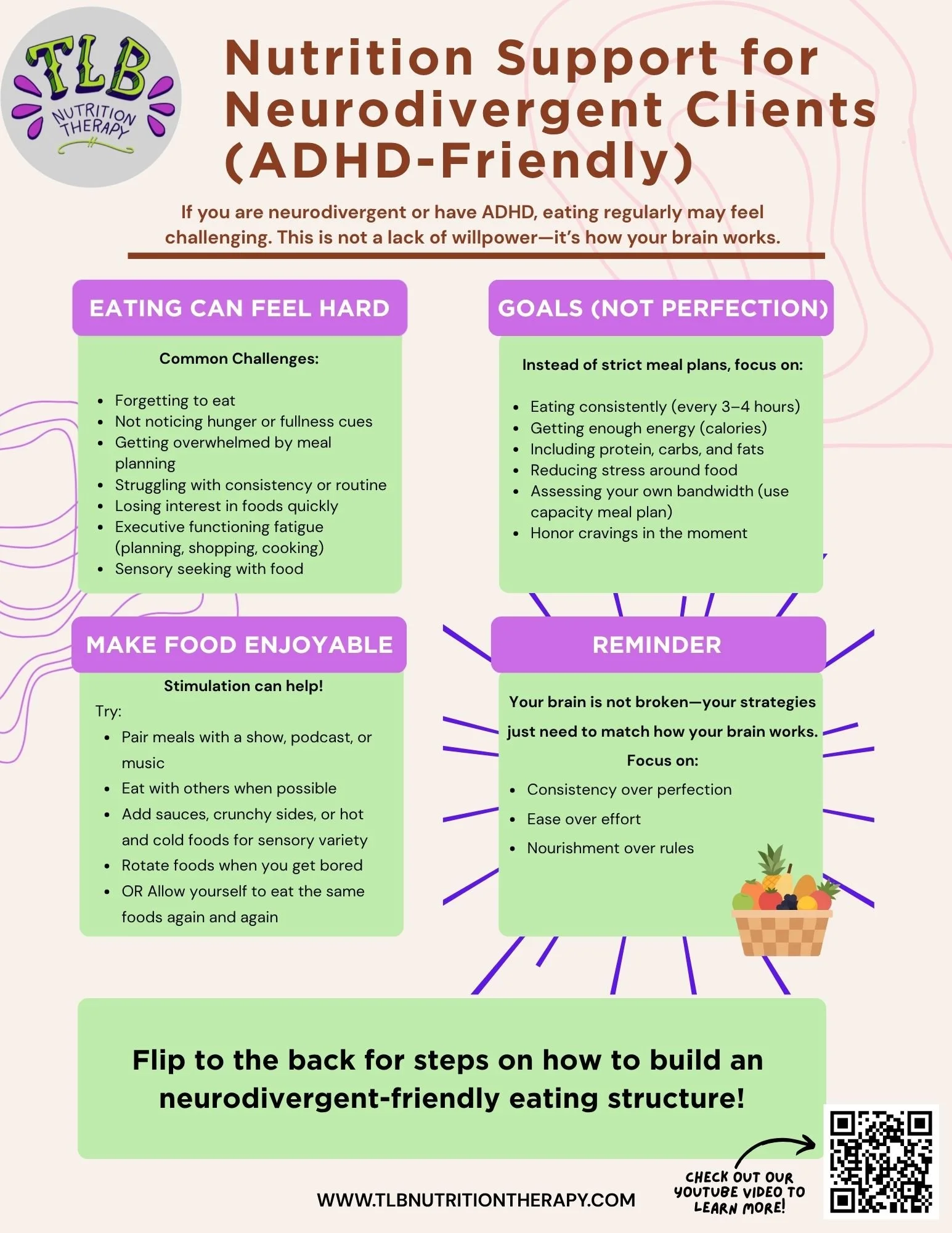
Nutrition Support for Neurodivergent Individuals
The handout includes strategies such as using time instead of hunger cues to remember meals, creating a short list of go-to foods, keeping low-effort meals available, using visual reminders, planning for low-capacity days, and reducing all-or-nothing thinking. It also emphasizes that repeated foods, convenience foods, and sensory preferences are valid tools—not failures.