
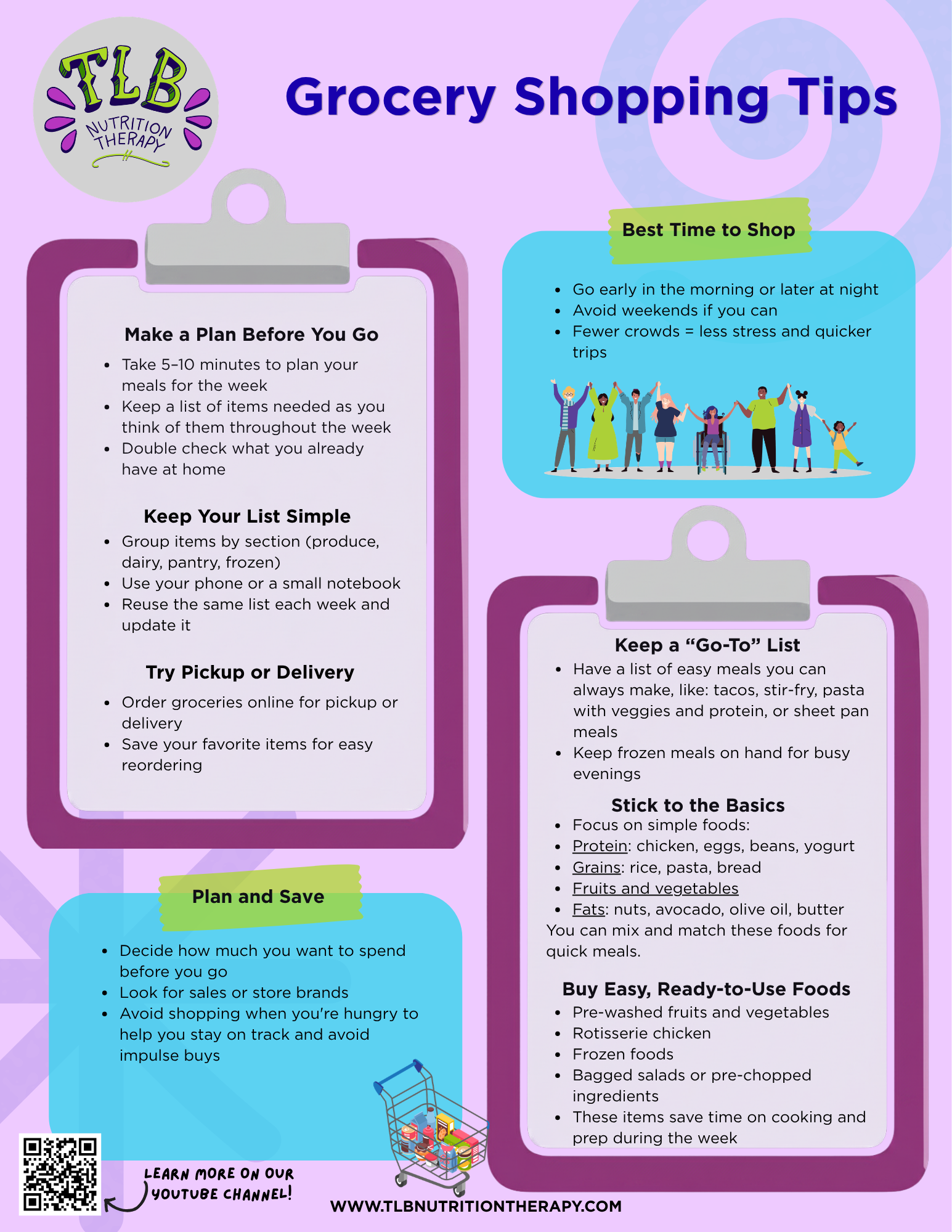
Click the image above for the PDF to download
Grocery shopping can feel surprisingly overwhelming. Between figuring out what you want to eat, remembering what you already have, navigating a crowded store, managing a budget, and finding the energy to prepare food afterward, there's a lot involved in what can seem like a simple task.
A little planning can help make the process feel more manageable.
Before heading to the store, consider taking 5–10 minutes to think through meals for the week, check what you already have at home, and create a simple grocery list. You don't need to reinvent your list every week either—keeping a basic list that you update as needed can reduce some of the mental load.
Convenience can also be part of nourishing yourself. Grocery pickup or delivery, frozen meals, pre-washed produce, rotisserie chicken, bagged salads, and pre-chopped ingredients can all make getting food on the table easier.
You don't need a perfectly planned menu or a cart full of ingredients for elaborate recipes. Sometimes the most supportive approach is keeping a few go-to meals and basic foods available that you can mix and match depending on your time, energy, and capacity.
Grocery shopping doesn't have to be perfect. The goal is finding a system that makes feeding yourself more realistic, accessible, and sustainable.
Grocery Shopping Tips: Making Food Shopping Simpler
Does grocery shopping ever feel like one more thing you have to figure out?
In this episode of Snack Chats with TLB, we explore practical strategies for making grocery shopping simpler and less overwhelming. From planning before you shop to relying on convenience foods and keeping a list of go-to meals, small changes can reduce the amount of time, energy, and decision-making involved.
In this episode, you'll learn:
How a few minutes of planning can make grocery shopping easier
Why you don't need a completely new grocery list every week
How organizing your list by store section can simplify your trip
How grocery pickup and delivery can reduce some of the work involved
Why keeping a list of go-to meals can help with decision fatigue
How basic ingredients can be mixed and matched into different meals
Why frozen and ready-to-use foods are useful tools
Strategies for shopping when crowds feel stressful
Simple ways to consider your grocery budget
How convenience can support consistent nourishment
Make a Plan Before You Go
Planning doesn't have to mean mapping out every meal and snack for the entire week.
TLB's Grocery Shopping Tips handout recommends spending about 5–10 minutes thinking about meals for the week, keeping a running list of foods you need, and checking what you already have before shopping.
Even a loose plan can reduce some of the decisions you have to make once you're standing in the grocery store.
Keep Your Grocery List Simple
Your grocery list doesn't have to be fancy.
You might organize foods by sections such as produce, dairy, pantry, and frozen foods. You can keep the list on your phone or in a small notebook—and there's absolutely nothing wrong with reusing essentially the same grocery list every week and making a few changes as needed.
If you've found foods that work for you, you're allowed to keep buying them.
Create a Few Go-To Meals
You don't need seven completely different dinners every week.
Having a list of easy meals you can return to—such as tacos, stir-fry, pasta with vegetables and protein, sheet-pan meals, or frozen meals—can make deciding what to buy and what to eat much easier.
You can also keep basic foods available from different categories—proteins, grains, fruits and vegetables, and fats—and mix and match them depending on what sounds good and what you have the capacity to prepare.
Convenience Foods Count
Pre-washed fruits and vegetables count.
Frozen foods count.
Rotisserie chicken counts.
Bagged salads and pre-chopped ingredients count.
Using foods that reduce cooking and preparation time isn't taking a shortcut you need to feel guilty about. These foods can make nourishment more accessible when you're busy or simply don't have the capacity for extensive meal preparation. The handout specifically highlights ready-to-use foods as a way to save time on cooking and prep throughout the week.
Make the Shopping Experience Work for You
Sometimes the food isn't the difficult part—the grocery store itself is.
If crowds make shopping stressful, going early in the morning or later at night may help. Avoiding weekends when possible can also mean fewer people and a quicker trip.
And you don't have to physically go into the grocery store at all. Grocery pickup and delivery are completely valid options. Saving favorite items for easy reordering can make the next shopping trip even easier.
Grocery Shopping Doesn't Have to Be Perfect
There isn't one “right” way to grocery shop.
Maybe you carefully plan your meals each week. Maybe you buy essentially the same foods every time. Maybe half your cart is frozen or ready-to-eat foods. Maybe grocery delivery is what makes consistent nourishment possible for you.
The goal isn't perfection.
It's having enough food available to nourish yourself in a way that works with your time, budget, energy, and life.
Download our free handout: Grocery Shopping Tips. This resource includes practical strategies for planning your trip, simplifying your grocery list, keeping go-to meals available, using convenient foods, saving money, and making the grocery shopping experience more manageable.
Disclaimer:
The information shared in this episode and handout is intended for educational purposes only and is not a substitute for individualized nutrition counseling, medical advice, or mental health treatment. Nutrition needs and access to food are different for everyone. We encourage you to work with a registered dietitian or other qualified healthcare provider for individualized support.